

Key Takeaways
- Before you pay, check three things: whether the ad names a brand, whether the seller has a working support channel, and who pays return shipping.
- Several members who bought heavily advertised neck and knee massagers described glue-held parts, foreign instructions and refunds they never got.
- One member paid $150 AUD for a knee massager and later found what looked like the same generic unit listed for $32 to $50.
- Known brands are not perfect either, but nine of the 15 buyer reviews we read on one cordless neck massager mentioned battery trouble, so a stated warranty and a usable return policy matter.
- If you have a heart condition, a blood clot history or are pregnant, ask a doctor before using compression or heated wraps, and stop at dizziness or sharp pain.
A gym owner in our Facebook group paid $199 directly to an online shop for a neck massager. Three months later the battery would only run for 15 minutes before refusing to recharge at all.
When they tried to return it, customer service offered only a 30% refund unless they paid international shipping back to Belgium.
Another member paid $150 AUD for a smart knee massager a friend recommended. When it arrived, they found what looked like the same generic unit, dropshipped (shipped straight from a foreign warehouse to the buyer, with the seller acting as a middleman who never handles the product), listed for $32 to $50.
It did nothing for their pain, and customer service made returning it a nightmare with endless photo requests and slow email replies.
The short version of this guide is that you can spot most of the trouble before you pay, by checking the brand, the seller and the return policy. The sections below show how.
What Our Members Ran Into
Several members bought heavily advertised neck and knee massagers straight from influencer ads or copycat storefronts. They reported damaged packaging, foreign instructions, missing chargers, and units that looked like someone else's return.
Some arrived with parts held together by the tiniest amount of glue. Members also reported motors that stopped after two days, massage heads that detached on day three, and heating elements that failed to warm up or got hot within minutes.
The hardest part for many was getting money back. Members said sellers advertising 30-day or 60-day money-back guarantees refused to provide prepaid return labels and directed them to ship packages to Belgium or the United States at costs above $100.
Others were offered partial refunds of 8% to 30%, or were asked for round after round of photos and emails. These are member reports, and we have not checked any seller's side of the story.
Warning Signs in the Ad
Social media ads for massagers look polished, with smooth video, happy people and a price that seems like a steal. The trouble starts when you check what the ad tells you about the seller.
Look for a brand name. If the ad shows a neck or knee massager but no brand appears in the video, the caption or the landing page, you may be looking at a generic unit.
The member with the $150 AUD knee massager found what looked like the same wrap for $32 to $50 elsewhere. Searching the product photos can show you whether the same unit is sold under other names.
Be wary of ads that promise everything. A neck massager that claims to fix migraines, sciatica and arthritis in one device is making claims no massager can back up.
Massagers can help sore muscles feel looser and may help tired legs feel lighter. If an ad reads like it solves every problem, treat it as a reason to slow down.
Be wary of premium prices on unknown names. Members told us several heavily advertised social media brands at $150 to $200 drew severe complaints about cheap glue construction, rapid motor failure and non-existent refunds.
Price alone does not prove quality in either direction. One neck massager that cost more than twice as much as the Snailax SL-681 still stopped spinning after a couple of years, so check the warranty and reviews before you trust a price tag.
Warning Signs on the Store
If the ad sends you to a website, check the store before you enter payment. These are the signs our members and reviews point to.
| Red flag | Why it matters | What to do |
|---|---|---|
| No brand name in the ad or store | May be a generic unit; one knee wrap found for $32 to $50 | Search the photos and compare prices |
| Premium social media brand at $150 to $200 | Members reported glue builds, quick motor failure, no refunds | Read independent reviews first |
| Returns shipped abroad | One member was told Belgium; another faced over $100 | Only buy with a prepaid return label |
| Partial refund offers of 8% to 30% | You can end up with a dead unit and most of the price gone | Dispute the charge with your card issuer |
| No stated warranty | No clear way to claim when the unit fails | Skip it, or get terms in writing |
| Foreign instructions or missing charger | Members saw these on units that looked previously returned | Return it right away |
| Slow or unresponsive support | Members described endless photo requests and slow replies | Test support before you buy |
One member who received a defective neck massager found the massage heads detached on day three, held on with a tiny amount of glue. The replacement took two weeks to arrive and was worse, with buttons randomly failing and the heating element getting hot within minutes.
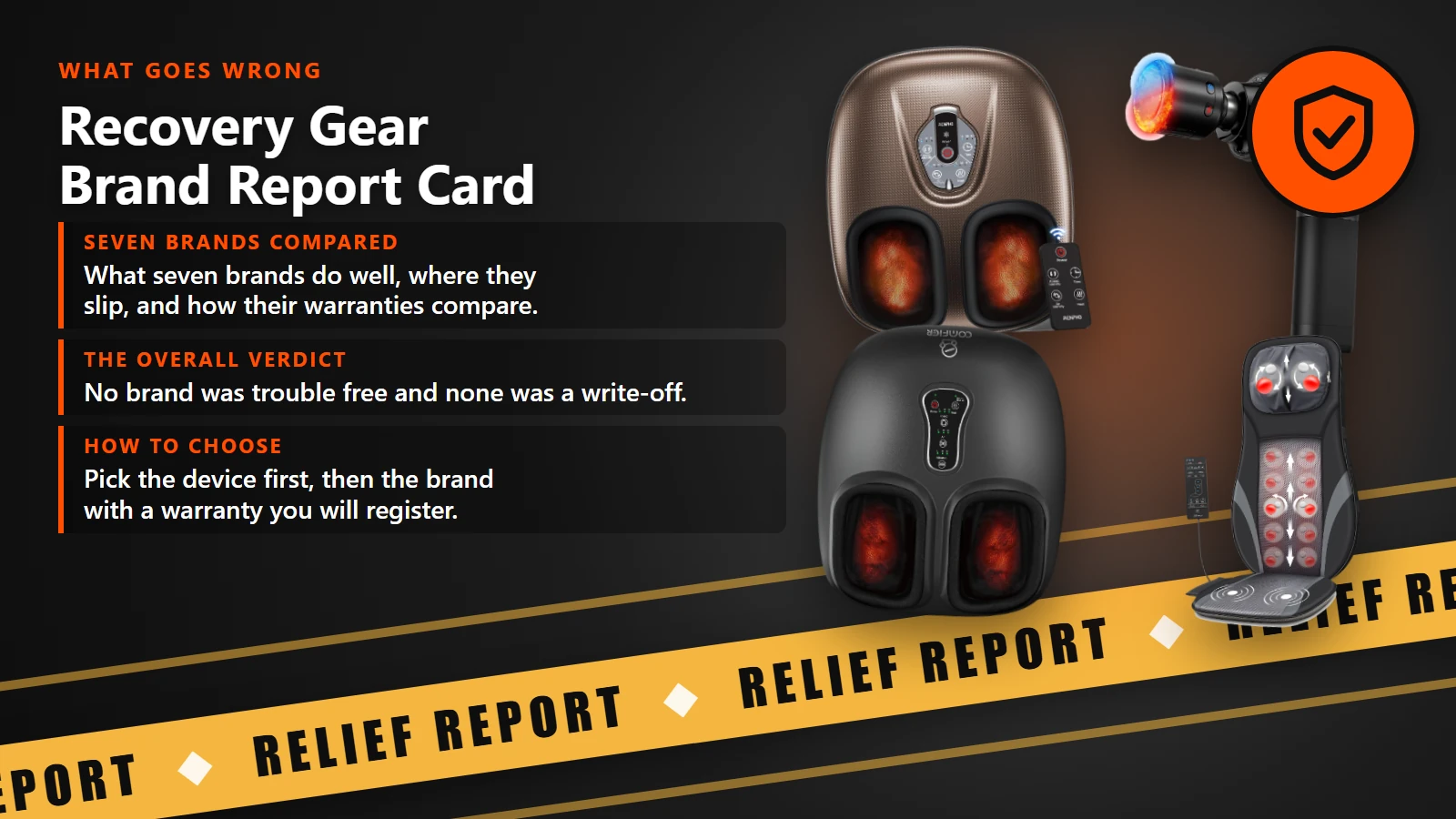
Check the about page and who is behind the store. A page with no names, no location and no history tells you little about who will answer when something breaks. Established brands like the ones in our recovery gear brand report card publish warranty terms and have support channels you can test.
Check whether the same product is sold for much less. The member who paid $150 AUD later found the unit listed for $32 to $50, which suggests the premium store may be reselling a cheap generic at a markup.
Check the instructions and packaging. Members reported units arriving with foreign instructions and missing chargers. A product from a seller with a real brand and support channel is more likely to arrive complete.
Return Policy Traps
The return policy is where members said the real trouble started. The ad promised 30 or 60 days, and the follow-through was different.
The international shipping trap. One member was told to ship the unit back to Belgium, and another was directed to ship to a US address at a cost above $100. When return shipping costs more than the refund, the guarantee is not much of a guarantee.
The partial refund trap. Members were offered refunds of 8% to 30% of the price. One was offered 30% on a $199 neck massager with a dead battery, and only if they paid shipping.
The photo and email trap. The member who paid $150 AUD described endless photo requests and slow email replies. Document everything, and keep the return policy as it appeared when you bought.
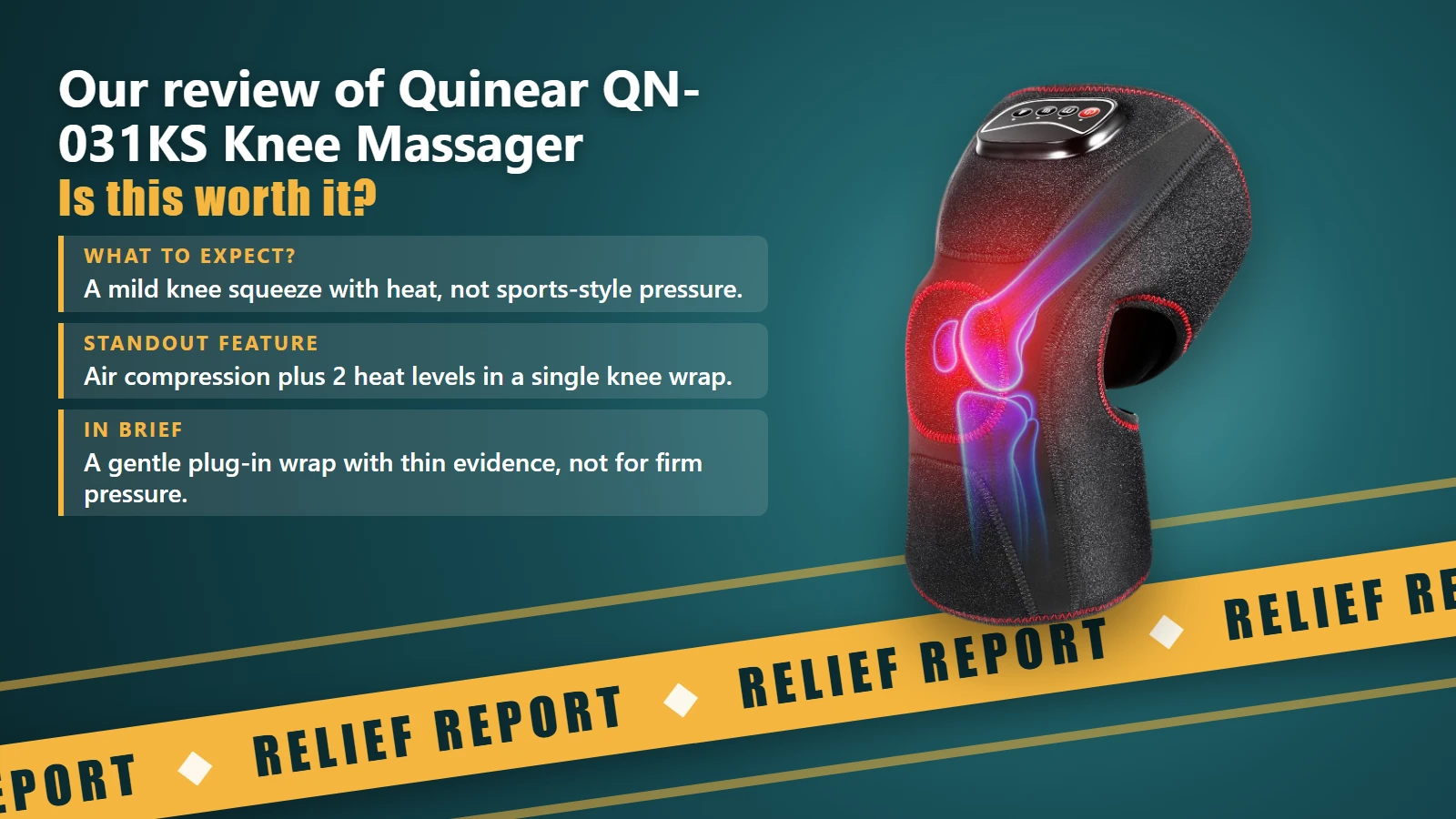
The no-warranty trap. Some listings state no warranty at all. In our Quinear QN-031KS knee massager review, we found the listing states no warranty, and a buyer who asked about one has no answer on record.
Budget wraps often trade lifespan for a low entry cost, and a listing with no warranty tells you that up front. Without one, you have no clear way to claim when the unit fails.
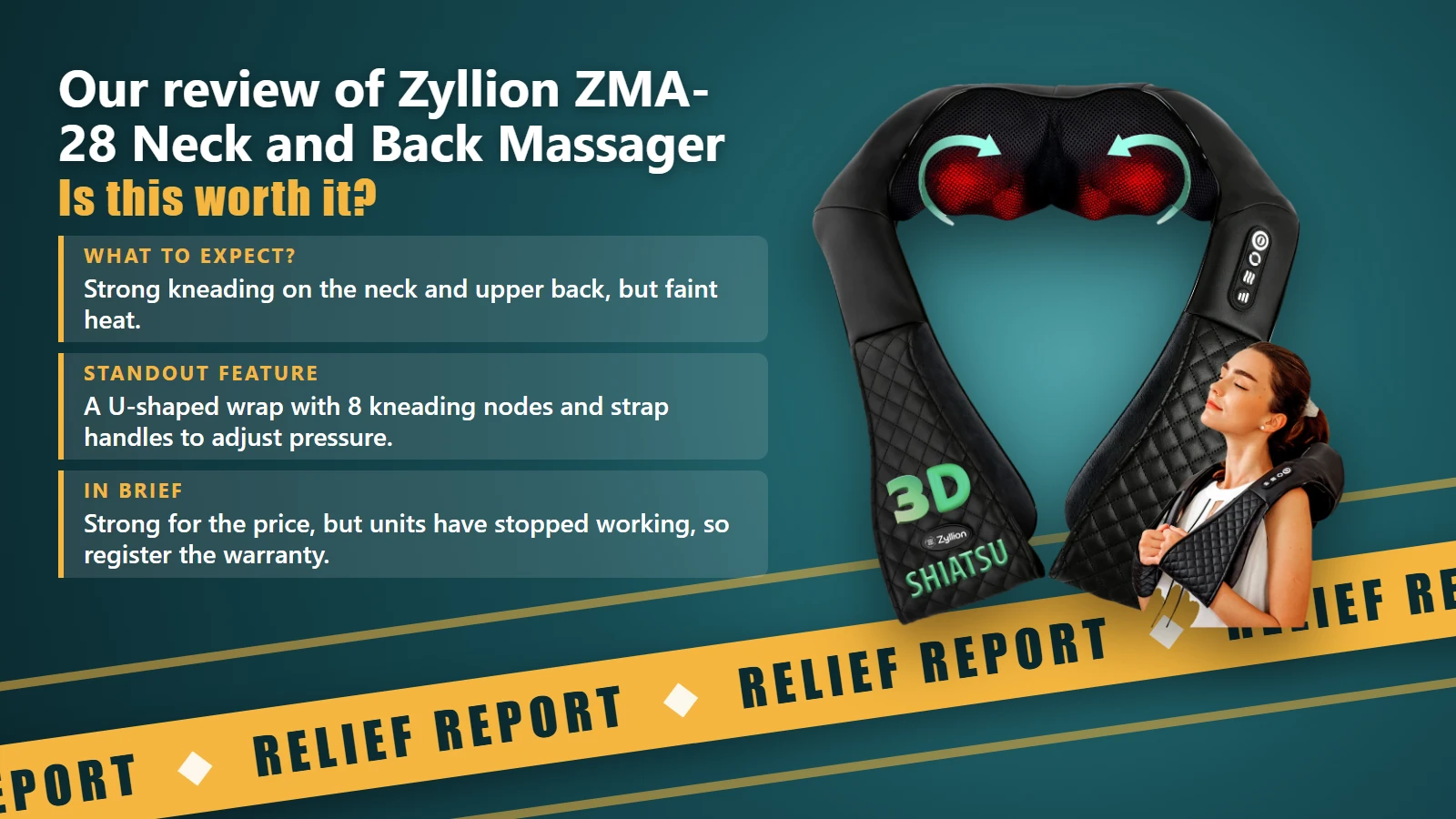
Contrast that with a listing that spells it out. In our Zyllion ZMA-28 neck and back massager review, the listing says one year, while members and one reviewer say registering online adds a second year free.
Support replaced units without a fight in every case we know of. That is a useful sign when you are choosing between sellers.
Safer Ways to Buy
You do not need to spend $200 to avoid a bad buy. You need a seller with a track record, a stated warranty and a return policy you can actually use.
Buy from known brands with published warranties. The brands we review, including Zyllion, Quinear, Snailax, Renpho and Comfier, are not perfect, and some have weak heat or battery issues. A client's first ZMA-28 even arrived used, with a return slip and someone's hair inside, and the replacement was new.
A different reviewer's ZMA-28 ground loudly and never warmed up. Zyllion sent a replacement and a prepaid return label, and the new one arrived three days later and worked as hoped.
Register the warranty the day it arrives. Members point to a free second warranty year with Zyllion massagers, and the Zyllion ZMA-36 lists three years in total, one automatic and two more if you register.
Test the unit hard in the first days. If a battery drains fast on day one, return it. In our Renpho Active massage gun review, two of three clients saw the battery drain fast, and one watched it fall from 100% to 65% in about 20 minutes.
A fast drain on day one is a reason to return the gun, not to nurse it along. Use the full return window to test every feature.
Read the return policy before you pay, not after. Look for a seller that provides prepaid return labels or covers return shipping. If the buyer pays shipping to an international address, compare that cost with the price before you commit.
Use a payment route with a fallback. The gym owner above paid the seller's own shop directly. A marketplace with buyer protection, or a card dispute, gives you somewhere to turn if a seller stops answering.
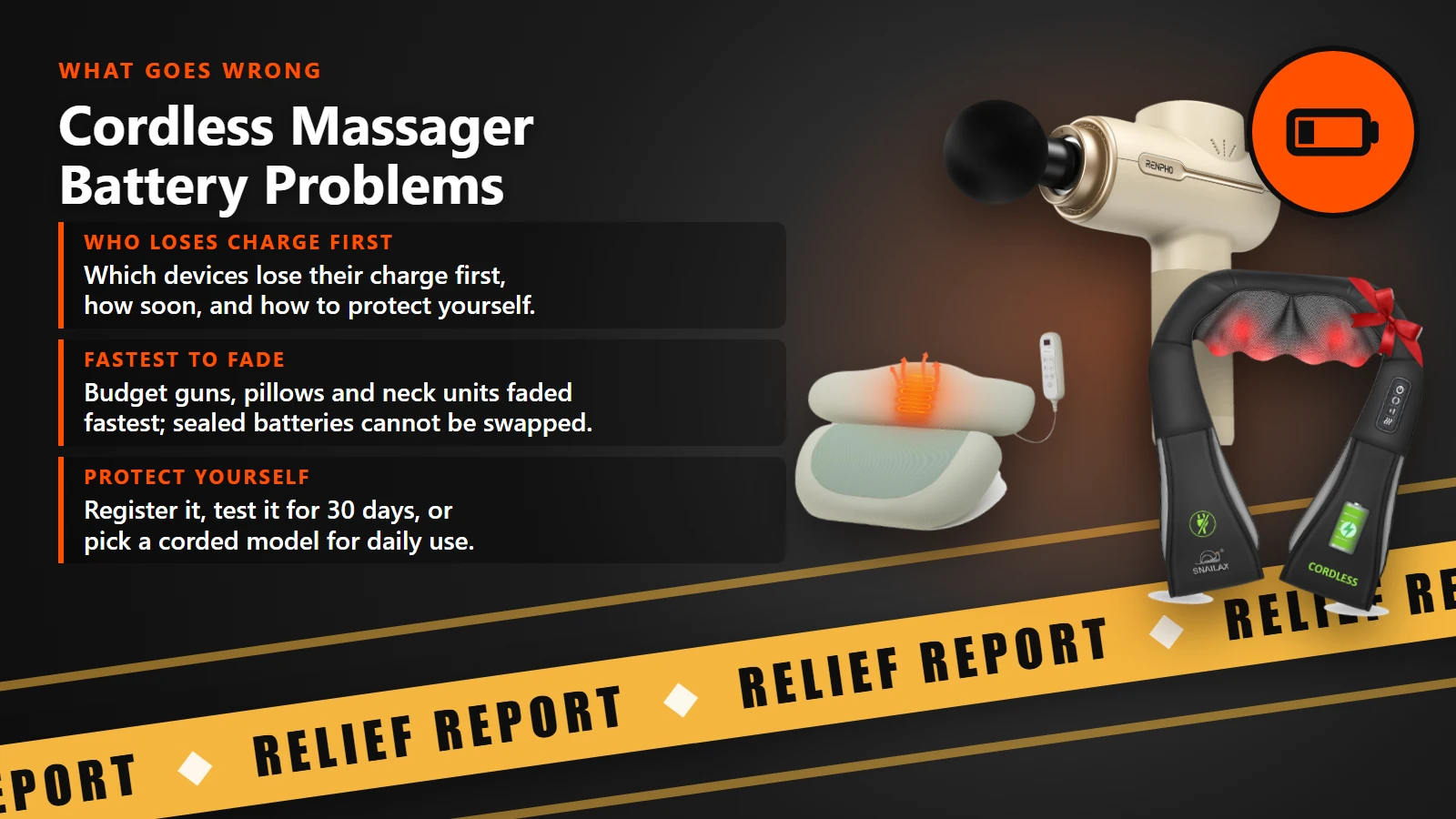
Read the battery complaints before you buy cordless. In our Snailax SL-681 cordless neck and shoulder massager review, nine of 15 buyer reviews mentioned the battery, charging or the unit dying. Six said it stopped working or stopped holding a charge, some within a month.
Our guide on cordless massager battery problems breaks down the full pattern. If you buy cordless, choose a seller with a return policy you can use and a warranty that covers the battery.
Skip aggressive neck massagers if you are prone to headaches. Members reported that aggressive kneading, intense vibration or misaligned nodes triggered worse migraines, nausea, vertigo and muscle inflammation.
One member had severe upper neck aches, headaches and dizziness for 10 to 14 days after a massage gun was used on the back of the neck. Scans came back normal, and the member said the doctor explained the gun had rattled the crystals in the inner ear.
If you get headaches easily, start on the lowest setting, keep guns away from the front and sides of the neck, and stop at the first sign of dizziness.
Check with a doctor if you have a condition. The maker of one knee wrap warns against use with deep vein thrombosis, heart conditions or pregnancy, so stop at any numbness, tingling or color change in your leg. Massagers can help sore muscles feel looser, but they are not a substitute for medical care.
Questions People Ask
How can I tell if a massager ad is risky?
Look for three signs: the ad names no brand, the seller has no working support channel, and the return policy makes you pay international shipping. If you see all three, the unit may be a generic resold at a markup, with no real support behind it. Compare prices and read independent reviews first.
What should I do if a seller refuses my refund?
If you bought through a marketplace with buyer protection, file a claim with the platform. If you bought from a standalone store, dispute the charge with your card issuer. Document everything, including photos, emails and the return policy as it appeared when you bought.
Are cheap massagers from known brands any good?
Some are. We have reviewed units under $70 that deliver real kneading or a gentle squeeze. The tradeoff is usually heat, battery life or fit, so buy from a brand with a stated warranty and a return policy you can use, and test it hard in the first week.
Can a neck massager cause headaches or dizziness?
Members reported that aggressive kneading, intense vibration or misaligned nodes triggered worse migraines, nausea and vertigo. Start on the lowest setting, stop if anything feels sharp or dizzying, and ask a doctor first if you are prone to headaches or have a heart condition or blood clot history.
Bottom Line
If an ad promises a one-device fix for $199, slow down and check the brand, the seller and the return policy before you pay. The members in our group who lost money described sellers that were hard to reach and refunds that cost more to chase than they were worth.
Buy from brands with a track record and register the warranty the day the unit arrives. Test every feature in the first week, and if the battery drains fast, the heat does not work or the fit is wrong, return it before the window closes.
A known brand is no guarantee of a perfect unit, but a published warranty and a usable return policy give you a fair way to fix a dud. If you are buying for someone else, check the return policy first, because a gift that cannot be returned easily becomes their problem.