
Key Takeaways
- Shiatsu feels like thumbs, vibration like a gentle buzz, percussion like a punch, and air compression like a slow squeeze.
- Two of the four clients who tried the shiatsu back pad found the nodes missed their shoulders or the base of the spine, so fit matters more than features.
- Percussion guns are the only action that reaches thick muscle, and two of four clients on the Renpho Power+ rarely went above level 1.
- Ten of 24 buyers called the vibration foot board too weak, which shows how much expectations decide the score.
- Compression boots squeeze and do not knead, so look elsewhere if what you want is a moving node pressing into a tight calf.
When clients ask me which massage device to buy, I ask what kind of pressure they like. Some people want thumbs digging into a knot, and others want a warm buzz that barely presses.
In our reviews and our Facebook recovery-gear group, the same pattern shows up every week. People buy a device with the wrong pressure style for their body, then blame the machine when it does not match what their muscles wanted.
This guide walks through the four main massage actions you will find at home: shiatsu, vibration, percussion and air compression. I explain how each one feels, who it suits and where it falls short, using what our clients reported after real use.
What Are the Four Ways a Machine Can Massage?
Shiatsu uses rotating nodes (rounded balls that knead into the muscle, roughly the way a therapist's thumbs would). Vibration is a surface-level buzz from small motors, with nothing pressing or kneading.
Percussion means a head that punches in and out of the muscle quickly, reaching deeper than a buzz can. Air compression uses inflated chambers that squeeze and release around a limb, a bit like a blood pressure cuff.
The table below shows how the four compare on feel, best body areas and who should skip each.
| Type | How it feels | Best body areas | Skip it if |
|---|---|---|---|
| Shiatsu kneading | Rotating nodes press like thumbs; firm and pointy | Back, neck and shoulders | Your body does not fit it, or you dislike pointy pressure |
| Vibration | A gentle surface buzz with no kneading | Tired feet, calves and large soft areas | You want to work out a knot |
| Percussion | A head punches in and out; real depth from 12 mm | Big muscles such as quads and glutes | You have thin skin over bone or a fresh injury |
| Air compression | A slow squeeze and release around the leg | Legs and feet | You expect kneading or deep-tissue work |
Most people settle on one or two of these based on what their body tolerates. The rest of this guide breaks each one down with examples from our reviews.
Shiatsu Kneading: Thumbs That Never Tire
Shiatsu is the closest thing to hands-on work, and clients who like firm pressure tend to love it. Some brands add an up-and-down motion and call it 4D kneading (the nodes press in and release as they turn, a bit like a thumb working a knot).
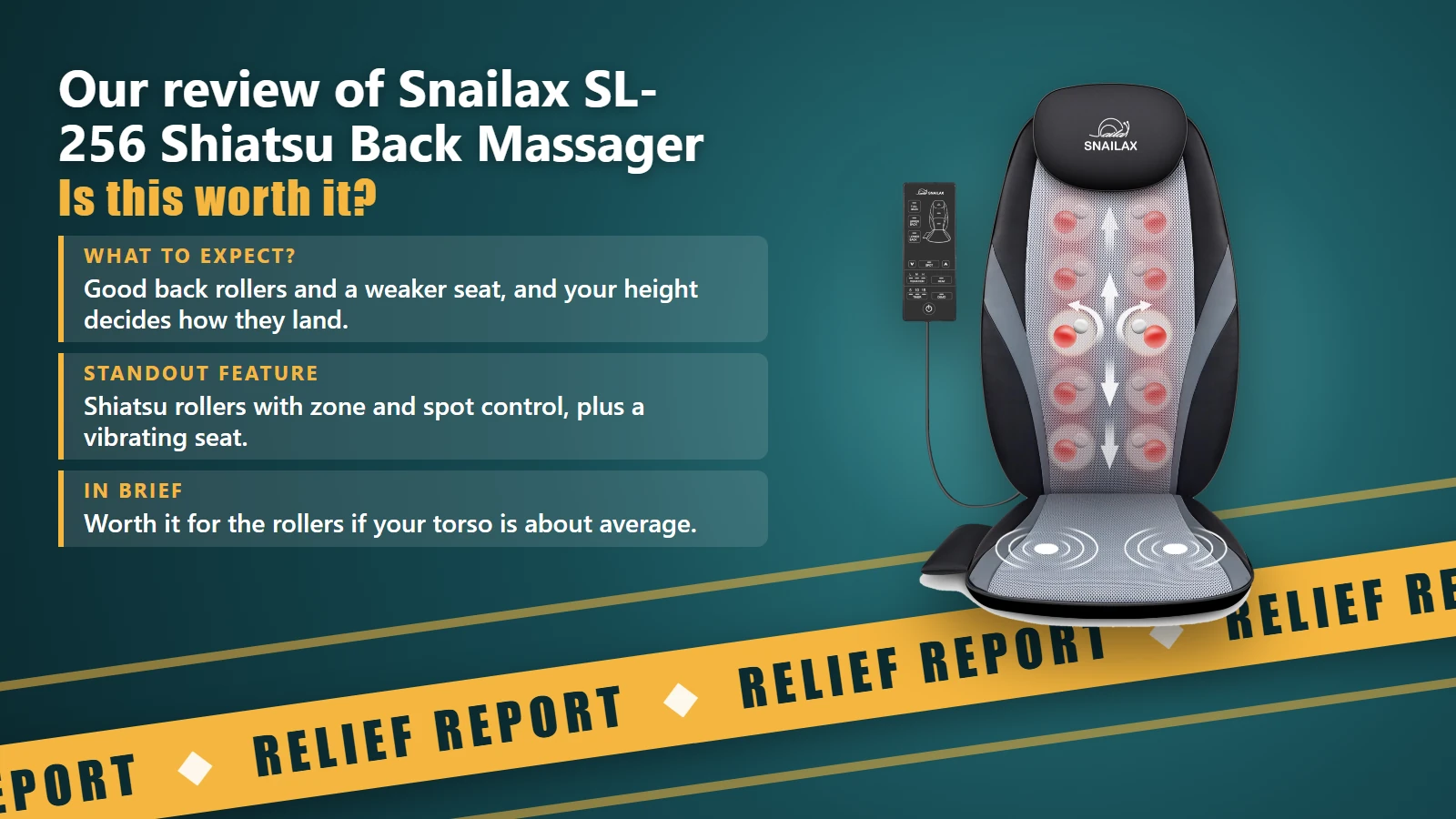
The Snailax SL-256 shiatsu back pad at $129.99 is a good example, and our full write-up on the SL-256 covers four clients who tried it. Two found the nodes stopped short of the shoulder blades, the base of the spine, or both.
The pad is 26 inches tall, so your torso length decides where the rollers land. A removable intensity flap (a padded cover over the nodes that makes the feel softer when it is on) lets you soften them if they feel too pointy.
One client who is 6 foot 2 called the kneading strong and deep, but the pad was short and the spot buttons seemed to do nothing. Another found that lying on a bed gave more pressure than sitting in a chair.
Members of our Facebook group who used generic shiatsu pads layered three blankets over the nodes and ran sessions of 1 to 4 hours daily. Padding made it tolerable, but that is a long time, and one client who tried hour-long sessions was sore for days.
For the neck, the Zyllion ZMA-36 at $79.95 uses eight nodes in a cordless wrap, and you pull on two loops to push the nodes deeper. What our clients found with the ZMA-36 is firm, quiet pressure and a fit gamble.
A client with a 17.5-inch neck found the nodes too rough, and there is no way to change the spacing. Three of seven buyer reviews said the nodes pinched or hurt, and one client called it one of the most intense massagers they had used.
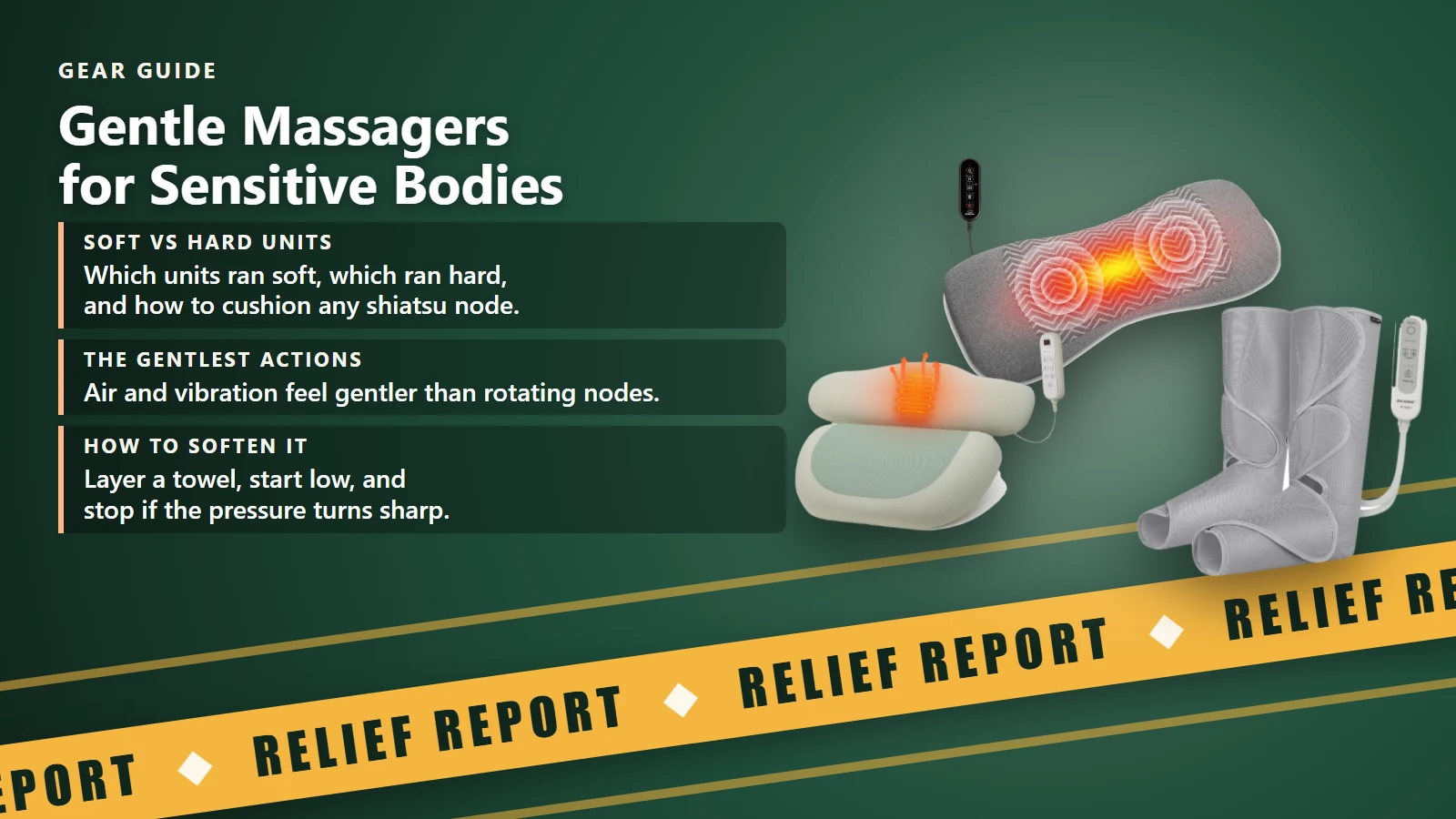
Shiatsu suits people who want firm, consistent kneading and do not mind pointy pressure. If nodes feel too hard on you, our guide to gentle options for sensitive bodies walks through softer alternatives.
Vibration: A Gentle Buzz for Tired Muscles
Vibration will not knead, roll or squeeze. It buzzes, which sounds like a complaint, but people with tender feet or a sensitivity to deep pressure often prefer it to hard rollers.
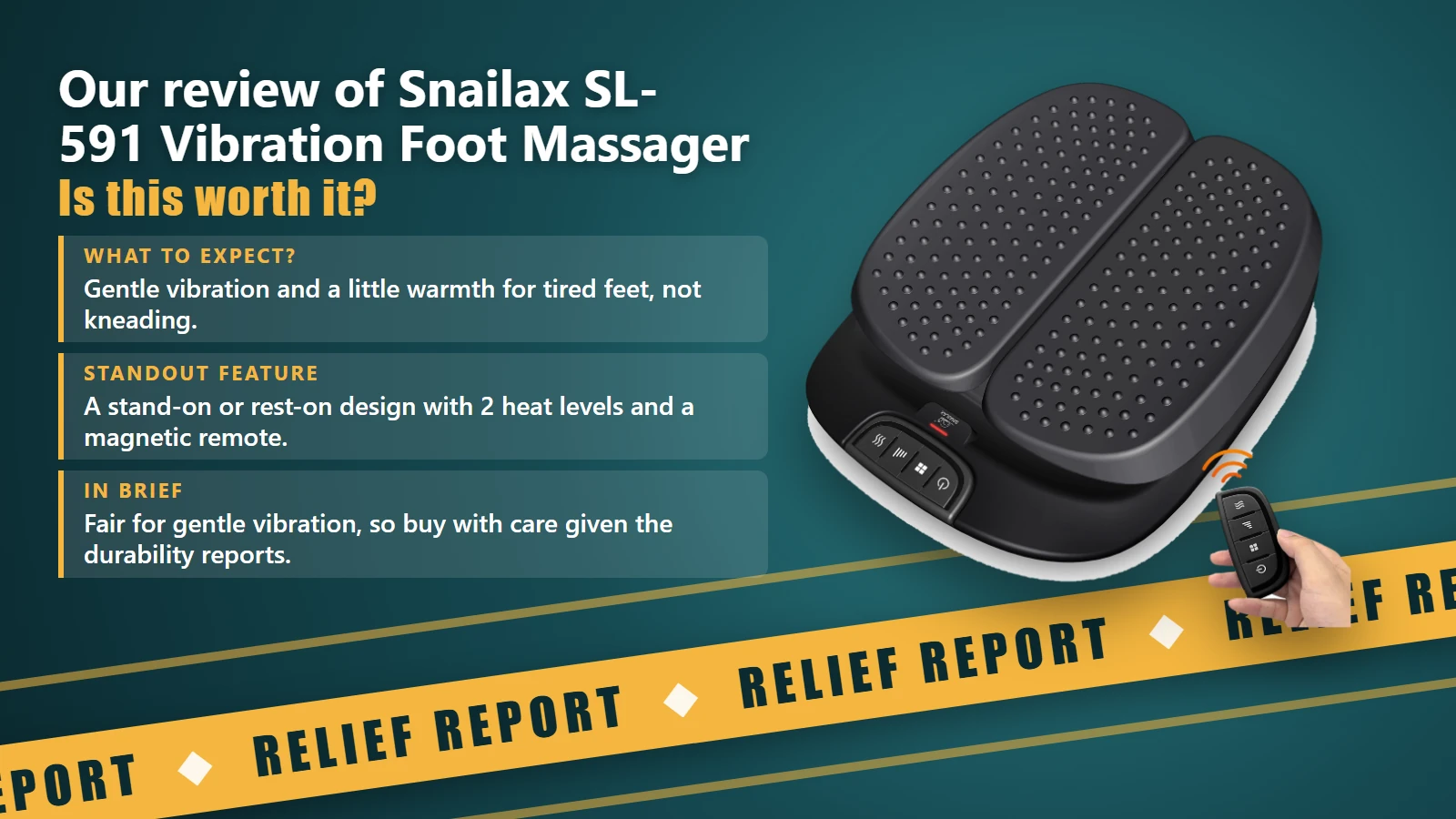
The Snailax SL-591 vibration foot massager at $89.99 is a stand-on board with three vibration modes and three intensity levels. Our review of the SL-591 covers five clients, four of whom gave it 4 or 5 stars for a gentle, even buzz under the feet and calves.
But 10 of 24 buyers called it too weak, and the brand itself says the vibration is mild and not shiatsu. One client found the unit restarts on the highest vibration after the 15-minute timer, so a stronger round than you meant is one press away.
A runner in our Facebook group with recurring plantar fasciitis said less pressure and more vibration helped most, with shoes on, using a premium vibration board rather than a Snailax. That is a comfort story, not a treatment plan, and persistent foot pain deserves a doctor's visit.
At the premium end, the MedMassager Body Massager Plus at $349.00 is a corded oscillating wand (a wide soft pad that moves in a circular, vibrating motion over a large surface, instead of punching in and out). Our write-up on the MedMassager found that clients liked the soft pad over bony areas.
Still, 3 of 22 buyers asked for more power and 3 more called it heavy or awkward. Members said $50 to $80 guns do similar work for casual soreness, so at $349.00 you are paying for build and the broad pad, not depth.
Vibration suits people who want gentle comfort, not muscle work. It can help tired feet feel lighter or take the edge off a long day of sitting, but it will not work out a knot.
Percussion: Depth and Power for Big Muscles
Percussion is the deepest of the four actions. The amplitude (how far the head travels into the muscle on each stroke) decides whether you feel real depth or just a tickle, and group members say true percussion starts at 12 mm.
The Renpho Power+ massage gun at $129 has six heads and six levels. Our review of the Renpho Power+ found that two of four clients stayed on level 1 or rarely went above it, which tells you the lowest setting is enough for many people.
One client's teeth felt sore after using it on the neck and shoulders, so I tell everyone to keep it on the big muscles of the legs and back. The fix people described was softer contact: a folded towel over the leg, a crescent head with nodules, or the flat head.
Members of our Facebook group use guns in short bursts. That means 30 to 60 seconds per tender spot, 1 to 2 minutes on a large muscle, and rarely more than 5 to 10 minutes per session.
For aggressive heads like the bullet or fork, they cap it at 15 seconds per spot. The Power+ 10-minute auto-off sits at the top of that range.
Stall force (how hard you can press before the motor stops) matters more than speed on a gun, because cheap motors stall when you lean into them. Members look for 20 to 35 lbs on compact units and up to 80 or 85 lbs on heavy-duty ones.
The battery is the risk. One client's gun was dead at 6 months of use every 1 to 2 weeks, and a softball player in the user reviews had one quit before a year was up, so keep your order details because one reviewer found the support link led nowhere.
Percussion suits athletes and people with dense muscle who want depth that shiatsu and vibration cannot reach. It does not suit thin skin over bones, recent injuries or bruised areas, and it should stay away from the throat, the front and sides of the neck, joints and bones.
Air Compression: Squeeze, Not Massage
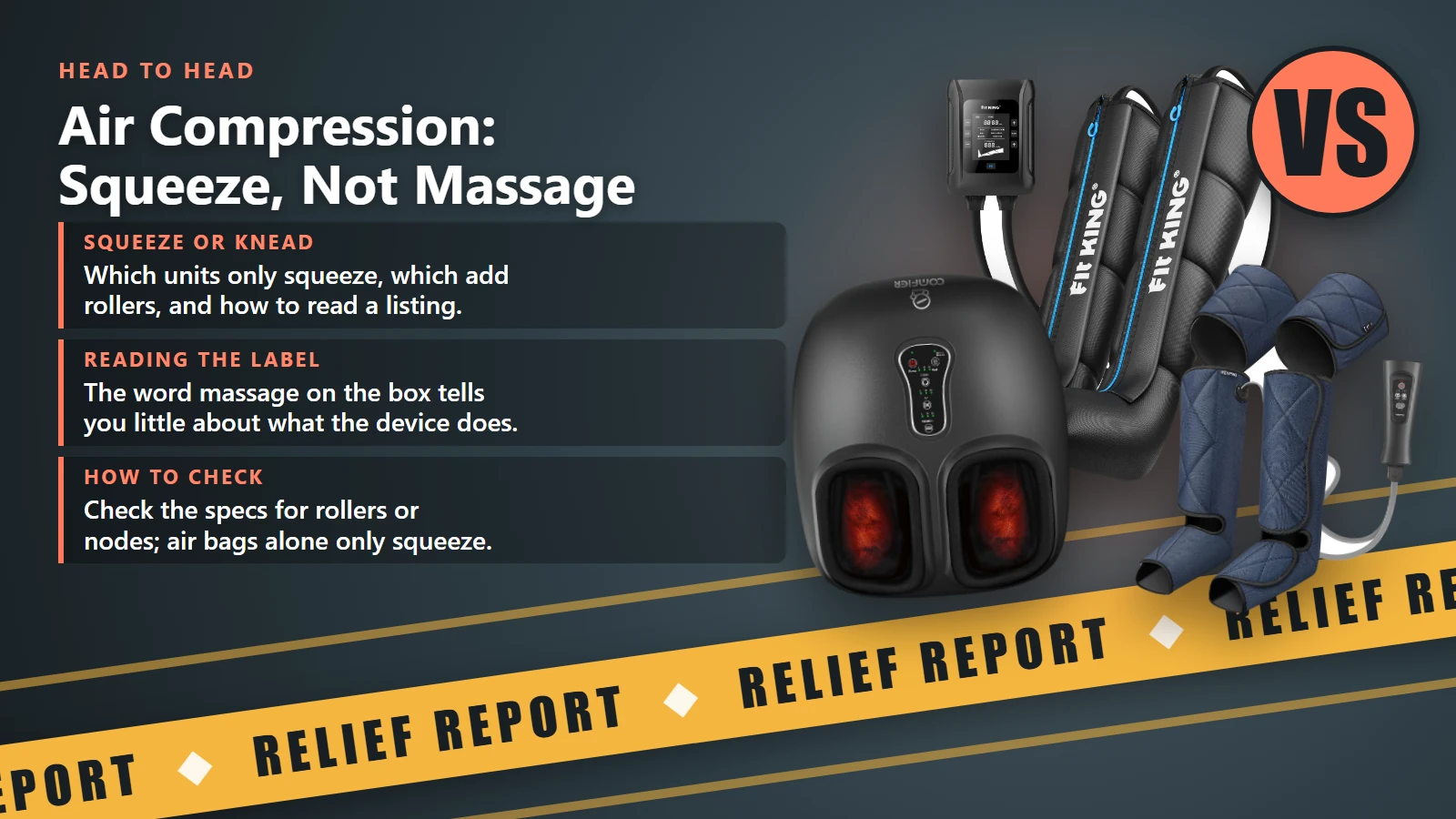
Air compression does not knead. Chambers inflate around a limb and then release, and members of our Facebook group strongly prefer sequential compression (chambers that squeeze one after another, starting at the foot) over boots that inflate everything at once like a balloon.
The Fit King FT-133A cordless leg massager at $149.99 is a pair of zip-on boots with three modes and six pressure levels. Our review of the FT-133A covers six clients, three of whom gave it five stars.
The listing says the boots "knead and simulate a hand massage," but none of my clients noticed either one. Every reviewer who discussed it said it is compression, not kneading, so think of it as an adjustable cuff around the lower leg.
Reviewers described sessions of 15 or 20 minutes, and members advise starting on the lowest pressure level, not the highest. Pressure is measured in mmHg (millimeters of mercury, the same unit used for blood pressure), and members suggest 70 to 120 mmHg for standard sessions.
Set too high, pressure causes pain, nausea, tingling or pinching. Measure your calf and inseam before ordering, because bulk and the zipper's limited adjustment were the fit complaints.
At $149.99, there is no point comparing the FT-133A with the $999 Normatec. The fairer rivals are other cordless boots that also drop the hose and the wall outlet.
If you are not sure compression is what you want, our guide on air compression versus real kneading explains the difference in plain terms. Compression can help tired legs feel lighter after a long day, but it is not a substitute for hands-on work on a tight calf or a sore arch.
Air compression suits people who want passive recovery, travelers who want cordless boots, and anyone whose legs feel heavy. If you have swelling that concerns you, ask your doctor before using compression boots.
Matching the Type to Your Body and Tolerance
Buying for the action you think you want, instead of the one your body tolerates, is the mistake I see most. Here is how I break it down for clients.
If you like firm, hands-on pressure and your body fits the device, shiatsu is your starting point. The trade-off is that nodes can feel pointy on bony areas, and fit decides everything.
A pad too short for your torso or a collar too narrow for your neck will pinch instead of soothe. Two of four clients on the SL-256 found the nodes missed key spots, and the client with the 17.5-inch neck found the ZMA-36 spacing too aggressive.
If you want gentle comfort and no deep pressure, vibration is the safer pick. One client who wanted a Swedish-style evening massage found medium vibration on the SL-591 worked well on feet and calves.
Four of five clients gave it 4 or 5 stars, but 10 of 24 buyers called it too weak, so your expectations decide whether you are happy.
If you want depth that reaches thick muscle, percussion is the tool. Start on the lowest level with a flat or air head, as two of our clients did, and add speed only if the muscle asks for it.
Keep sessions short and keep the gun on large muscle groups. A folded towel over the leg softens the impact if even level 1 feels too strong.
If you want passive recovery for your legs, air compression is the answer. Just know that squeezing is all the FT-133A does, and the reviewers who liked it took it as a squeeze, not a massage.
Whatever you choose, shorten the next session if you are sore after the first. If a device pinches or hurts, stop, because no machine is worth bruising over.
Questions People Ask
Is shiatsu or percussion better for back pain?
It depends on what your back wants. Shiatsu kneads along the spine and feels like thumbs working a knot, while percussion punches in and out and reaches deeper into thick muscle. Both are comfort tools, so see a doctor for pain that persists.
Can vibration actually do anything for sore muscles?
Yes, but not what some buyers expect. Vibration gives a gentle buzz that can help tired feet or legs feel lighter after a long day, and four of five clients liked the SL-591 for that. It does not knead or break down knots, and 10 of 24 buyers called it too weak.
Are air compression boots a real massage?
No, and that is not a flaw. Compression boots squeeze and release around your leg, which can help tired legs feel lighter and more relaxed. If you want nodes that press into a tight calf, look at a shiatsu foot and calf massager instead.
How long should I use a massage device each day?
Most devices in our reviews cap sessions at 15 or 20 minutes with a timer. Group members use percussion guns for 5 to 10 minutes total, with 30 to 60 seconds per spot, and one client who tried hour-long shiatsu sessions was sore for days, so start short and see how you feel the next morning.
Bottom Line: What Should You Do Next?
If you already know your pressure preference, pick the type that matches it. Firm and hands-on means shiatsu, gentle and passive means vibration, deep and targeted means percussion, and squeeze and relax means air compression.
If you are not sure, start with the gentlest option in the category that interests you. Every device in our reviews has a lowest setting, and you can always add pressure, but you cannot undo a bruise from starting too hard.
Measure your body before you buy. Torso length decides whether a back pad fits, neck size decides whether a collar pinches, and calf size decides whether boots zip.
Finally, no device replaces hands-on work or medical care. If pain persists, gets worse, or comes with numbness or swelling, see a doctor before you buy anything.