

Key Takeaways
- Ask your doctor first if you have diabetes, neuropathy or reduced feeling in your feet, because you may not notice heat or pressure building.
- One group member ran back-to-back 30- and 40-minute sessions in a single day and could barely bear weight the next morning, so a numb foot has even less warning.
- The same firm machine hurt one person with nerve damage and pleased another who used it daily, which is why the split follows the person and not the product.
- Several units we reviewed ran faint on heat, but one client's heat suddenly rose and left a red welt, so heat on numb feet is never a safe bet.
- Look at your feet after every session for redness, bruising or broken skin, and stop if anything goes numb or tingly.
One of our clients with neuropathy loved a friend's vibration foot pad for four minutes, then used their own for ten. Nerve pain shot through the feet a couple of hours later, the feet were numb for an hour, and the hands and arms felt numb for days.
That is the reason for this page. If your feet are numb or you have diabetes, a foot massager can build up heat or pressure that you do not feel, so this guide covers what to check first, which features help, and how to look at your feet each day.
It is written as comfort-tool safety advice. Nothing here claims to fix diabetes, neuropathy (nerve damage that dulls feeling in the feet) or any other condition, and your own doctor comes first.
Why do numb feet change the rules?
With normal feeling, your feet warn you. Heat gets uncomfortable, pressure starts to hurt, and you stop.
With reduced feeling, those warnings can go quiet, and heat or rollers can do damage before you notice. A diabetic member with severe numbness described burns from a foot soaker whose bubble circulation stopped while the heater stayed on, and they could not feel the temperature spike.
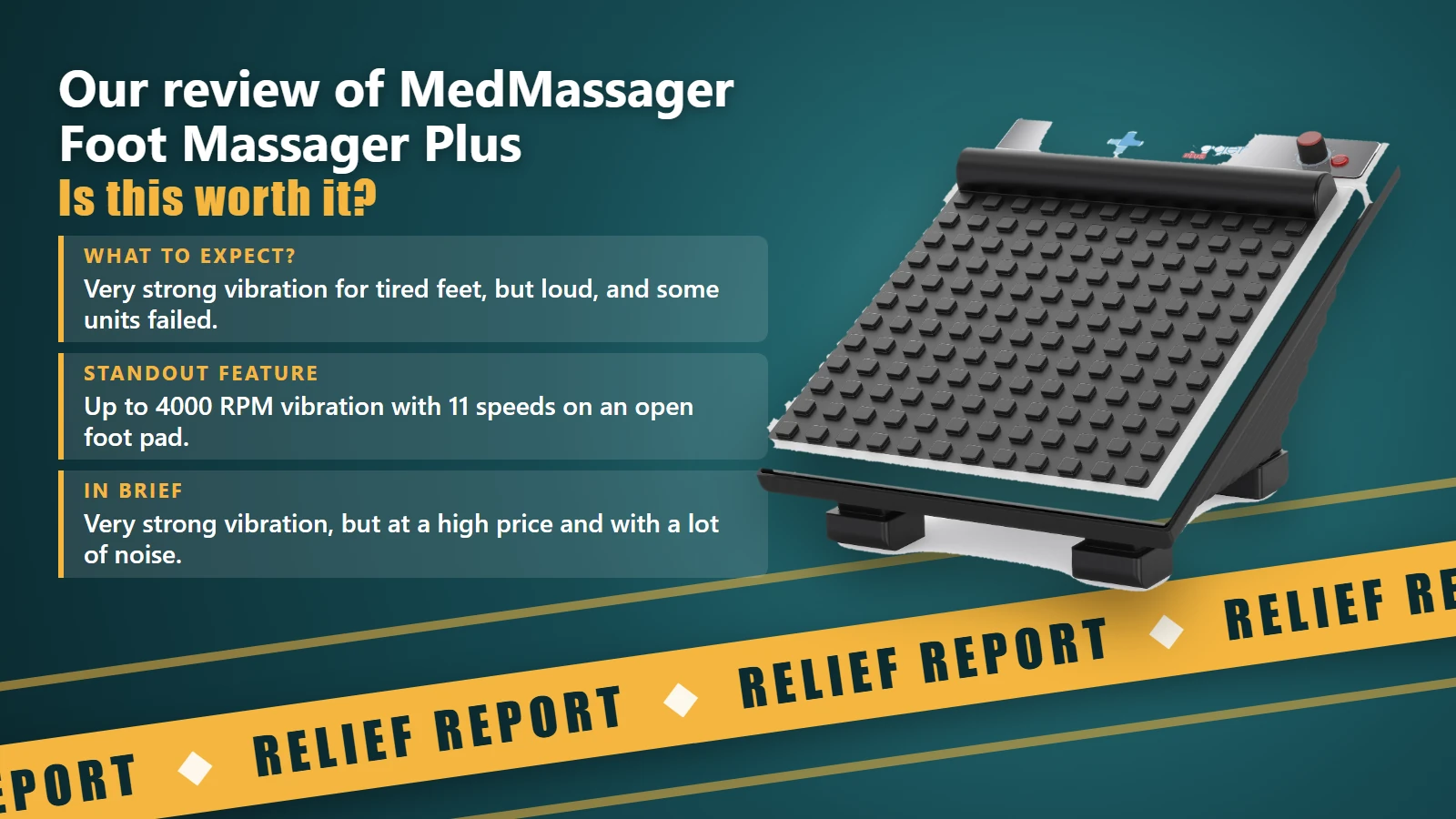
Foot massagers have their own version of that story. On the $369.00 MedMassager MMF07, the client with neuropathy returned it after the nerve pain and numbness above.
Results with nerve problems went both ways. Of the people with neuropathy we read, one found the newest model too strong, one said vibration only masks the pain, and our client was numb for an hour.
A client with Raynaud's (fingers and toes that turn cold and pale) found the feet just as cold after a vibration pad and ended up happier with a heated shiatsu machine (one that presses and kneads with rolling nodes). Two clients with Raynaud's had opposite results, so ask your doctor before using any of these for a nerve or circulation problem.
Why talk to your doctor first?
Because the listings often do not say enough. The MedMassager listing states no precautions, and the Renpho 4-in-1 listing does not either, so ask your doctor first if you have a pacemaker, a history of blood clots, are pregnant, or have had recent surgery.
Some listings are blunter. The $99.99 Bob and Brad Lite says not to use it with diabetes, a history of blood clots or other circulatory disorders.
Calf compression adds a question of its own. Ask your doctor about it if you have a history of blood clots, heart problems or swollen legs.
Blood sugar matters too. Professional massage therapists and diabetic members note that vigorous massage and increased circulation can lower blood glucose by 20 to 40 mg/dl, and up to 100 in some cases, so monitor your levels and keep fast-acting carbs nearby.
Members also mention cautions about deep pressure around the Achilles tendon, inner ankles and certain reflexology points during pregnancy. They add that gentle home rubs are widely considered fine.
Heat: what is the main risk?
Heat is the risk you cannot feel. The Bob and Brad Lite lists 122°F on low and 154°F on high, and its listing warns about burns from long use at high heat, so keep sessions short.
On the Renpho 4-in-1, one client said the heat suddenly rose and left a red welt through clothing. Another reviewer said the heat was faint at first, which shows how widely units vary.
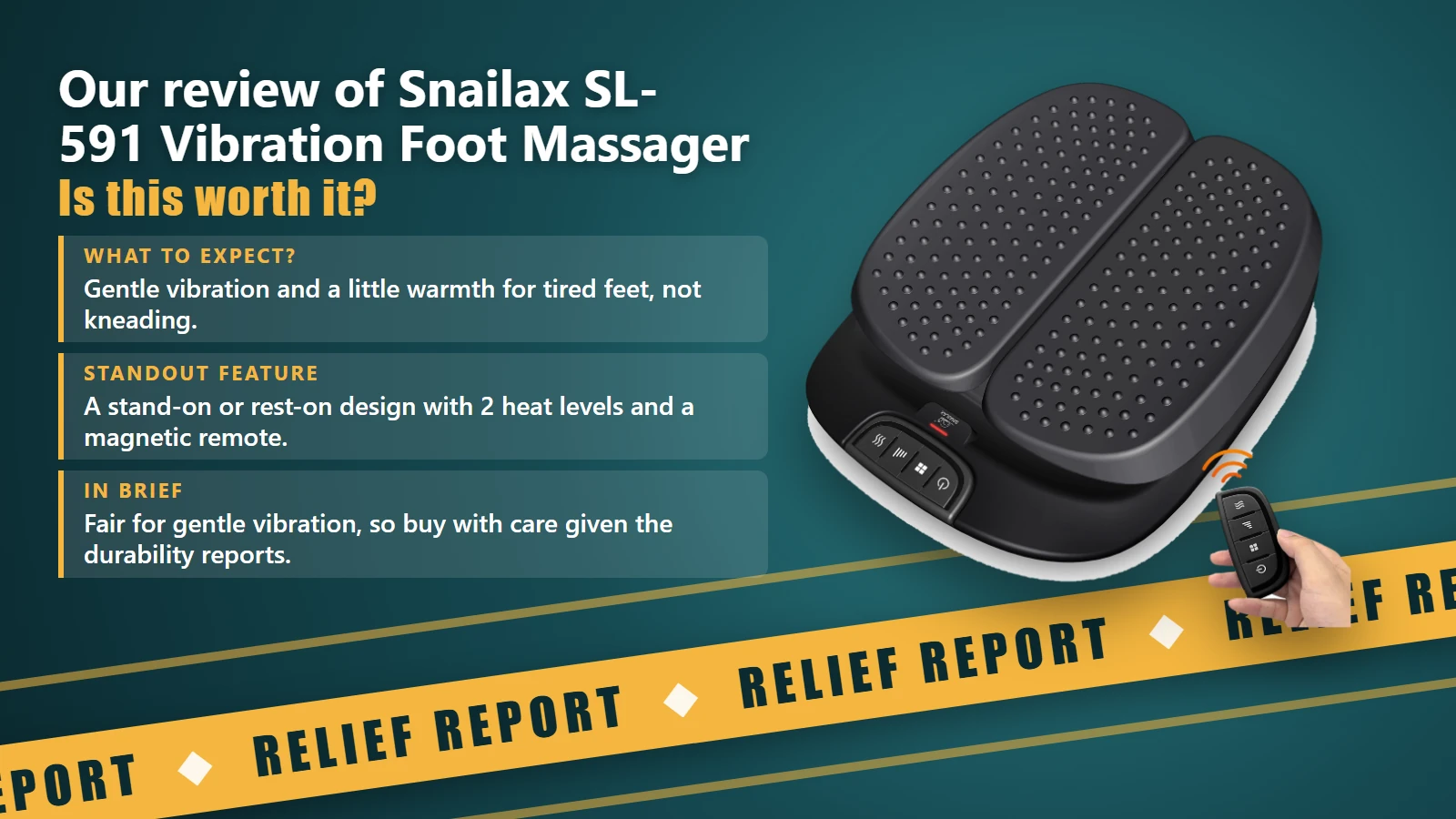
Most foot units ran faint or slow instead. The Snailax SL-591 was called lukewarm by 2 reviewers and 3 buyers, and a diabetic client got no heat at all from the Renpho R-D003R, which is a defect and not a safety feature.
Heat can also fail to start. On the Bob and Brad Lite, one client's heat did not come on even after a 30-minute wait, then worked when the husband tried it, so test any unit with your hand before a numb foot goes near it.
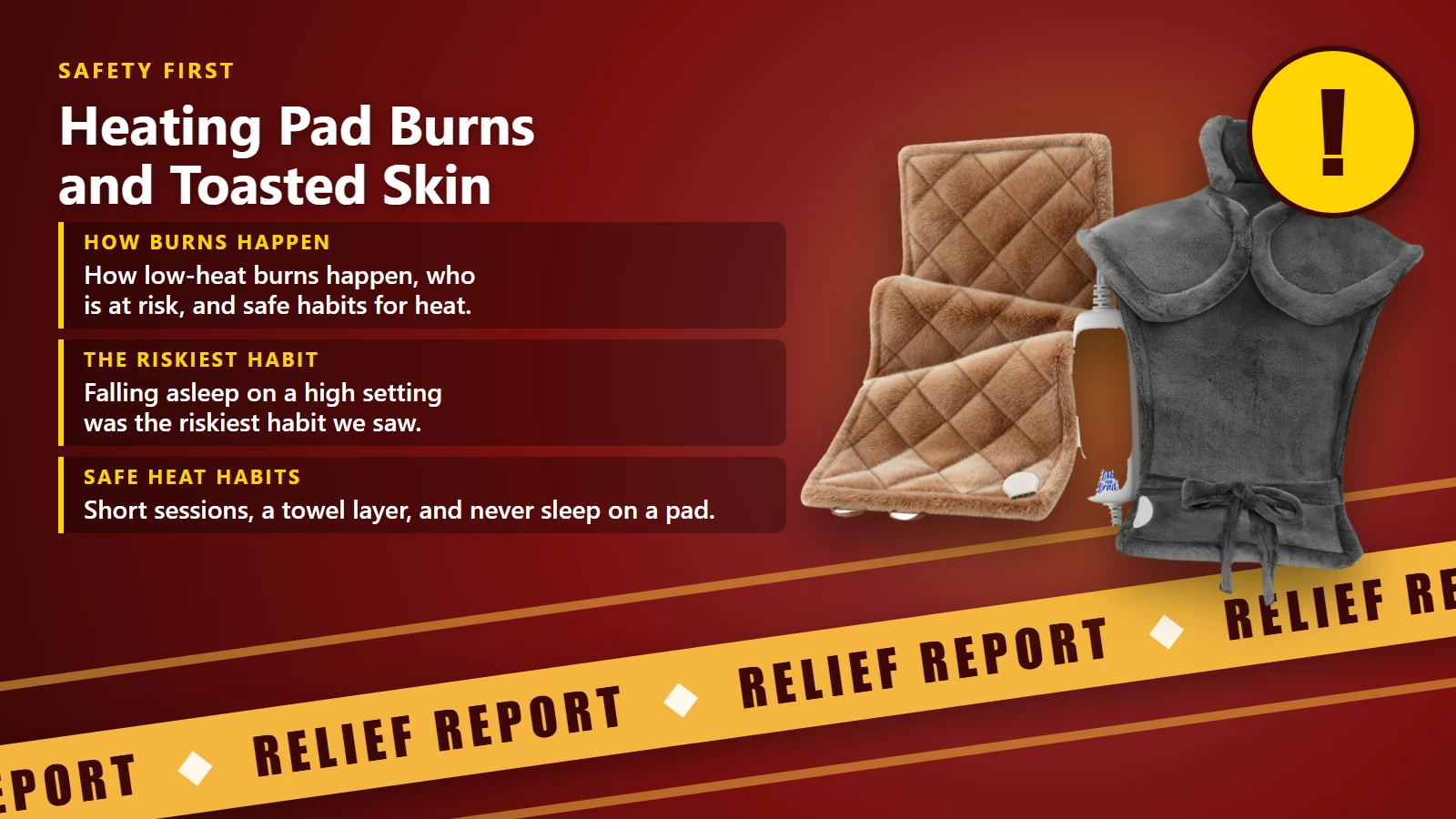
For longer reading on keeping skin safe from heat, see our guide on heating pad burns and toasted skin, which applies here too.
Pressure and bruising: what goes wrong?
Hard rollers can bruise feet that cannot report pain. A buyer's arches were bruised for days, along with the buyer's daughter, and members warn never to use aggressive massagers directly on bones, joints or acutely inflamed ligaments.
Members suggest keeping deep pressure under 30 to 60 minutes. Overusing a massager, such as back-to-back 30- and 40-minute sessions in one day, can irritate the foot so much that bearing weight the next day is hard.
Timers matter more with numb feet. The MedMassager lists no timer, so you watch the clock yourself, while the SL-591, the Bob and Brad Lite and the ZMA-31 all stop at 15 minutes.
A sensible first week is to keep every setting on low and inside the timer, and move higher only when your feet feel better the next day, not worse. With numb feet, that next-day check should include a look at the skin, because you may not feel the difference.
Older family members tend to notice the pressure first. In one client's family an 85-year-old found even the lowest setting on the Renpho R-D003R too strong, and on the R-WMF06 a 78-year-old mother lasted about a minute.
Two units show how strong pressure can feel. On the Zyllion ZMA-31, a client with sciatica and neuropathy said plugged in it felt like nails, and now uses it unplugged as a footrest, while another reviewer with nerve damage in both feet used it daily and liked the heat.
The Renpho 4-in-1's kneading hurt one client's feet and calves even on the lowest level, and another reviewer reported a darkened toe. Those split results are exactly why a clinician should weigh in before you try one.
Which features make a unit safer?
No machine makes numb feet safe, but some features help. Here is the checklist, with units we reviewed.
| Feature | Why it matters with numb feet | Units we reviewed with it |
|---|---|---|
| Heat you can switch off or keep low | You cannot feel heat building | Zyllion ZMA-31 (on or off), Snailax SL-591 (2 levels) |
| Short auto shut-off with overheat protection | Limits long sessions | SL-591 and ZMA-31 (15 minutes) |
| Open platform instead of a pocket | You can lift your feet off at once | MedMassager MMF07, SL-591, ZMA-31 (open toe) |
| Gentle vibration, no kneading rollers | Rollers can bruise unnoticed | Snailax SL-591 |
| Settings that reset to low | Even the lowest level can be too strong | Renpho 4-in-1 (resets to low; lowest still sharp for one) |
| Listing that states precautions | Some state none at all | Bob and Brad Lite states them; MedMassager does not |
The honest read is that the gentlest options were also the least powerful. The SL-591 gives an even buzz but no kneading, and one client said it restarts at the highest vibration after its 15-minute cut-off, so check the level each time.
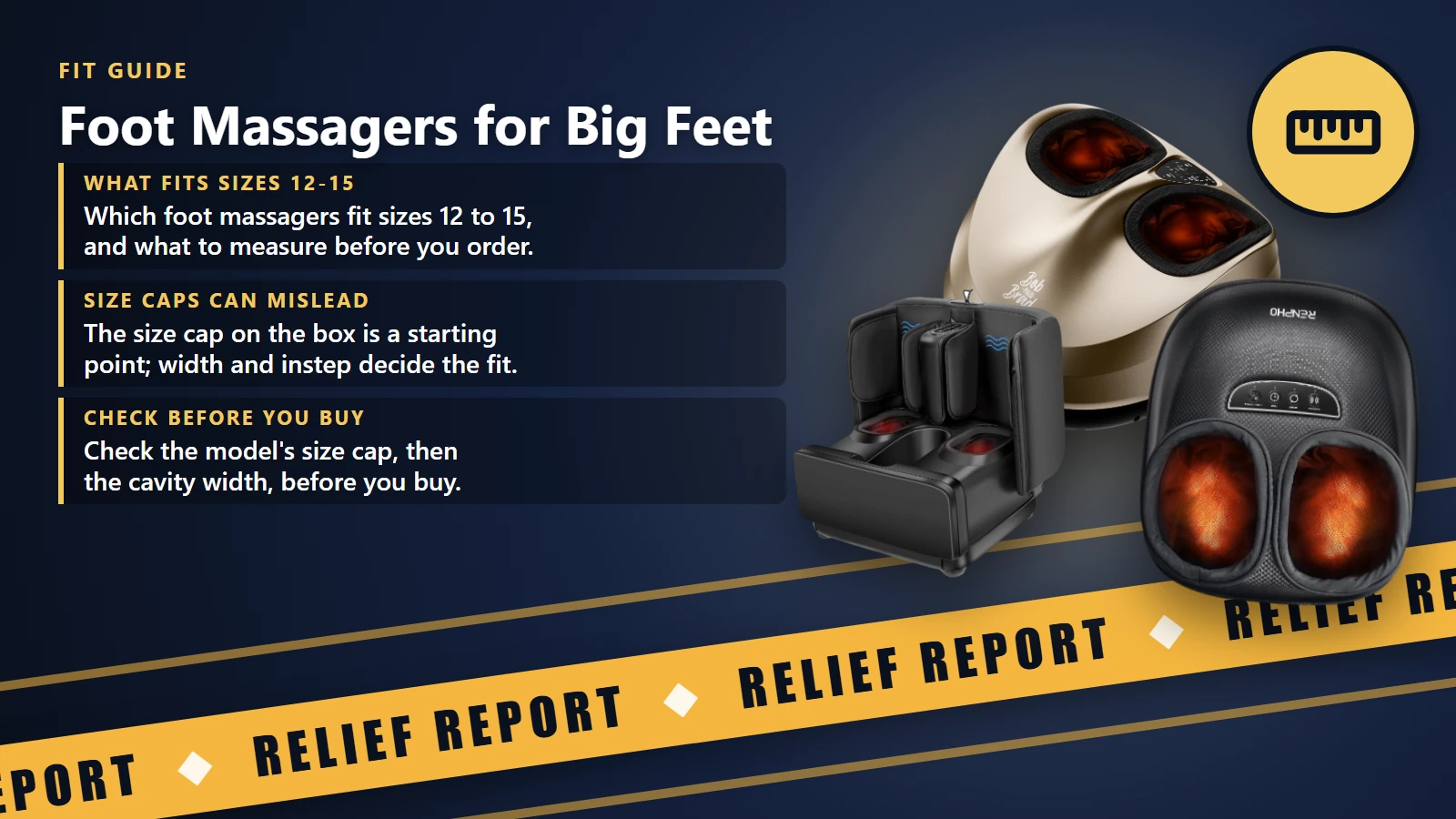
If foot size is part of your shopping, our guide to foot massagers for big feet covers fit. If the person using the machine is an older adult, simple controls and gentler pressure matter more, and our guide to massagers for older adults covers that.
What can a foot massager realistically do?
Members and massage professionals in our group are clear about this. A foot massager gives temporary relief, a pleasant distraction and a short-term lift in blood flow, but it does not break down scar tissue or permanently fix a chronic problem.
Many members said foot pain often traces back to tight calf muscles or weak hips and glutes. Supportive shoes, orthotics and calf-strengthening exercises gave them far more lasting relief than a machine alone, and they were skeptical of cheap electrical foot mats advertised online.
Our own client stories fit that. One client's swollen, tingly feet felt better for a while after a full cycle on the Renpho R-WMF06, which we read as a short-term comfort report, not a result to count on.
One client whose podiatrist suggested a foot massager gave the SL-591 five stars and called it terrific, though the heat was only so-so. That conversation with a foot doctor is the one we would want you to have before you buy.
Anyone with nerve symptoms should ask their doctor first, and use a massager next to good shoes and stretching, not instead of them. New, painful or one-sided swelling needs a doctor, not a machine.
How do you do a daily foot check?
Doctors recommend checking feet daily for bruising, redness or skin breakdown, whether or not you used a massager. Here is a simple routine.
- Look at the tops, soles, heels and between the toes, in good light or with a mirror.
- Check for redness, bruising, color changes or broken skin.
- Check again after every massager session, not just once a day.
- Stop right away if anything goes numb or tingly.
- Never use a massager on open wounds, and tell your doctor if a mark stays.
Questions People Ask
Can I use a foot massager if I have diabetes?
Ask your doctor first. One listing says not to use it with diabetes, and with reduced feeling you may not notice heat or pressure building. Vigorous massage can also lower blood sugar, so keep fast-acting carbs nearby.
Is a heat setting safe with numb feet?
Keep it low or off, and keep sessions short. Heat can build without any pain, and the units we reviewed varied from no heat at all to hot enough to leave a welt.
How long should a session be?
Keep it short. Members suggest keeping deep pressure under 30 to 60 minutes, most timers we saw stopped at 15 minutes, and back-to-back cycles caused soreness the next day.
Do foot massagers help neuropathy?
Results were mixed. One person found vibration only masked the pain, another was numb for an hour, and some liked the heat, so read these as personal comfort stories and ask your doctor.
So what should you check first?
Talk to your doctor, choose short sessions, low or no heat and gentle pressure, and look at your feet every day. If something goes numb, tingly or marked, stop.
And if the listing states no precautions, read the manual and ask anyway.