

Key Takeaways
- Members who woke with burn blisters had one thing in common: they fell asleep on a plug-in pad set to a high level.
- A towel or thin shirt between you and the pad, and 15 to 30 minutes per session, is the starting point that most of our members use.
- One massage mat's listing says its shut-off keeps you safe during sleep, yet one client felt the seat section burn within about five minutes.
- Numb skin, diabetes-related nerve changes and a fresh injury are the three situations where heat is the wrong choice.
- A short timer is a feature, not a flaw: it is the one thing standing between a dozing user and a long burn.
One member of our Facebook group fell asleep on a plug-in pad set to maximum and woke up with second-degree and third-degree burn blisters. The member's skin was numb and sore from a back injury, and numb skin can hide a burn.
Heat feels harmless, and that is exactly why burns happen. This guide explains how heating pads burn people, what toasted skin is, who is at higher risk, how to use heat safely, why overnight use is the one habit we would skip, and what an auto shut-off does and does not do.
How do heating pads burn people?
Most heating pad burns are slow, low-heat burns. A pad that feels pleasant for ten minutes can still injure skin that sits against it for hours, and members report first-, second- and third-degree burns, some needing a burn clinic and wound clean-up.
The common causes in our group were falling asleep on high heat and strapping a pad tightly against bare skin. Some members describe burn blisters and scars that lasted months.
Hot spots are the other cause. One client found the seat section of a massage mat burned after about five minutes, and a reviewer blistered the first time they used a red light mat, so check your skin early in the first session.
Two clients told us they now choose lower top temperatures on purpose. One valued a pad's lower top setting after a burn from another pad, and another preferred a pad that was less hot than their last one after past skin marking.
What is toasted skin?
Toasted skin syndrome (a net-like brown or red marking that builds up after long, repeated heat on the same spot, also called erythema ab igne) is a different problem from a burn. It comes from daily heat over weeks and months, not from one bad session.
Members describe mottled red, brown or purple patches on the stomach, lower back and thighs that can last months or years and sometimes become permanent. The marks carry long-term skin health risks, so they are worth a doctor's attention.
What members do about it is simple: they layer a towel or thin shirt, and they avoid high heat for many hours a day. Some members run pads anywhere from 2 up to 12 hours daily, which we do not recommend without medical guidance, and the ones who do usually watch their skin for marks.
Who is at higher risk?
Four groups need extra care, and the first is the most important.
- Diabetes, neuropathy or reduced feeling. Neuropathy (nerve damage that dulls feeling) means a burn can happen without any pain, so keep the heat low or skip it, and ask a doctor first.
- Anyone who might fall asleep. This is the biggest single risk we saw in our group.
- Children, older adults and anyone who cannot sense heat. They may not feel a pad getting too hot, or tell you, and one listing says outright that its pad is not for infants or anyone who cannot sense heat.
- Fresh injuries. Skip heat on fresh swelling or a new injury for the first 48 to 72 hours, and use ice instead.
Members add two more groups. People with inflamed, hot joints during a flare may find heat makes throbbing pain worse, and people with burning nerve pain may find heat aggravates it.
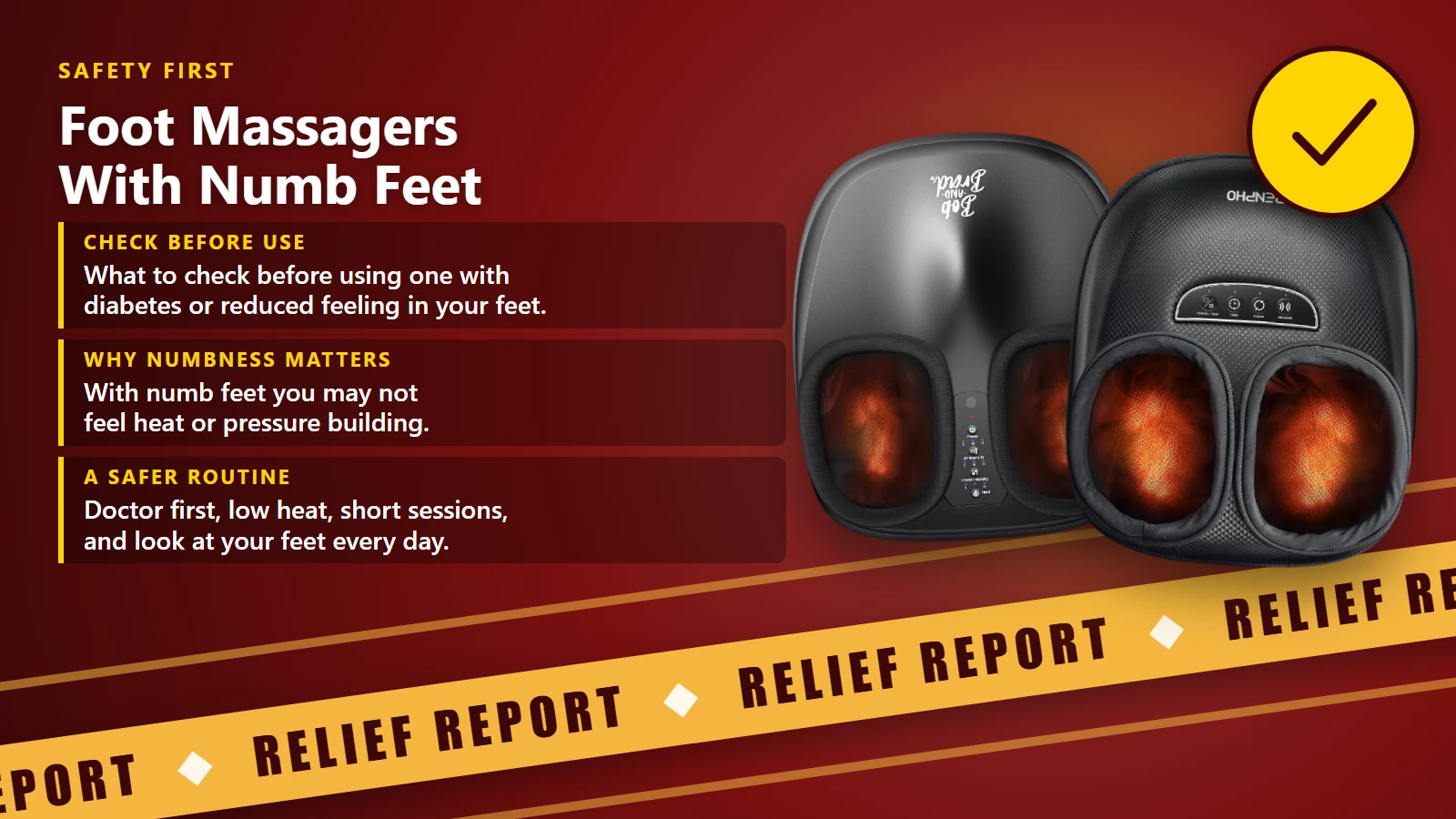
If numb feet are your worry, read our guide to foot massagers with diabetes or numb feet, which covers the same logic for foot heat.
What are the heat safety rules at a glance?
This table pulls the safety points from our reviews into one place.
| Situation | Risk | Safer habit |
|---|---|---|
| Falling asleep on a pad | Burns and blisters, some severe | Never sleep on it; follow the listing |
| High heat on bare skin | Hot spots and burns | Put a towel or thin shirt between |
| Many hours a day on one spot | Toasted skin markings | Avoid high heat for long hours |
| Diabetes, neuropathy, numb skin | Burn with no pain | Keep heat low or skip; ask a doctor |
| New injury or fresh swelling | Heat may worsen swelling | Use ice for the first 48 to 72 hours |
| Folded or crushed pad and cord | Fraying, sparks, fire risk | Do not sit on or fold; plug into the wall |
| Infants or anyone who cannot sense heat | Burns they cannot feel | Not for them, per one listing |
| Hot spot at the seat of a mat | Seat burned in about five minutes | Cover skin; do not lie on the hot spot |
If you only keep two rules, make them layer the skin and never sleep on it. The rest follow from those.
What are the safe habits, including overnight?
Start with 15 to 30 minutes, the range many of our members use for general tightness, and build up only if your skin shows no redness or marks. Put a thin towel between the pad and your skin if you run the higher levels for a while.
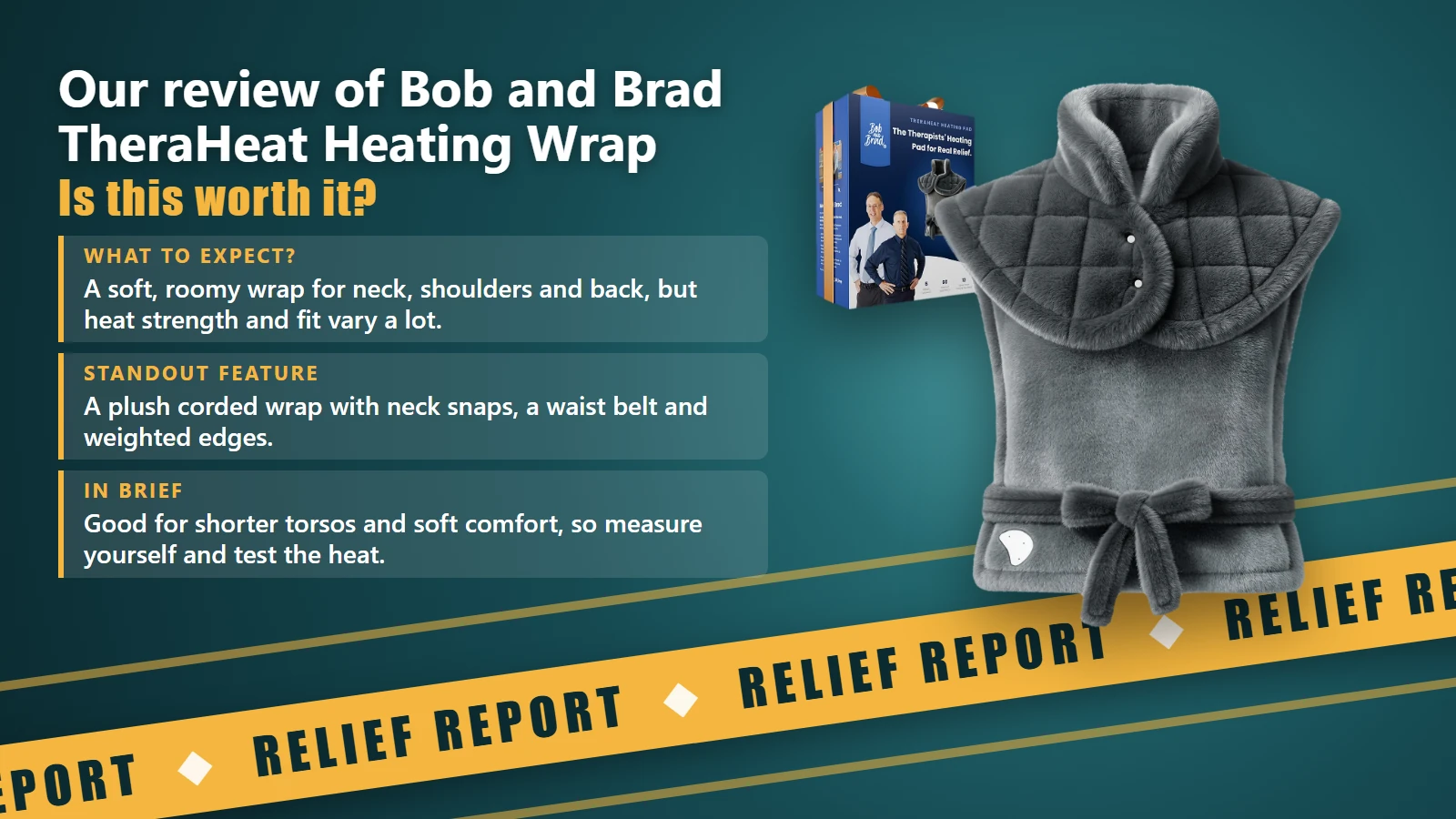
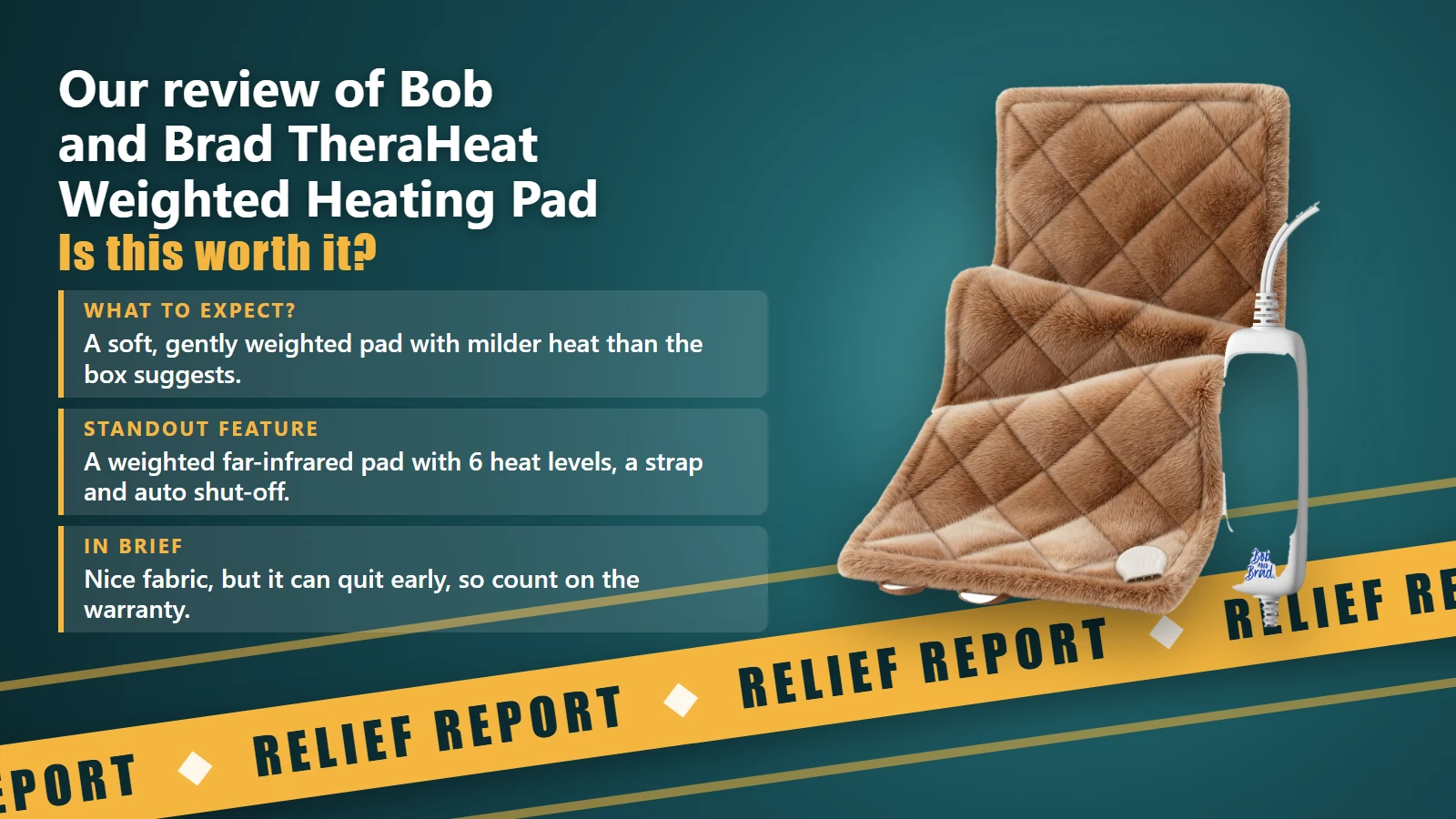
On the $49.98 TheraHeat weighted pad, the 6 levels run up to 150°F. Two reviewers wrote that they fall asleep with it on, but the listing tells you not to, and members who dozed on other pads at maximum heat woke with burn blisters.
Use the pad over clothing, not on bare skin, as the Renpho R-HAP61 listing says. It also says the pad is not for infants or anyone who cannot sense heat.
The same rules appear for the Bob and Brad SW-H1022D: keep it away from water, avoid broken or irritated skin, and keep it off the face. One reviewer placed it on their shoulders and went to bed with it, and the listing says not to sleep with it on, so we would not copy that, however well it turned out.
So what about overnight? The honest answer is that sleeping on a heating pad was the most dangerous habit we heard about.
If you want a warm bed, many members run a pad for 20 to 30 minutes before sleep to relax muscles and warm the sheets. We would switch it off and unplug it before you drift off.
Members also use heat in the morning against stiffness and at a desk. Some use it first to loosen tight tissue before stretching or foam rolling, and some alternate 20 minutes of ice with 20 minutes of heat.
Protect the wiring as well. Members say wires that are bunched, folded or crushed under body weight can fray, spark or catch bedding on fire, so don't sit on or fold the pad, and plug heavy-draw pads straight into a wall socket or a heavy-duty surge protector.
After a session, look at your skin. If a spot stays marked or sore, stop and ask your clinician.
What does auto shut-off do, and what doesn't it do?
Most pads in our reviews end a session by themselves. The SW-H1022D offers 30, 60 or 90 minutes, the TheraHeat stops at 90 minutes, the Comfier CF-6413 has a 30 or 60 minute timer that defaults to 30, and the R-HAP61 shuts off after 60 minutes if you set nothing.
The shut-off protects you if you doze off, and clients liked it for that. Members add that short cutoffs are a safeguard for anyone who nods off.
It does not make the heat safer while it is on, and a hot spot can burn in the first few minutes, long before any timer ends. Do not work around it by turning the pad back on all night.
The CF-6413 also starts with its vibration on high, which one client called "aggressive and jarring", so press the mode button as soon as you switch it on.
Members with daily pain often want stay-on timers and are annoyed by short ones. That is a real trade-off, and if you need hours of heat, talk to your doctor about it.
One massage mat's listing shows why caution matters. The brand says its overheat protection and auto shut-off keep you safe during sleep, but that is the brand's claim, and a client felt the seat section burn in about five minutes.
When is heat the wrong choice?
Skip heat for a new injury, fresh swelling, a hot or inflamed joint, or burning nerve pain. In those cases members say ice or another approach worked better.
Also skip it on broken or irritated skin, and on numb skin. The Comfytemp red light mat got hot enough that one reviewer's sweating was constant, another's surface was hot to the touch, and one reviewer blistered the first time, so stay awake and check your skin after the first few minutes.
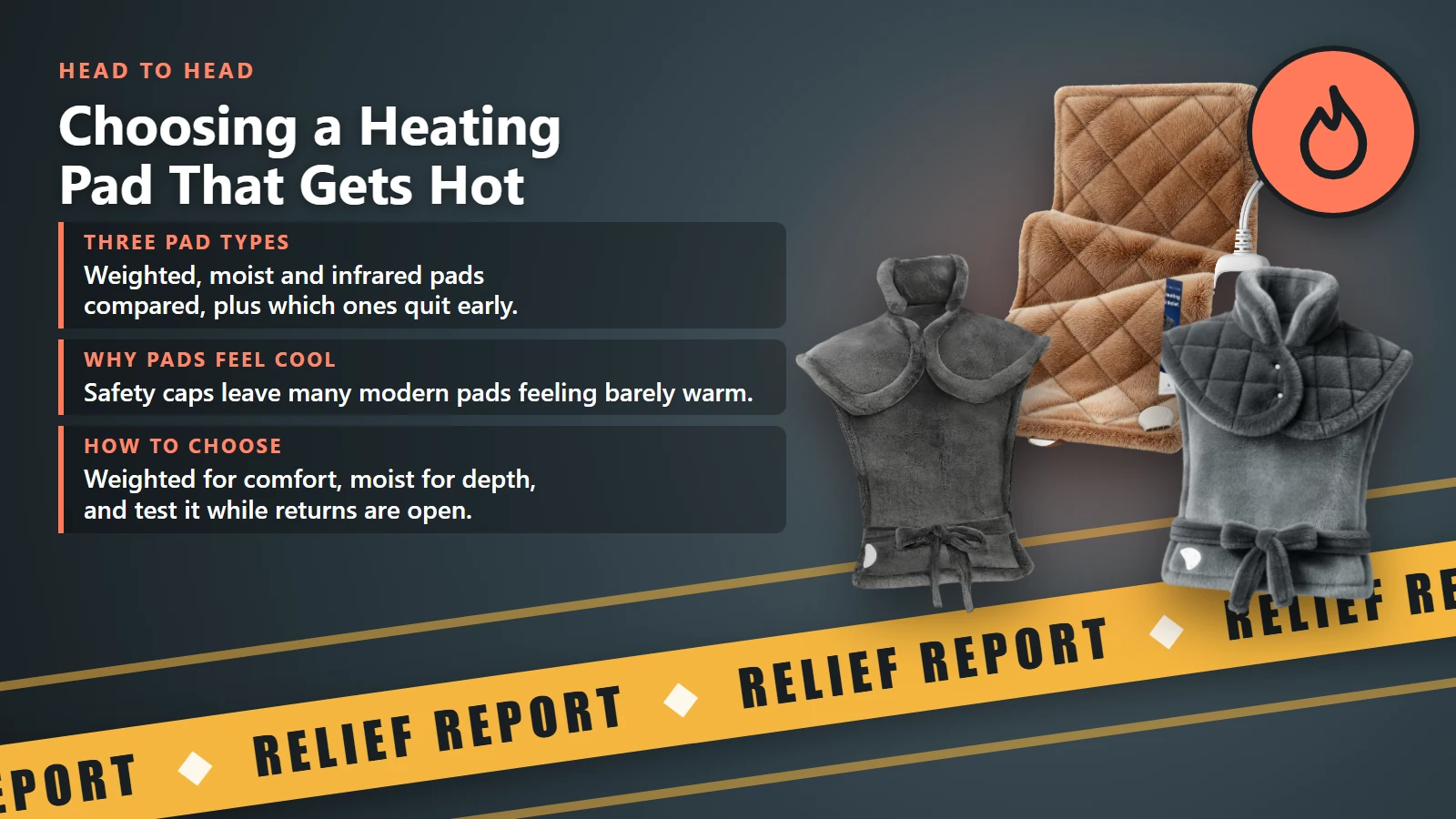
Finally, hotter is not always better. If you are shopping, our guide on choosing a heating pad that actually gets hot explains weighted, moist and infrared styles, and why a pad that gets hot enough is a safer pick than one you keep turning up.
Questions People Ask
Can I sleep with a heating pad on?
No. Every listing we read that mentioned it says not to sleep with the pad on, and members have woken with serious burns after dozing on plug-in pads. If you want warmth in bed, run it before sleep and switch it off.
How long should I use a heating pad?
Start with 15 to 30 minutes, with a towel layer, and extend only if your skin shows no redness or marks. Routine sessions in our group range from 15 to 30 minutes for general tightness, and long daily sessions are where toasted skin shows up.
Is a heating pad safe if I have diabetes?
Ask your doctor first. With diabetes, neuropathy or reduced feeling a burn can happen without pain, so keep the heat low or skip it. The same care applies to children, older adults and anyone who cannot sense heat well.
What is toasted skin?
It is a net-like brown or red marking from long, repeated heat on the same spot. Layer a towel, avoid long hours of high heat, and see a doctor if the marks stay.
So how should you use heat safely?
Use a pad for short sessions, with a towel layer, while awake. Never sleep on one, and skip it if your skin is numb or the injury is new.
If anything stays red, marked or sore afterward, stop using it and ask a clinician.