

Key Takeaways
- Members say 3D or 4D rollers are essential for reaching tight knots, while 2D feels closer to basic rolling.
- No industry standard defines 5D or 6D, and members call both baseless marketing, so pay for track length, body scanning and a calf extension instead.
- Measure the doorway first: the iMaster Pro weighs 214.51 lb, and members say full-body chairs often need at least 30 inches of clearance.
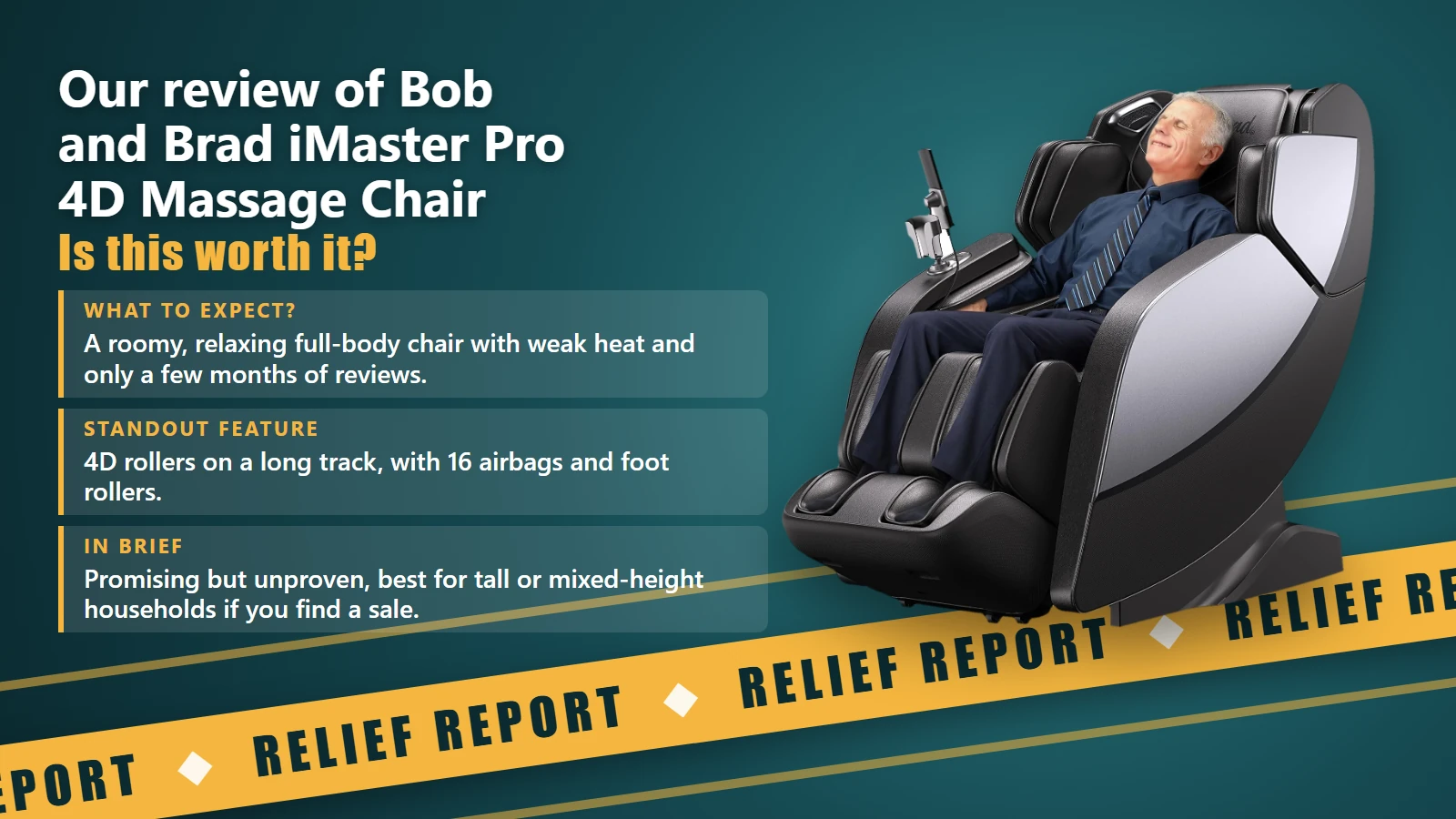
- Heat and warranty were the weak spots on the one full chair we reviewed, with no warmth felt on the highest setting and only a 1-year warranty.
- A chair can help sore muscles feel looser between sessions, but it will not replace a therapist, and sharp pain or numbness is a clinician's call.
Why Roller Dimensions Matter More Than the Price Tag
A 6'2" member of our Facebook group spent months trying warehouse chairs, and shoulders and ankles hung off every model. Then they sat in a chair with a 51.4 inch SL-track (a roller rail shaped like an S and an L, which follows your spine and runs on under the hips and upper thighs), and the body scan found their frame.
They paid about $2,400 on sale and called the 4D massage a decompression zone. That is why the "D" numbers and track types matter more than the sticker price.
This guide explains what 2D, 3D and 4D rollers feel like, which track shape fits which body, and why labels above 4D are mostly noise. It draws on our Bob and Brad iMaster Pro 4D Massage Chair review, our chair pad reviews, and what members report after owning these chairs for months or years.
What Do the D Numbers Actually Mean?
The "D" in 2D, 3D or 4D is a sales shorthand for how the roller heads can move. It is not a measure of dimensions in the geometric sense.
Members who have owned both budget and mid-range chairs say 3D or 4D is essential for penetrating tight knots, while 2D feels closer to basic rolling. This table decodes the features you will see on a spec sheet.
| Feature | What it does | Worth paying for? |
|---|---|---|
| 2D rollers | Move up, down and side to side | Fine for light rolling; weak on stubborn knots |
| 3D rollers | Add in-and-out motion for adjustable depth | Yes; members say it reaches tight knots |
| 4D rollers | Add variable speed and rhythm to 3D depth | A real step up from 2D, per members |
| SL-track, 44 to 55 inches | Rail follows the spine and runs under the hips | Yes; the iMaster Pro's is 51.4 inches |
| Body scanning | Finds shoulder height and frame before you start | Yes, especially if heights differ at home |
| Zero gravity, 160 to 166 degrees | Reclines to spread weight and deepen the rollers | Helpful; skip it if reclining bothers you |
| Airbags and calf extension | Squeeze shoulders, arms and legs; fit long legs | Yes, if airbag strength is adjustable |
| 5D, 6D, speakers, spare presets | Labels and extras around the massage itself | No; members call them marketing and filler |
The pattern in the table is simple. Pay for what changes how the rollers reach your body, and ignore what only changes the brochure.
2D, 3D and 4D Rollers in Plain Words
2D rollers move up and down your spine and side to side at a fixed depth. Members describe 2D as surface-level rolling that can leave tired muscles feeling relaxed but does not dig into a knot between the shoulder blades.
Entry-level chairs like the Culanta Full Body (about $1,000) and the Tlife (about $1,499) use basic 2D or early 3D rollers. Members who have owned them describe rougher rollers, a narrower fit range and shorter lifespans.
3D rollers add an in-and-out motion, so the chair can press deeper or back off. This is what members mean by deep-tissue pressure (firm, focused force that reaches knots below the surface muscle).
4D rollers take 3D and add variable speed and rhythm. Members regard 4D as a real step up from 2D, and one member who debated for ages said the 4D massage on the iMaster Pro is what made them commit.
In our iMaster Pro review, the brand lists 4D rollers on a 51.4 inch SL-track. One buyer loved the foot massage, while another found the 3D foot rollers too tight.
4D does not mean the chair is flawless. One buyer said the hips get no pressure, and our one client felt no heat on the highest setting.
Which Track Type Do You Need: S, L or SL?
The track is the rail the rollers run along, and its length decides how much of your body they can reach. A short track stops at the lower back, while a long one runs under your glutes and thighs.
Members say standard S-tracks and L-tracks cover the upper spine or extend under the seat separately. Modern SL-tracks follow the natural curve of the spine and continue into the glutes and upper hamstrings.
They run 44 to 55 inches, and the iMaster Pro's 51.4 inches sits right in that range. The 6'2" member said the SL-track fit their frame where warehouse chairs did not.
Some premium chairs use dual SL-tracks, which keep rollers closer to body contours for smoother spinal transitions. These appear in the $5,000 to $15,000 tier.
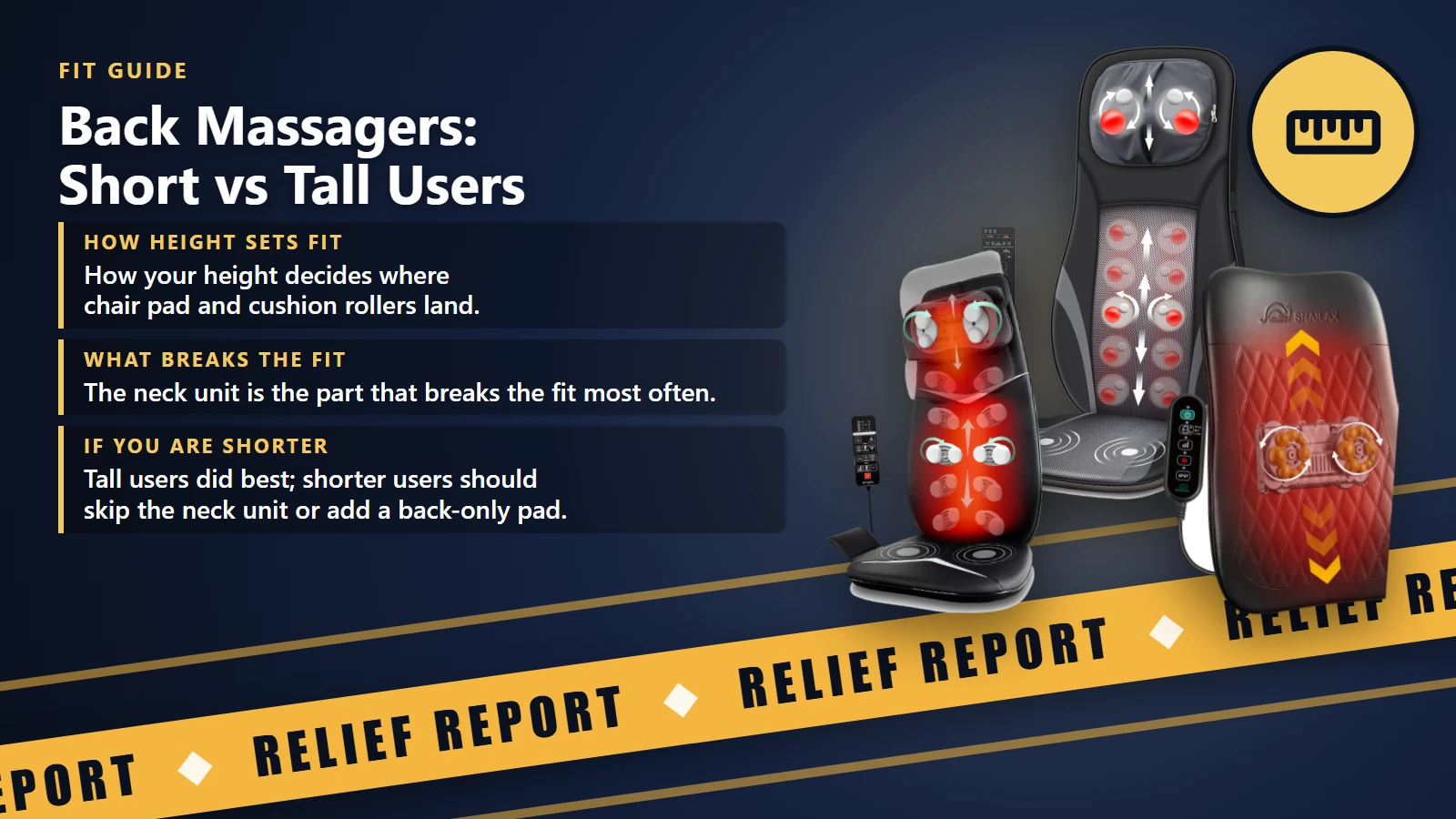
Track length also affects fit, and our guide on how your height decides the fit covers the same logic for pads. A short user on a long track may find the rollers hit the wrong spot, and a tall user on a short track may find the lower back untouched.
Do Body Scanning and Zero Gravity Actually Change the Massage?
Body scanning is the chair's attempt to find your shoulders, spine and legs before the session starts. Without accurate scanning, members report that rollers hit the wrong vertebrae, pinch necks or miss the lower back on petite, short (around 5'4") and tall (6'2" to 6'10") users.
A 5'4" member who is a massage therapist said standard chair rollers hit bony spots on their hips and shoulder blades. Short frames are poorly served by chairs that scan badly or not at all.
The iMaster Pro includes body scanning, and the 6'2" member said it helped the chair find their frame. It is not perfect, but it beats a fixed starting point that assumes everyone is the same height.
Zero gravity (a deep recline of 160 to 166 degrees that spreads your weight across the backrest) takes pressure off the spine. Members report that it deepens roller pressure.
The iMaster Pro reclines to 166 degrees, and a 6'2" client who uses a chair pad at zero gravity on a power recliner likes the reclined position even more than upright.
Full-body "yoga" stretch programs go further. They use airbags (inflatable bags at the shoulders, arms, hips, calves and feet that squeeze in a rhythm) to hold your shoulders and legs while the chair reclines and drops the footrest.
The iMaster Pro has 16 airbags and a 6.3 inch calf extension. Members say to check for independent airbag intensity adjustments, or the shoulder and calf grips may squeeze uncomfortably tight.
Why 5D and 6D Are Just Sales Labels
Members of our Facebook group are blunt about this: 5D and 6D are baseless marketing. No industry standard says what they mean, and they do not describe a new direction of roller movement.
For example, a chair sold as 5D can list at $11,000 to $12,000. A price like that buys build quality and extras, but the label itself tells you nothing about how the rollers press.
Members flag other features as filler too: built-in Bluetooth speakers, fancy lights and dozens of redundant presets. Members called the speakers, meditation tracks and spare presets on the iMaster Pro filler, so pay for the long track, the calf extension and the foot rollers instead.
The same doubt applies to AI voice control (speaking commands to the chair instead of using a remote) and mobile apps. They are convenient if you like them, but members say manual spot and zone controls matter more because they let you park the rollers on a trigger point.
What Should You Test in a Showroom?
If you can sit in a chair before buying, do it. A spec sheet gives you the track length and roller type, but not how the chair feels on your body.
Test the roller depth on your tightest spot. Park the rollers where you carry the most tension and see if the depth reaches it.
Check the body scan on your frame. Let the scan run and note where the rollers start at your neck and where they end at your lower back.
Recline to zero gravity for five minutes. Feel whether the pressure deepens, whether your calves rest comfortably on the extension, and whether the airbags squeeze too tight.
Measure your doorway and your room. The iMaster Pro is 29.33 inches wide upright and stretches to 70.67 inches long reclined, so plan around the reclined length.
One reviewer says it ships reclined and needs less than 5 inches from the wall once upright, and another paid $99 for installation. Full-body chairs weigh 200 to 300-plus pounds, and members say door clearance often needs at least 30 inches.
Check the warranty and parts. Members advise brands with domestic spare parts and in-home labor coverage of 3 to 5 years at minimum, and the iMaster Pro's 1-year warranty is short for the price.
Sit in a 2D chair and a 4D chair back to back. The difference is the clearest way to understand what the D numbers mean.
What About Chair Pads vs Full Chairs?
Not everyone needs a $3,000 chair. If you want help for your neck and back at a desk or in front of the TV, a pad costs far less.
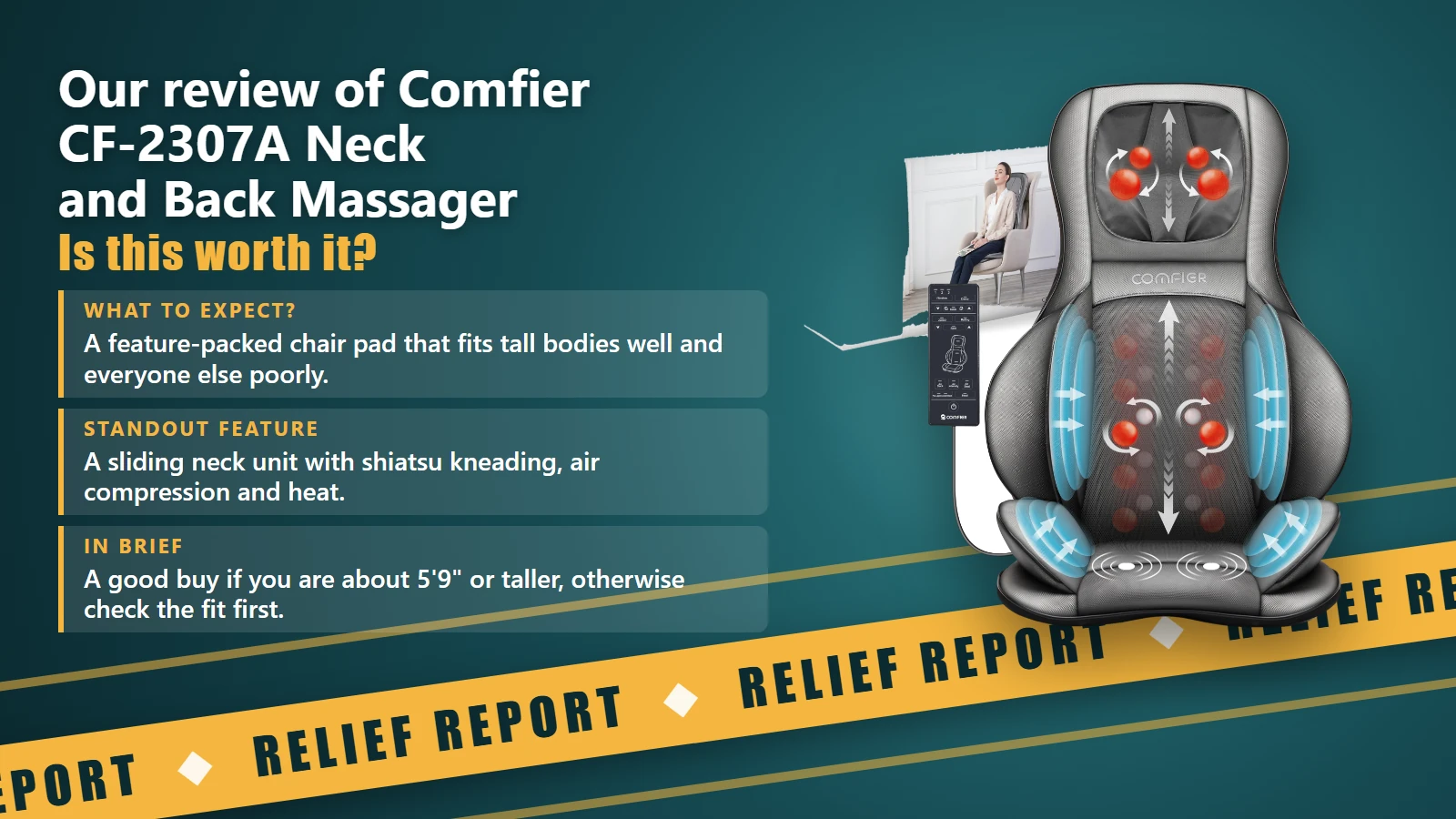
Our Comfier CF-2307A review covers a $223.99 pad with sliding neck nodes, kneading and air squeeze. Our Snailax Shiatsu Chair Pad review covers a $199.99 pad with strong, controllable kneading.
Pads use shiatsu kneading (rotating nodes that press and roll into the muscle, a bit like thumbs), and some add air compression (bags at the waist, hips and seat that inflate and squeeze in a rhythm). They have no tracks or body scanning, so your height decides where the nodes land.
Fit trouble is the biggest complaint. Three of five clients had fit trouble with the Snailax, and about half of four clients had fit or coverage trouble with the Comfier.
Taller clients on recliners mostly loved the pads, while clients at 5'7" and under mostly needed a pillow or sent the pad back. If you stand all day and want foot rollers, or want a full stretch program, a pad will not do it.
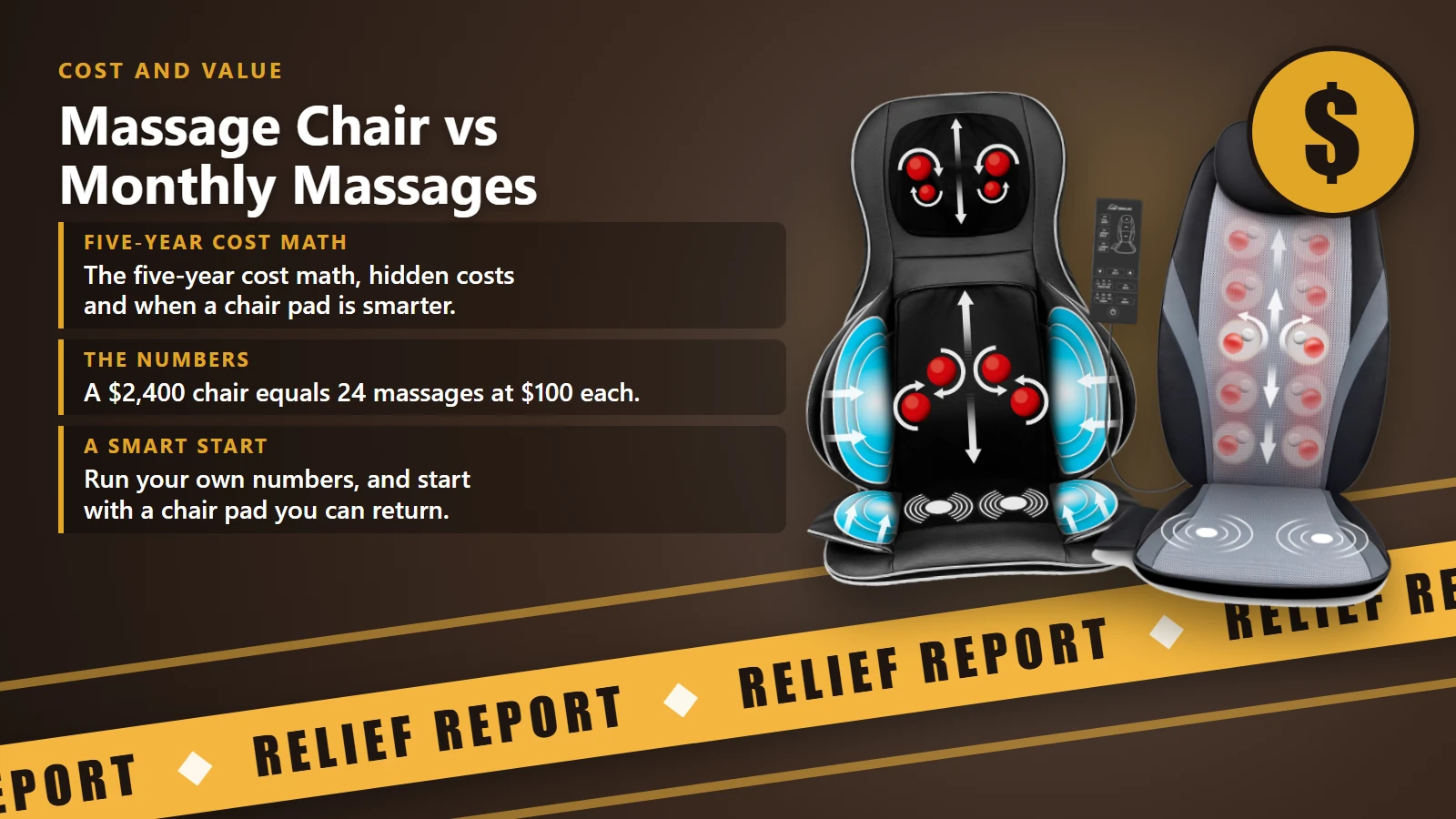
For the money side, our guide on massage chair vs monthly massage costs over five years does the math. A chair only pays off if you use it regularly.
Questions People Ask
Is 4D always better than 3D?
Not always. 4D adds variable speed and rhythm to 3D depth, which members say is a real step up, but a well-built 3D chair with a good track and body scan can beat a poorly built 4D one. Build quality, fit and scanning matter as much as the label.
Do I need zero gravity to get a good massage?
No, but it helps. Reclining 160 to 166 degrees spreads your weight and deepens roller pressure, while upright your body weight drives the rollers. If reclining bothers your breathing or you have a medical condition, check with your doctor first.
How long do massage chairs last?
We have no long-term reports on most current models. Members say faux leather can crack within 2 to 3 years under heavy use, and that premium chairs report lower failure rates, around 1 percent against 2 to 5 percent on standard models, so look for 3 to 5 year warranties and available parts.
Can a massage chair replace my therapist?
No. Members across all price points agree that no chair matches the touch or precise access of a skilled therapist. A chair is a daily maintenance and relaxation tool that can help sore muscles feel looser, and pain from an injury, numbness or a fall is a clinician's call.
Bottom Line: What to Do Next
If you are shopping for a full-body chair, focus on roller depth (3D or 4D), track length (an SL-track of 44 to 55 inches) and body scanning that fits your height. Ignore 5D and 6D labels, skip the speakers, and check the warranty before you check the price.
If you are tall or share the chair with people of different heights, members see the best value in the $2,000 to $5,000 tier. The iMaster Pro at about $2,400 on sale offers a 51.4 inch SL-track, 4D rollers and a 166 degree recline, though the heat is weak and the warranty is short.
If you are not ready for a full chair, start with a pad. Measure your torso and neck first, and plan to use it on a recliner.
Whatever you choose, use it between professional sessions, not instead of them. If you have sharp pain, numbness or a medical condition, talk to your doctor before you buy anything.