

Key Takeaways
- A chair earns back its price only when someone uses it daily, which is easy in a busy household and rare once the newness fades after a few weeks.
- Pay for a long roller track, a calf extension and foot rollers; skip the speakers, meditation tracks and spare presets that members call filler.
- Check the sale price before you accept the list price: two members paid about $2,400 for a chair that lists at $3,299.99.
- Three of our 5 clients had fit trouble with one $199.99 chair pad, so the cheaper middle ground carries its own risk.
- Best for busy households and people who dislike in-person massage, and not so good for anyone expecting a machine to match a therapist's hands.
One member of our Facebook group argues that a $2,000 to $3,000 chair pays for itself within months if you would otherwise book $100-an-hour massages. We checked the math, and it works only for people who really would.
This guide puts a massage chair, monthly massages and a chair pad side by side over five years. It covers what chairs and massages cost, when a chair pays off, the hidden costs, and the middle ground.
Every figure comes from the prices and lifespans members reported and from our own reviews. A chair is a relaxation tool, not a replacement for care from a professional.
What is the quick math?
Take a $100 massage once a month. That is 12 sessions a year, or $1,200 a year, or $6,000 over five years.
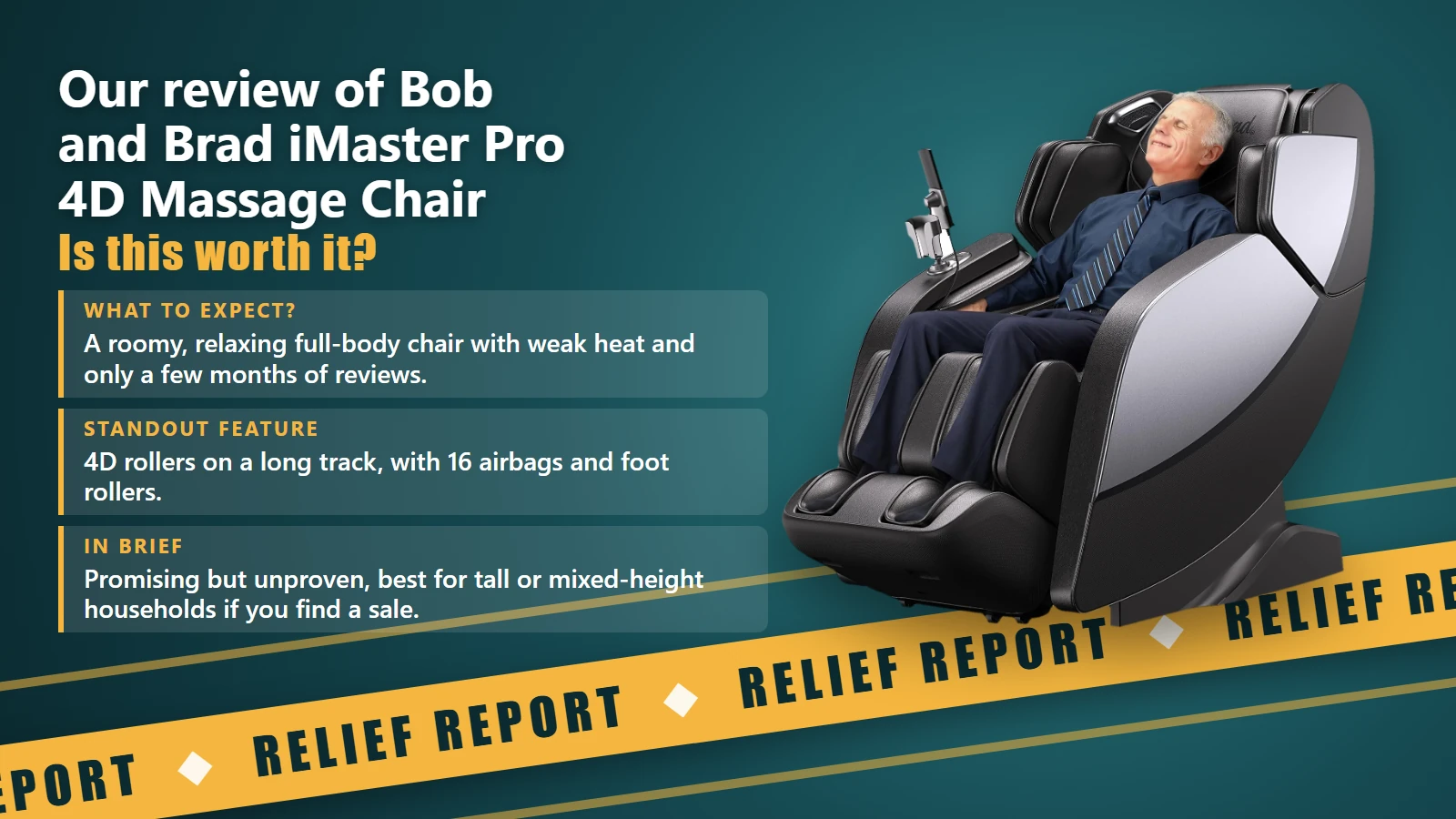
Now take the Bob and Brad iMaster Pro 4D chair at its $3,299.99 list price. Spread over five years that is about $660 a year, and at the roughly $2,400 members paid on sale it is $480 a year.
Put another way, a $2,400 chair equals 24 massages at $100 each. Pay for a massage every month and the chair breaks even after two years, and pay for one every week and it breaks even in about half a year.
That is the whole argument, and it only holds if you would genuinely book those massages.
How do the options compare over five years?
This table shows the math, using prices from our reviews and member reports.
| Option | Upfront | Per year |
|---|---|---|
| Massage once a month at $100 | $0 | $1,200 |
| iMaster Pro chair at list price | $3,299.99 | About $660 |
| Same chair at member price | About $2,400 | About $480 |
| Snailax chair pad | $199.99 | About $40 |
| Comfier CF-2307A pad | $223.99 | About $45 |
| Generic $40 to $80 pad, replaced yearly | $40 to $80 | $40 to $80 |
| Option | 5-year total | Catch |
|---|---|---|
| Massage once a month at $100 | $6,000 | Salon prices from $60 would be $3,600 |
| iMaster Pro chair at list price | $3,299.99, plus $99 install | 1-year warranty; repairs not included |
| Same chair at member price | About $2,400 | Sale price; repairs and delivery not included |
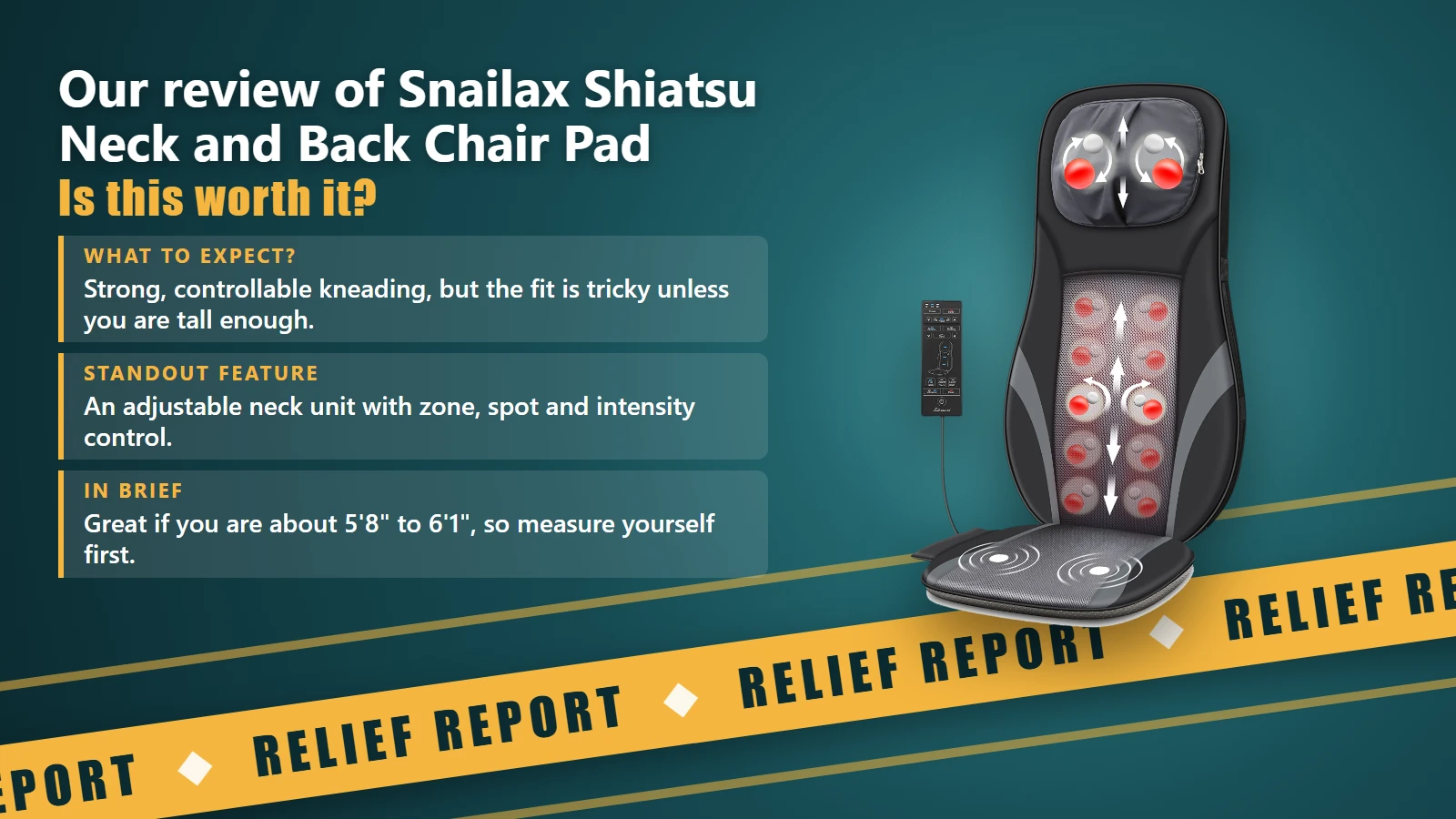
| Snailax chair pad | $199.99 | 3 of 5 clients had fit trouble |
| Comfier CF-2307A pad | $223.99 | Fit gamble for short users |
| Generic $40 to $80 pad, replaced yearly | $200 to $400 | Members say they wear in 6 to 12 months |
The "per year" column simply divides by five, so it assumes each chair or pad lasts that long, and the totals leave out repairs, delivery and space. A cheap pad is the lowest risk, a chair is the best deal only with heavy use, and massages cost the most but give you a human.
What does a chair really cost?
Members describe three price tiers. An entry chair runs under $1,000 up to $2,000, a mid-range chair $2,000 to $5,000, and a premium chair $5,000 to $15,000 or more.
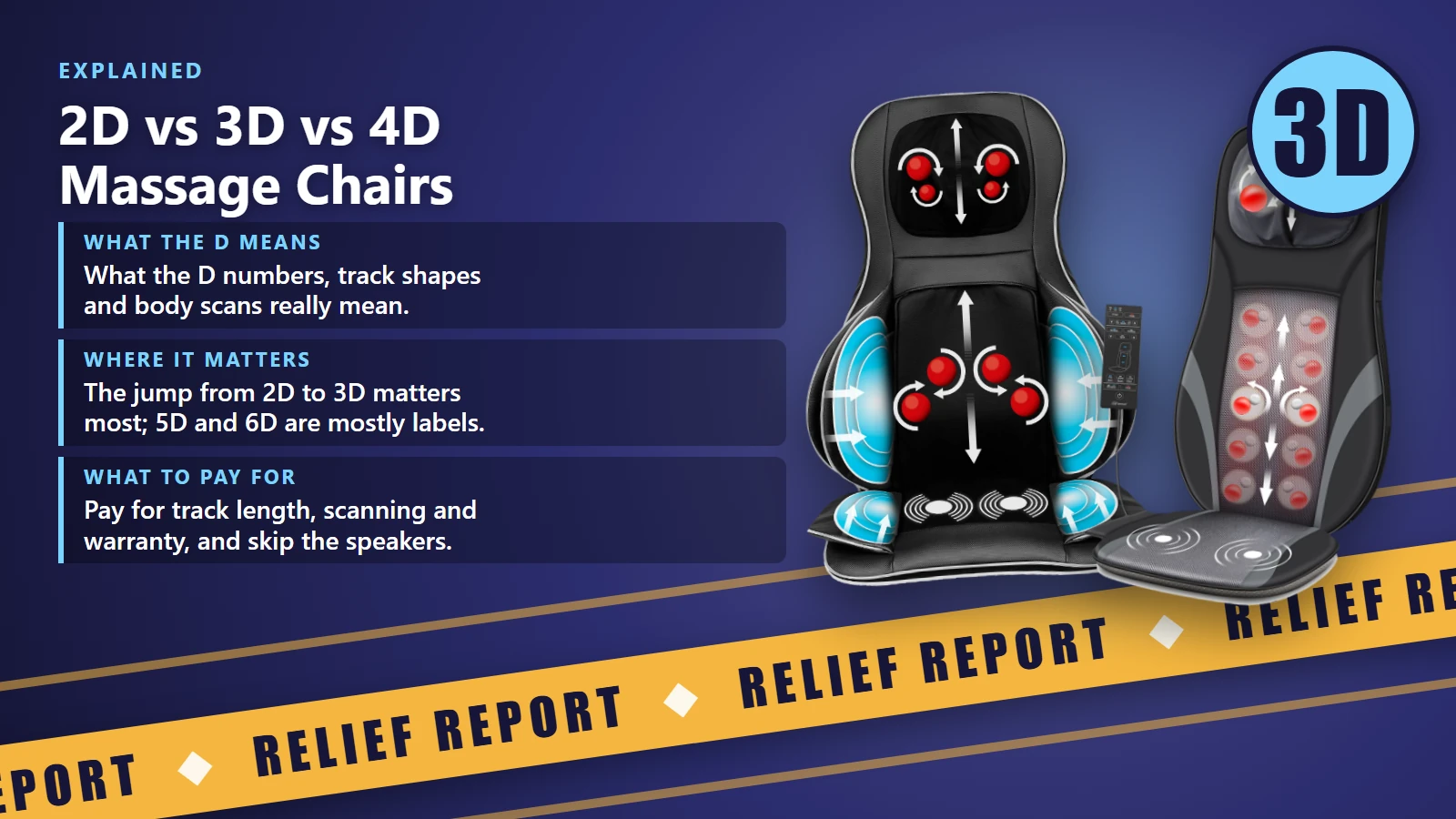
The mid-range is widely seen as the value sweet spot. Members say that is where you get true 3D and 4D rollers (rollers that move in and out as well as up and down, for more depth), a recline of 160 to 166 degrees that takes weight off your back, and 3 to 5 years of warranty.
It is also where track design and body scanning (the chair maps your shoulders and spine before it starts, and the track is the rail the rollers travel along) improve a lot. The jump from $5,000 to $10,000 or more buys mostly styling, where the chair is made and extra electronics, not twice the massage.
At the low end, members who owned entry-level chairs describe rougher rollers, a narrower fit range and shorter lifespans.
The Bob and Brad iMaster Pro 4D lists at $3,299.99, but two members paid about $2,400 and a member's roundup put it at $2,299.97, so the list price runs $900 to $1,000 above what the group paid. Our guide to 2D, 3D and 4D massage chairs explains the roller names.
Other prices members mentioned include a Titan at $2,500 on sale and an OSIM at $2,999 on sale. Used Inada chairs run $1,000 to $2,000.
Prices swing a lot, so watch for sales. One Kyota model was $3,000 at a warehouse store against a $9,000 list price, and members valued that store's return policy as a form of warranty protection.
How do you run your own numbers?
Use this quick check before you spend.
- Count how many massages you would honestly book in a year, not how many you hope to.
- Multiply by the price you would pay, such as $100 per 60 minutes.
- Divide the chair's price by the cost of one massage to see how many sessions it takes to break even.
- Add delivery, installation (one reviewer paid $99) and a warranty gap if the chair carries only 1 year.
- Be honest about daily use, since the chair earns nothing back if it sits unused.
If the answer is close, the chair pad route is the lower-risk way to find out how much you really use it.
What do massages cost?
Members cited $60 or more at a salon, $100 per 60 minutes, $120 an hour, and up to $450 for a 90-minute couples session. One member estimated $800 to $1,000 in yearly savings from using a home chair.
What the math leaves out is a person's touch. Members across every price point agree that no chair can copy a skilled therapist's intuitive touch or precise access under the shoulder blade, so a chair is a daily maintenance and relaxation tool, not a stand-in.
When does the chair pay off?
Members say a chair earns its cost in multi-person households and workplaces, where daily use quickly offsets the price spread over the years. It also suits people who dislike in-person touch or lack the time to schedule appointments.
It pays off least for buyers who expect a machine to duplicate a human massage, and for casual buyers prone to novelty fatigue. Members call it the "novelty trap": the excitement fades within weeks, and the chair becomes a giant clothes rack or a cat bed if it is not built into a daily habit.
So run your own check. If you would not book the massages, do not use them as the reason to buy.
What are the hidden costs?
Several costs sit outside the sticker price.
- Space and weight. A full chair weighs around 300 pounds, the iMaster Pro is 214.51 pounds and needs a 30 inch doorway, and one reviewer paid $99 for installation.
- Moving. Members underestimated the size and found it impossible to move between rooms without taking it apart or hiring movers.
- Repairs. Members regretted brands with 1-year warranties after motors failed, upholstery cracked, and $300 technician visits ended with the chair declared unfixable.
- Short lifespans. One family's five Kahuna chairs all failed within 2 to 3 years on 1-year warranties, and synthetic leather cracks after 2 years.
- Used chairs. Cheap secondhand chairs without warranties led to stripped gears and failed home repairs.
The other side of the ledger is real. A member with more than 1,000 sessions on a used Inada Dreamwave reports no repairs in 6.5 years, and high-end Japanese chairs report 10 to 20 years of use, so members suggest 3 to 5 years of coverage.
The iMaster Pro carries only a 1-year warranty. Nobody in our group has reported a repair on it, but nobody has reported on it long term either.
When is a chair pad the smarter middle ground?
A pad costs a fraction of a chair and takes a fraction of the space. It also has limits, and fit is the big one.
The $199.99 Snailax Shiatsu Chair Pad gives strong kneading, but 3 of 5 clients had fit trouble, and clients said they paid about $130 to $150 earlier. The $223.99 Comfier CF-2307A pleased taller users, and one client says theirs still works after three years of family use.
The $219.95 Zyllion ZMA-33 has a 3-year warranty (1 year plus 2 with registration), yet several units failed in the first month. A high school coach's pad has held up for years, and one buyer said theirs lasted almost six years.
Cheaper pads exist. A member scored a generic $50 pad 7.75 out of 10 for kneading, though members say these wear in 6 to 12 months.
A pad is not a better chair, and the member who tried several cushions ended up with a full chair. If your budget climbs toward $2,500, a body-scanning chair is a different category.
Questions People Ask
Is a massage chair worth it financially?
It can be if you would otherwise book regular massages and will use it daily. At about $2,400 it equals 24 sessions at $100, so a monthly massage habit breaks even in about two years. A chair that becomes a novelty earns nothing back.
How long does a massage chair last?
Members report anything from 2 to 3 years on cheap brands with 1-year warranties to 10 to 20 years on high-end Japanese chairs. Synthetic leather cracked after 2 years for some owners, so ask about the upholstery and the repair terms before you buy.
Is a chair pad a good substitute?
For the price, often yes, but check the fit and the warranty. Pads range from $199.99 to $223.99 in our reviews, cheaper ones wear in 6 to 12 months, and a pad cannot give the full-body feel of a chair, so decide what you want it for.
What warranty should a chair have?
Members suggest in-home coverage of 3 to 5 years and regret 1-year coverage. Terms they reported include 3 years on Osaki parts and 5 years on Olympia and Inada, while the iMaster Pro carries 1 year in its listing.
So which should you choose?
If you would book massages every month and have a busy household, a mid-range chair with 3 to 5 years of warranty may pay off within about two years. If you are not sure, start with a chair pad you can return, and only move up if you use it daily.
And whichever you pick, check the doorway, the weight and the warranty before you pay.