

Key Takeaways
- What you get is a leg squeeze you sit through after training, not a hands-on massage, and a reviewer likened it to a blood pressure cuff around the whole leg.
- At $699.99 it makes sense for people who train hard several times a week and will live with a 4.2 kg pair, and for nobody else.
- The maker's default is 50 mmHg, and 80 already felt a bit strong to a client, so begin low even though the range runs to 150.
- I'd skip it if you exercise now and then, since Leonard and a few reviewers I read couldn't tell what the premium bought them at home.
- Durability is unproven here: nearly every review covers days or weeks, so what we know is that it feels like a sensible cordless build that members actually use.
- A history of clots, heart failure, artery problems, open wounds, infections or a recent operation means a doctor signs off before session one, and sharp pain or a numb foot is your cue to quit.
A member of our Facebook group spent two years not buying recovery boots because they couldn't justify a grand for something their spouse would call leg pajamas. In the middle of marathon training, with legs still cooked after long runs, they finally paid $800 for this exact model and ran it on level 7 most days and level 9 after long runs.
Three weeks in, their honest question was whether the boots or the 30 minutes a day of sitting still were doing the work. That is the right question for this Fit King FT-130A cordless compression boots review: a $699.99 cordless, full-leg pair that all 4 of our clients rated 4 or 5 stars, and that made two of them mention the price.
I went through those 4 client reviews, one buyer review and what members posted about this model and its siblings. My bottom line is a well-built, convenient pair that is only worth the money if you will use it often, and nearly all the evidence comes from the first weeks of use.
What Do You Get for $699.99?
The FT-130A is a pair of zip-on boots that run from the foot to the thigh, each with five overlapping air chambers, its own battery and its own touchscreen controller. It cost $699.99 when I checked on October 14, 2026, which puts it in the premium tier for leg compression boots.
Pressure is shown in (mmHg - millimeters of mercury, the same unit as a blood pressure cuff; this pair runs 50 to 150 in 11 steps). The brand also says the boots adapt inflation to your leg size, which I couldn't verify.
| Spec | What it means for you |
|---|---|
| Price: $699.99, checked October 14, 2026 | Premium; well above Fit King's other boots |
| Cordless, foot to thigh, 5 chambers per boot | No hoses, pump box or wall outlet |
| 11 levels, 50 to 150 mmHg | Gentle start, firm top end |
| 3 modes: Combination, Circulation, Sequence | Different inflation patterns up the leg |
| Timer 15 to 60 minutes, built-in touchscreens | Set each boot or sync both |
| 2 x 2600 mAh, 2.5 hours both legs, 3-hour charge | Several sessions between charges |
| Medium: thigh to 28.5 in, inseam 34 in, 5'9" to 6'3" | Measure before you order |
| 4.2 kg, zip carry bag, 2-year warranty | Bulky to store; not a pocket device |
Check the current price of the FT-130A (if you buy through this link we may earn a small commission, which doesn't change what our clients and group members reported).
Who Should Buy the FT-130A, and Who Should Skip It?
The reports line up on who gets the most from a cordless boot. These are the people who did best.
- High-volume runners and gym-goers: a strength coach in our group who trains five to six days a week upgraded to this model because the hoses of the older pair made them skip sessions.
- People who hate setup: the boots zip on and start with a button hold.
- Households that share: one client's single Medium fit every shape at home.
- Travelers and bag carriers: clients liked the carry bag and the cordless design.
And these are the people I'd send somewhere else.
- Casual exercisers: the price is hard to justify for occasional use.
- Anyone who wants heat or a kneading feel: one reviewer put it as "just pure compression."
- Anyone who needs proof it lasts: the reviews are mostly first-weeks impressions.
- People between sizes or with very short legs: several reviewers found the sizing tricky.
What Happened When Four of Our Clients Used the FT-130A?
All 4 client reviews were positive: two gave 4 stars and two gave 5. I picked three, from a client unsure the price makes sense to one whose household shares a single Medium.
| Client | Why they bought it | How they used it | What worked |
|---|---|---|---|
| Leonard, a middle-aged client returning to training | Recovery after workouts | 30 to 35 minutes, several weeks | Touchscreen, sync, clear squeeze |
| My older brother, who wanted little setup | Replace corded boots | Sitting with legs out | Stronger squeeze; easier to carry |
| One of the people I've helped with recovery | Legs that ache, many devices already | Whole family, one Medium | Sturdy, easy display, fits all |
| Client | What didn't | Their verdict |
|---|---|---|
| Leonard, a middle-aged client returning to training | Price for a casual home user | 4/5 |
| My older brother, who wanted little setup | Large too big; must sit up | 4/5 |
| One of the people I've helped with recovery | Nothing reported | 5/5 |
Leonard used it for recovery after workouts for several weeks and says it is like drinking a very expensive bottle of wine: it's good, but Leonard can't tell why it costs so much. After 30 to 35 minutes the legs felt a little less tired, yet there was no dramatic change by the next day, so the price only makes sense to Leonard for people who train very often.
My older brother compared them with his old wired boots and found 90 on this pair feels stronger, and the set is easier to carry. He has to sit with his legs extended because lying back moves the controllers, and the Large ran far too big for someone who normally wears a Medium.
The client with chronic pain already owns many massage devices for the neck and back and wanted something for the legs. A Medium fit everyone in the household, the zipper is smooth and sturdy, and the client said it exceeded expectations.
The pattern is easy to read. Clients who train often liked the cordless convenience and the sync, and the ones who took a star off did it over price, size, setup, or because it felt more like a cuff than a massage.
Other Observations From Friends, Relatives and Other User Reviews
- A reviewer who asked about heated gear shares one pair with a partner and gets roughly two days per charge, liked the build and the 50 to 150 range, and thought a price this high should come with heat and a bigger screen (4/5).
- A recreational athlete I worked with said the boots work reasonably well but feel like an adjustable blood pressure cuff on the whole leg, and found setting each leg independently a clear step up from last year's Fit King models (4/5).
- A reviewer who wanted the boots ready before early sessions uses Combination mode for 15 to 30 minutes on long run days, finds the squeeze right and the charge long, and is unsure the price is worth it (5/5).
- Lowell, our fourth client, whom I helped set up a home routine, finds the Medium fits perfectly and reaches the groin even though the size chart pointed toward Small, and uses it at maximum intensity after runs and desk-heavy evenings for about three hours of battery (5/5).
What Did Members of Our Facebook Group Say About It?
Only one member post is about this exact pair, so the table also uses posts about the Fit King family and a premium rival. I labeled each row by what the post was really about.
| Member | Device | Experience | Takeaway |
|---|---|---|---|
| Marathon trainee, three weeks in | Fit King FT-130A | Level 7 daily, 9 after long runs; zipper fights a bigger calf | Fits a routine; zip can strain |
| Strength coach, 5 to 6 days a week | FT 082A, then FT-130A | 80 to 100 mmHg for 45 minutes after heavy legs | Cordless won on convenience |
| Long-course endurance athlete | Fit King boots, model not named | Chose them over a pricier rival; measuring legs mattered | Measure before ordering |
| Nurse on 12-hour shifts | Fit King boots, model not named | Uses them after showering, over dinner | At-home option kept the habit |
| 45-year-old marathon runner | Normatec Elite | 60-minute sessions after runs and before bed | Premium rival at about $999 |
Members and clients agree that the cordless design is what gets the boots used. They split on whether the result is worth it, and the marathon trainee even asked whether the boots or the forced rest was doing the work.
That is the honest limit of the evidence. Several members and physical therapists in our group say compression boots don't speed up tissue repair or beat good sleep and habits, and the benefit they report is mostly that legs feel less heavy and that it makes you sit still.
Does the FT-130A Live Up to the Listing?
The hardware claims mostly hold up, and the places they wobble are strength, battery and the "like a massage" idea. Each row sets one claim against what clients and the lone buyer found.
| What the listing promises | What users actually found |
|---|---|
| Cordless, no hoses or pump box | Praised; but 4.2 kg and awkward to put away |
| 50 to 150 mmHg, 11 levels | One reviewer felt it weaker than others; another found it stronger |
| Smart Sync between boots | 3 of 4 clients praised it |
| Sensor adapts to leg size | One client called it real; I cannot confirm it |
| 2.5 hours on both legs | Two clients praised it; one reported about four uses |
| Massage-like experience | One reviewer: more like a blood pressure cuff |
| Sizes Small to Large with a chart | Medium fit many; one found Large too big |
Is it loud?
The listing doesn't state a noise level. One reviewer called the pump noticeable, and another said the hum you hear is just the pump working.
Members say pump hum can bother a partner or make it hard to sleep through a cycle. Run yours once in the room where you plan to use it before you decide it can sit next to someone sleeping.
Level counts also differ between reviewers, with one saying 12 where the brand lists 11. I'd trust the brand's 11 and check the screen on your own set.
Will the Medium Fit You, or Should You Size Differently?
Fit was where clients disagreed most, so I lined up what each of them said. The maker's chart puts the Medium at an upper thigh up to 28.5 inches, an inseam up to 34 inches and a height of 5'9" to 6'3".
- Close to the chart limits: one reviewer who was within the limits still said to order the larger size, because the Medium felt snug on the thigh.
- Smaller legs: Lowell, who is 1.67 m and 56 kg, wears the Medium even though the chart pointed to Small, and it reaches the groin. a reviewer I read said it sits high on the thighs on a small frame but still works.
- Between sizes: my older brother usually wears a Medium, found the Large far too big, and still got it working.
- One pair for a household: the client who has chronic pain bought a Medium so the family could share, and it fit everyone at home. Another reviewer says you can partly unzip the boot to fine-tune a slightly loose fit.
- Bigger calves: the marathon trainee in our group says the zipper fights a bigger calf.
The boots have no extension panels, and one reviewer wished for them. Measure your upper thigh, inseam and height before you order, because the boots offer little room to adjust afterward.
What Do the Modes Feel Like, and Where Should You Start?
The three modes are different inflation patterns, and clients described them better than the listing does. Most of them landed on the same one.
- Combination: alternates between full and partial upward cycles, and it is the one Lowell and a reviewer I read use. That reviewer runs it for 15 to 30 minutes, depending on the day.
- Circulation: starts at the lower leg and moves up through all five chambers in a broader sweep.
- Sequence: alternates between the first two, per the reviewer who tested all three.
The default pressure is 50 mmHg, and another client found 80 a bit strong. Members also say the first sessions can feel tight, like a blood pressure cuff on the whole leg, and that most people adapt over a few sessions.
I tell clients to begin low and step up across a week, which is also what one reviewer advised after noticing how firm the high settings get. One reviewer never went above 80, the older brother ran 90, and the marathon trainee in our group sits at level 7 most days.
How Long Does It Last, and What Do People Complain About?
The honest answer is that the data doesn't tell us. All 4 client reviews were positive and covered days to weeks of use, and the only buyer review is a 3-star from someone whose battery charge didn't hold and who suspected a used or defective set.
The complaints that do appear are about price and fit. One of the two 4-star clients mentions the price, two of 4 mention it somewhere, and one found the sizing inflexible.
Beyond this pair, members have reported broken zippers after 4 months on other boots, and say to expect about 3 years from the built-in battery on cordless models. A strength coach in our group also said the thick material gets warm enough that air conditioning is needed in summer.
The 2-year warranty covers support, but no client used it, so I can't say how it works in practice. Keep your receipt and don't assume it is smooth.
How Does It Compare With Other Compression Boots?
Members compare it with its own siblings, with Normatec and with Sharper Image. This table uses only what the data states.
| Product | Price | Key difference | What users liked |
|---|---|---|---|
| Fit King FT-130A (this pair) | $699.99 | Cordless, 5 chambers, 11 levels to 150 mmHg | No hoses, sync, long battery |
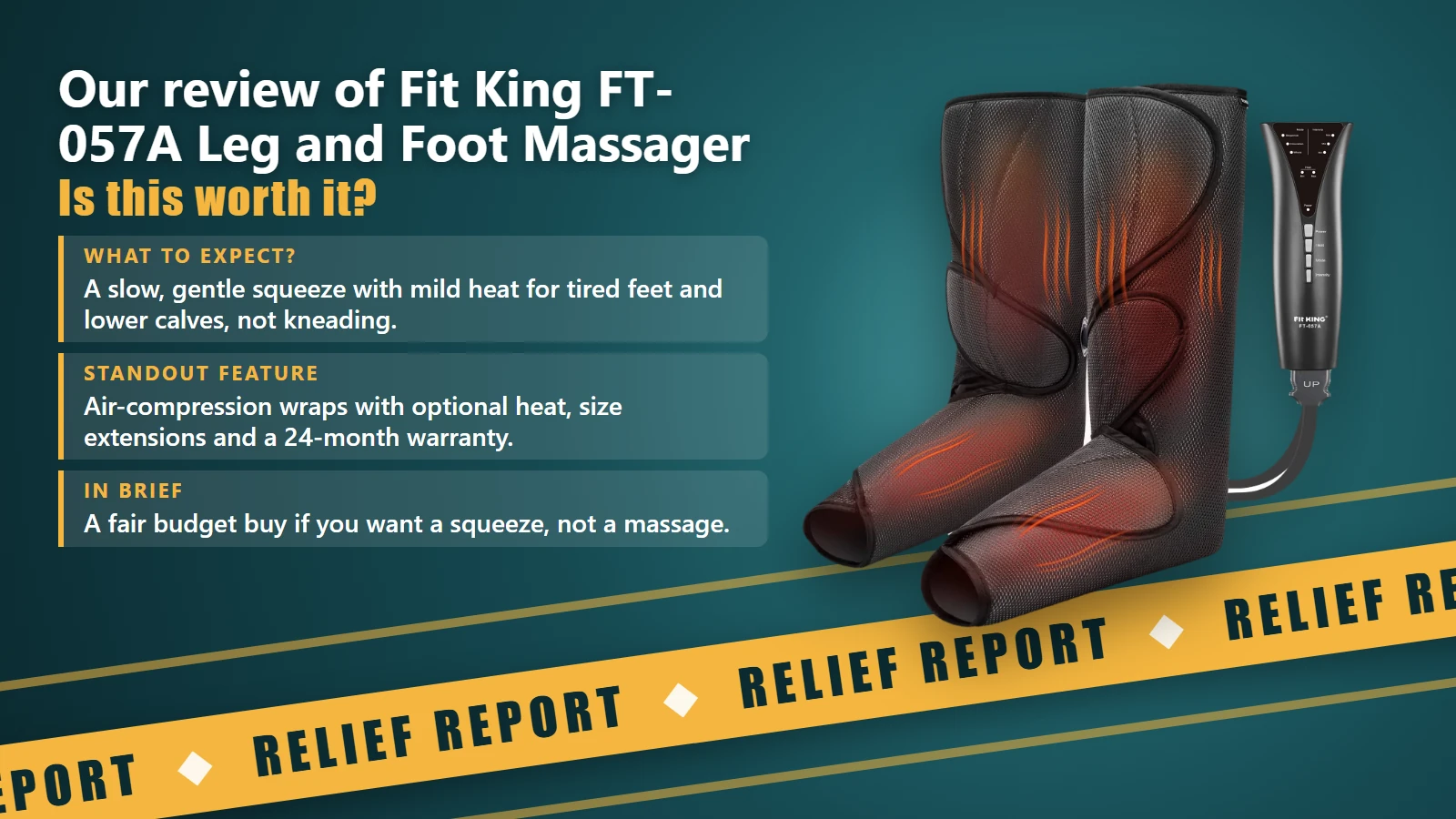
| Fit King FT 082A | $319.99 | Corded; 8 levels, 50 to 120 mmHg | Solid, much cheaper |
| Hyperice Normatec Elite | $999 to $1,000 | 5 sequential zones; 3 to 4 hours battery | Pressure moves up the leg in order |
| Sharper Image boots | $150 USD or $200 CDN | Corded, basic compression | One runner got 8 months of use |
| Product | What users disliked | Best for |
|---|---|---|
| Fit King FT-130A (this pair) | Price, bulk, thick warm fabric | Frequent users |
| Fit King FT 082A | Hoses and plugs made a coach skip sessions | Once or twice a month |
| Hyperice Normatec Elite | Price; manual deflation about 3 minutes per leg | Premium shoppers |
| Sharper Image boots | Another returned them after a month: hard to put on and store | Casual users |
A member who trains five to six days a week called the FT-130A the winner over the older corded boots for frequent users, and said the older pair still makes sense if you only use it once or twice a month. A long-course athlete in the group chose Fit King over Normatec on price, and I cover the $474.99 mid-range zip-on model in the Fit King FT-115A Compression Recovery Boots review.
For a plug-in unit with no heat at $159.99, what our clients found with the Quinear 3-in-1 Leg Massager shows the foot-to-thigh format for far less. If it's mostly your feet that are tired, our Renpho Thermacool Foot Massager findings cover a $179.99 heat and cold foot unit.
What Should You Look for in Compression Boots?
Members and clients repeat the same points. This table pairs each with how the FT-130A fared.
| Factor | What to check | Why it matters |
|---|---|---|
| Cordless vs tethered | Built-in controls and batteries | Members who went cordless report using them 4+ times a week |
| Sequential inflation | Chambers that fill foot to thigh | All-at-once units feel like a balloon |
| Sizing and inseam | Your inseam against the chart | Boots ride up the groin if too long |
| Pressure range | A low start and a high ceiling | Members use 70 to 120 mmHg for most sessions |
| Closures | Full zippers over velcro | Velcro can pop open under pressure |
| Storage and weight | Space for a 4.2 kg pair | Bulky sets end up in closets |
| Heat and noise | Thick fabric warms; pumps hum | Summer sessions can feel hot |
If your feet are what tire first, a standing-worker foot unit may suit you better, and my Bob and Brad 721 Foot Massager review covers a $159.99 one that fits up to size 14. Boots like this one don't replace sleep, food or a sensible training load, which members say are the real recovery basics.
How Do You Use It Safely and Get the Most From It?
Members run 15 to 30 minutes for standard recovery and 45 to 60 minutes after heavy days, mostly in the evening on the couch. As for how often, they go daily or 4 to 6 times a week in peak training and 2 to 3 times a week for upkeep.
The brand's default is 50 mmHg, a Medium user found 80 a bit strong, and members who like it firm sit between 80 and 100. Start low and step up across a few sessions, and wear light pants inside the sleeves to avoid skin marks.
What should you do on day one?
The setup is simple, but clients tripped on a few small steps. This is the order I walk people through.
- Charge fully first: the instructions call for about 3.5 to 4 hours before the first use, and one reviewer says the boots can't run while charging.
- Check the emergency stop: it has to be locked in place or the boots won't switch on.
- Hold the power button about 2 seconds, then press start: without that second press, the controls switch off on their own after roughly 2 minutes.
- Sync is a long press of the play button if your two boots aren't already paired; one reviewer's pair arrived paired.
- Let the air out before you pack: push some air out of the boots, let them deflate fully, then fold them into the carry bag.
- Ask your doctor first if you have a history of blood clots or DVT, peripheral artery disease, heart failure, open wounds, a leg infection or recent leg surgery.
- Get one-sided calf swelling checked fast, especially with pain or shortness of breath, before using any pressure device.
- Stop for pain, tingling or numbness, which members linked to pressure set too high or too frequent sessions.
- Use the emergency stop if something feels off, and lock the controls when it is stored.
- Save it for after training, since members say not to use it right before a session.
- Go slowly if nausea or lightheadedness shows up, and drink water.
Compression boots can make tired, heavy legs feel better and fit into a recovery routine. They are a comfort tool, not a treatment for a circulation problem or swelling, and sharp or lasting pain is a reason to stop and see a professional.
Questions People Ask About These Boots
Can two people use one pair?
Yes, with a catch. Unpaired, the two controllers run as independent units, so each person can take one boot, and one reviewer and a partner share one pair, taking turns, for roughly two days per charge.
Can you run just one boot?
Yes, a single boot can run alone, and the brand lists up to 5 hours of battery that way against 2.5 with both legs. A member in our group noted it helps when only one leg is tight, and you don't need to strap on the second one.
Do you have to lie down, or can you sit?
Sit with your legs out in front. My older brother found that lying fully back made the controllers hard to manage and let the legs shift inside the boots, while another reviewer uses them reclined or lying down and a third sits anywhere.
Do the boots get hot in summer?
The boots have no heat setting, but the thick fabric can still run warm. A strength coach in our group says it gets warm enough that air conditioning is needed in the summer.
Will they speed up recovery?
Not in any way I can promise. Leonard felt legs a little less tired after 30 to 35 minutes but saw no dramatic change the next day, and members say these boots give you lighter-feeling legs and a reason to sit still, not faster tissue repair.
Is it practical for travel?
It travels better than a corded set, but it isn't light at 4.2 kg. The zip carry bag with a shoulder strap holds the boots, charger and quick-start guide, and a long-course athlete in our group takes a Fit King pair to race weekends.
Verdict: Is the Fit King FT-130A Cordless Compression Boots Worth $699.99?
In this Fit King FT-130A cordless compression boots review, the case for buying is a hose-free, well-built pair that clients and members actually use, with a wide pressure range and syncing that worked. The case against is a $699.99 price, bulk, and a review set that covers weeks, not years.
Buy it if you train hard several times a week, hate untangling hoses and have space for a 4.2 kg pair. Skip it if you exercise casually or want heat, in which case I'd look at the corded FT 082A at $319.99 or a cheaper boot, and I'd measure your legs before ordering either.
If this one fits your week, see the current price, and keep in mind that the evidence here is thin: one buyer review and mostly early impressions from clients.