

Key Takeaways
- Some new pads top out near 105°F, while members prefer pads that reach 121°F to 165°F for deep soreness.
- Weight presses heat flat against your body, yet the weighted pads we reviewed ran modest on heat, and 7 of 12 buyers saw the Renpho pad die or error out.
- Moist heat hits harder at 150 to 165°F, which is exactly why numb skin and sleeping on it raise the burn risk.
- Measure your torso first, because buyers at 5'7" and 6'3" found one wrap short in the back and fit complaints outnumbered every other kind.
- A $30 Costco XL pad that a member returned once in about 5 years is the fair rival to the mid-range pads we reviewed.
One of our clients tried a $55.99 heating wrap after a half-marathon and called it barely warm on the highest setting. Another client used the same pad for evening relaxation and said it heats very well.
That split showed up again and again, and it points to the biggest complaint in our Facebook recovery-gear group: modern heating pads just do not get hot like the old ones did.
This guide pulls together what our four heating pad reviews found, what members of our group report across the category, and what buyers said in their reviews. You will learn why some pads feel lukewarm, what weighted and moist heat change, how infrared claims hold up, and which pads quit early.
Why New Pads Often Feel Weak
Members of our group report this constantly. They buy a new pad, plug it in, and it feels barely warmer than a heated blanket.
The cause is built-in thermostat safety caps, and some pads only reach about 105°F. Members prefer units that reach 121°F to 165°F for cutting through deep soreness and joint stiffness, and that gap is why so many new pads go back to the store.
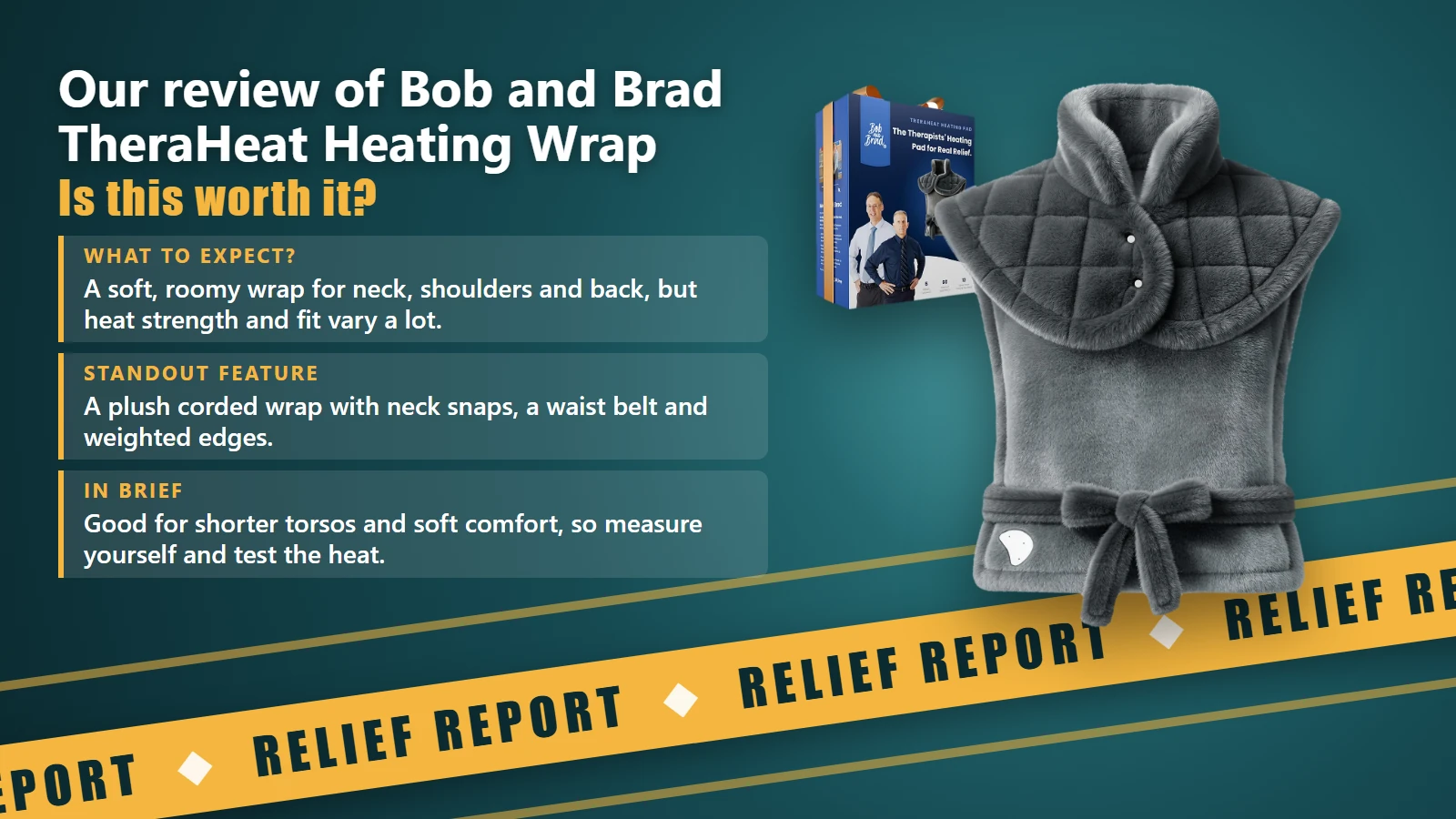
The heat split in our reviews was real. For the Bob and Brad TheraHeat SW-H1022D, one reviewer could not stay on the top level because it was too hot, while a client and three buyers said the same level barely warmed.
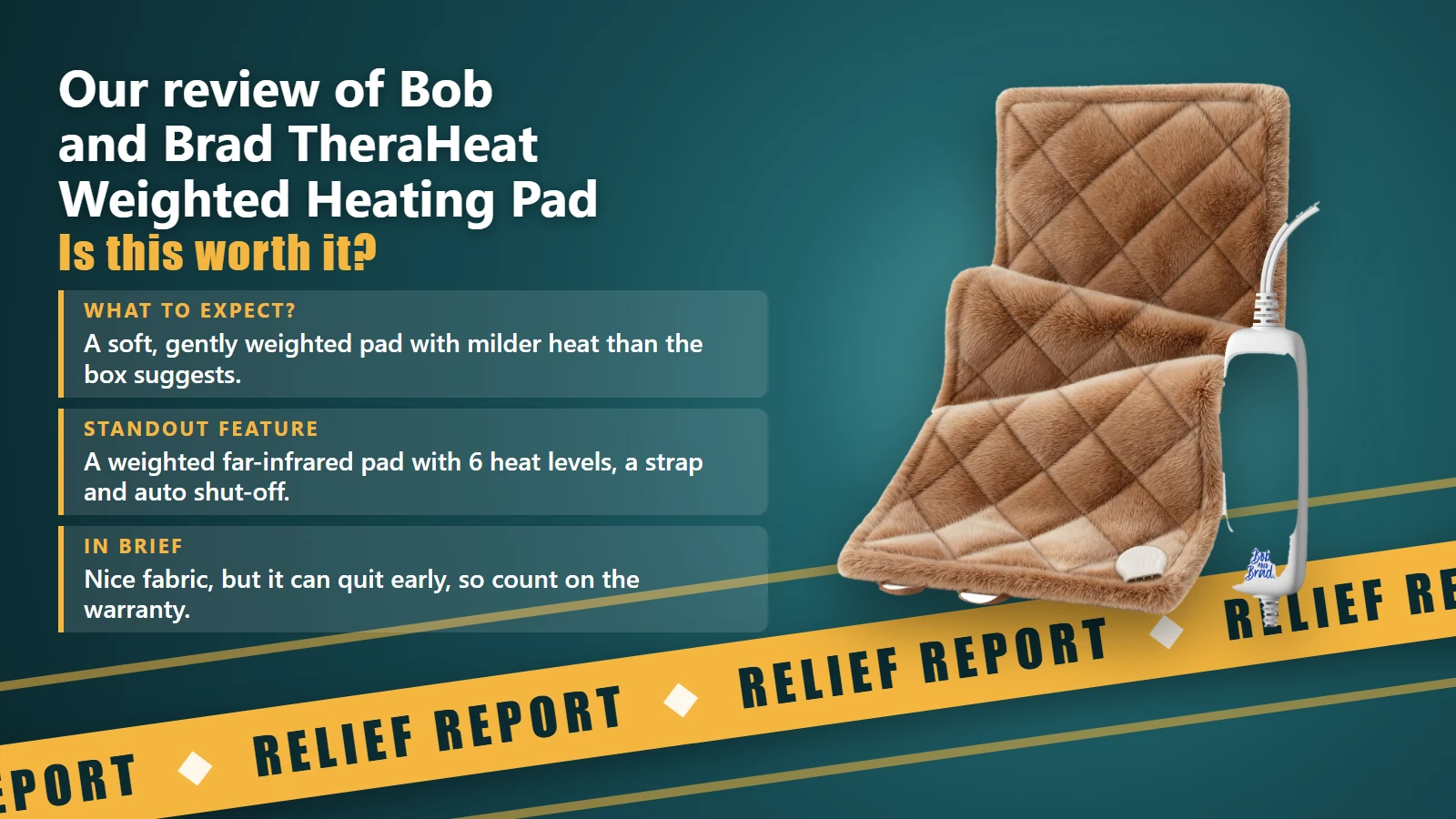
The pad lists six heat levels from 100 to 150°F, and clients disagree on whether the top levels deliver. Two of six clients who tried the Bob and Brad TheraHeat 2.4lb weighted pad found it too mild at first, and one came around after a few uses and called it plenty hot.
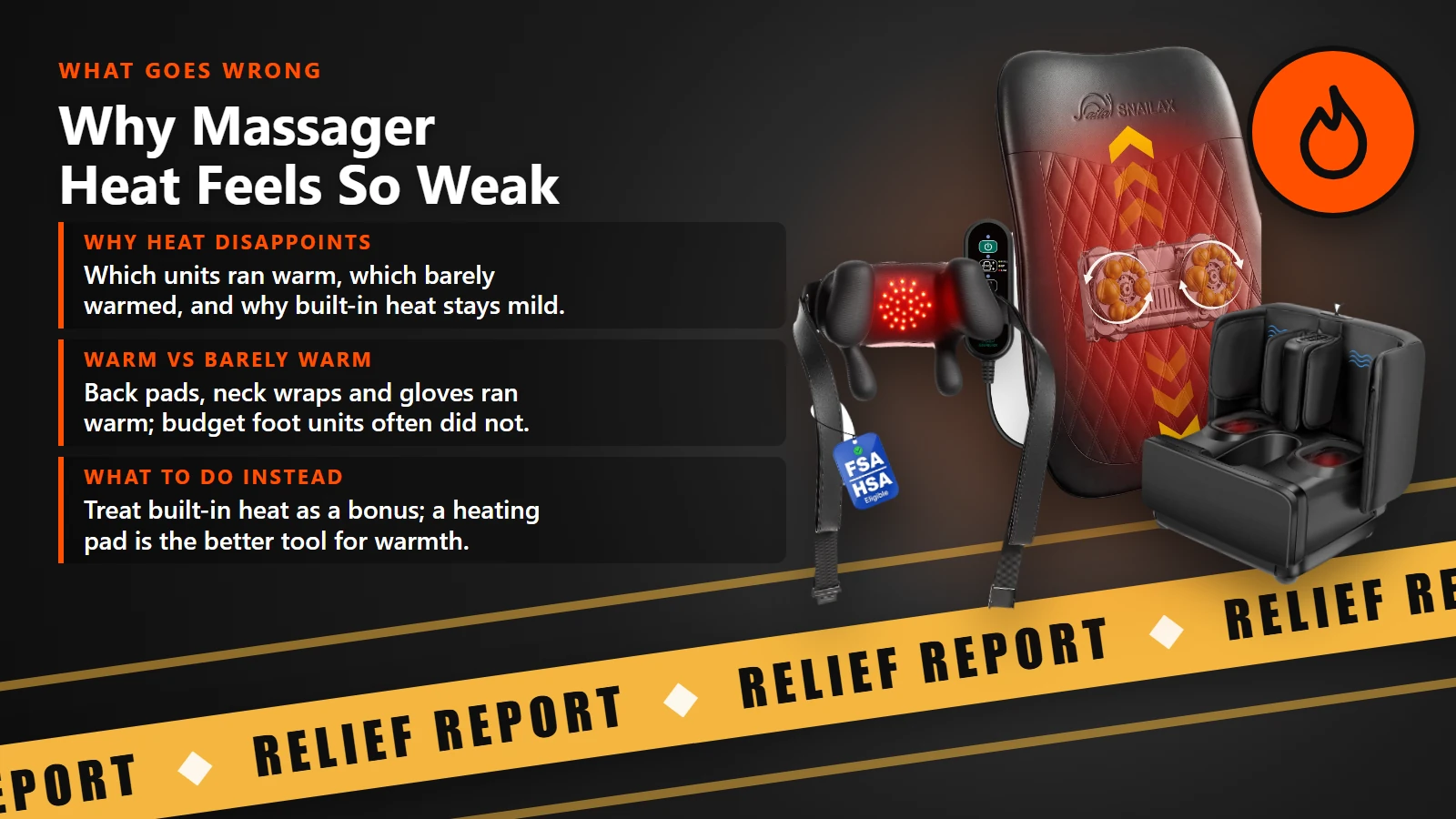
For more on why heat disappoints across device types, our guide on heat that barely registers and which units actually run warm covers the pattern.
Weighted Pads
Weighted pads are filled with glass beads, usually 2.2 to 2.6 lbs. That weight presses the pad flat against your body so the heat transfers better, without you holding it or leaning into it.
A member with pelvic cramping used a Comfytemp 12x24 weighted pad and said the 2.2 lb weight pressed the heat flat against the skin. Clients and members agree that a weighted pad contacts the body better than a flimsy one.
The trade-off is that the weighted pads we reviewed ran modest on heat. The Bob and Brad 2.4lb lists six levels up to 150°F, but one client liked the weighted drape for two months before the pad quit.
Another client found that level 2 preheated fast, but level 6 took 15 to 20 minutes to reach full warmth. The Renpho R-HAP61 at $49.99 tells a similar story on comfort and a worse one on durability.
Clients loved the plush weighted wrap, and one read 150°F on the controller. But 3 of 6 client reviews and 7 of 12 buyer reviews reported a pad that died or errored out.
Members also liked the Sharper Image Calming Heat weighted pad at $59.99, where the weight kept it in place and the favorite mix was low heat with medium vibration. If you want buzz with your heat, weight helps a vibrating pad stay put instead of walking off your body.
Moist Heat
Moist heat is the category favorite in our group, and the reason is depth. Members like damp heat because it feels deeper without the dry skin that plain electric heat can cause after long sessions.
The pad members mention most is the Thermophore moist-heat pad, which one member with back stiffness said reaches 150 to 165°F on high. A physical therapist suggested it to that member, the first one lasted over a decade, and members put the price at about $55 to $78.
Our four reviews covered dry heat pads with weighted fills, straps and vibration. None offered true moist heat, though the Bob and Brad 2.4lb allows a light mist on the cover if you want to approximate it.
Members report that moist heat hits much harder than dry wraps, and one said the Thermophore high setting can feel like it cooks you. That is both the strength and the caution, because numb skin or reduced sensation means a real burn risk.
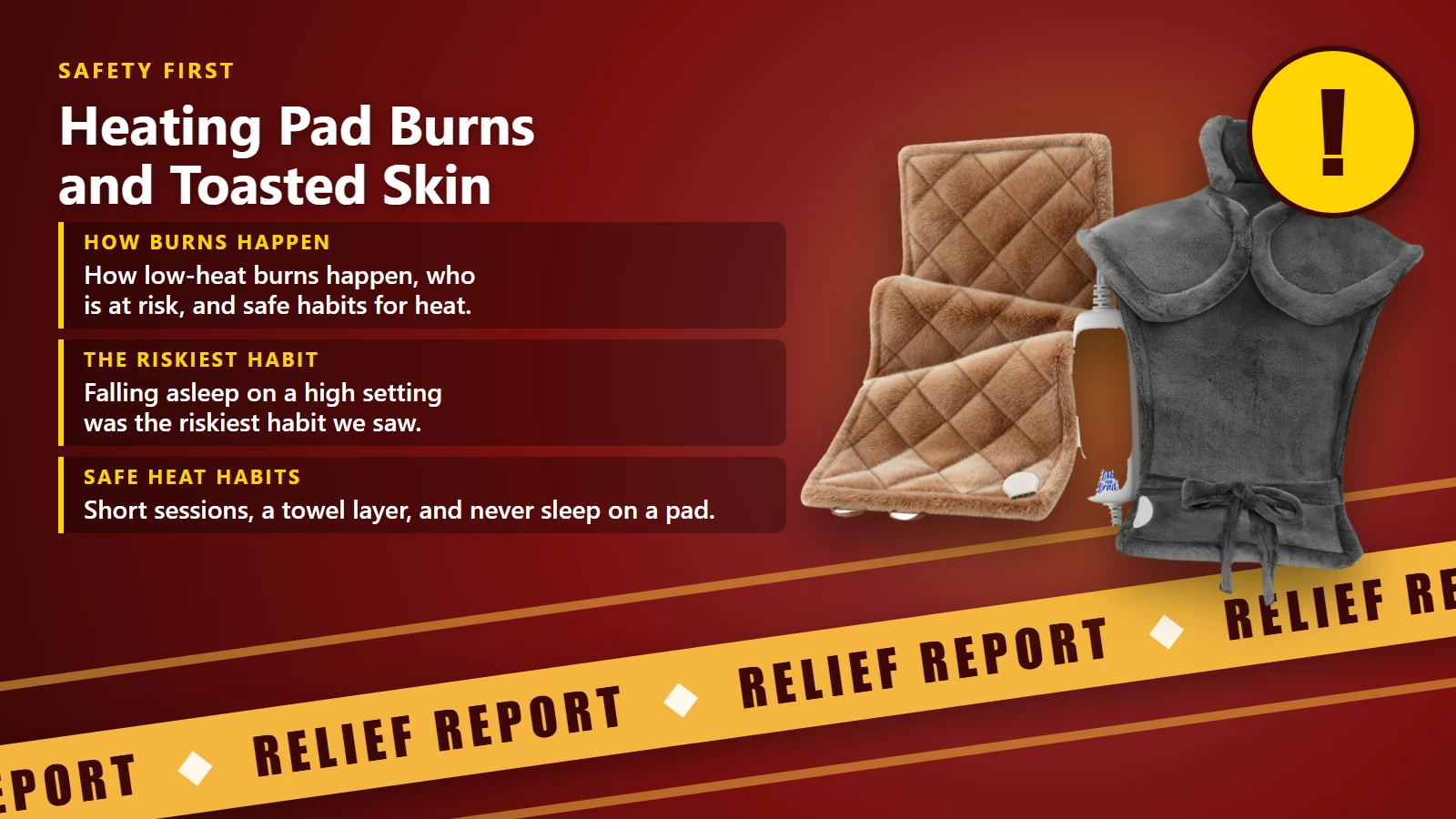
Never sleep on a high-heat moist pad. For guidance on using heat safely, including overnight use and skin protection, our guide to heating pad burns and toasted skin walks through the risks.
Infrared and Stone Pads
Far infrared (a longer-wavelength heat that brands say warms below the skin surface) is where marketing and experience part ways. The Bob and Brad 2.4lb sells its ceramic beads as a far infrared feature, and members in our group are split on whether it feels any different from a plain heating element.
One member tested the infrared heated head on a Bob and Brad massage gun and did not find it effective. Members are skeptical of infrared claims in heating pads, and our reviews do not push back on that.
Stone pads take infrared a step further. Premium pads in the $110 to $150 range use jade, tourmaline or carbon wire elements, and the claim is that they reach tissue up to 3 inches deep.
The downside members report is that the stone surface can feel stiff or uncomfortable to lie on directly. Our reviews covered pads from $49.98 to $69.99, none with stone, so we do not have enough hands-on feedback to recommend one.
The far infrared label on a $49.98 pad is a claim you cannot check at home. If the pad gets hot enough and the weight feels good, the tag is a bonus, and if the pad barely warms, the label does not save it.
Size, Shape and Auto Shut-Off
Fit problems outnumbered every other complaint in our reviews. Buyers at 5'7" and 6'3" found the SW-H1022D short in the back, and one reviewer's neck panel barely covered the back of the neck, so a buyer tied a scarf around it.
The Renpho had similar gaps, with a 6'2" user getting a heat gap across the back and a smaller client getting neck gaps. Standard sizes run from 12x15 inches up to XL and XXL sizes like 17x33 or 24x36, and a 12x24 pad covers one area well, so shoulders to lower back needs an XL or a strap-on wrap.
Auto shut-off is the other battleground. Built-in safety timers range from 15 minutes up to 12 hours depending on the pad, and the Bob and Brad pads cap at 90 minutes.
The Renpho shuts off after 60 minutes if you set nothing, and the Comfier CF-6413 offers only 30 or 60 minute timers. Members with chronic soreness hate short timers and seek a stay-on function to avoid waking up cold, and a member praised the Comfytemp 12x24 weighted pad for exactly that.
The Comfier CF-6413 adds vibration, which one client described on high as aggressive and jarring, so press MODE three times right after switching it on. The strap fits up to 61 inches, and a 58-inch client said it closed fine.
Lying down was where it lost people: one client felt hard nodes through their back and two buyers called it bulky. The table below sets the main types side by side.
| Type | How it feels | Upside | Downside |
|---|---|---|---|
| Weighted pad (2.2 to 2.6 lb) | A soft, contoured drape; milder heat | Presses heat flat against the body | Heat can run modest; several died within months |
| Moist heat | Deep, strong heat; 150 to 165°F on high | Members say it feels deeper; one lasted over a decade | Can feel like it cooks; real burn risk on numb skin |
| Infrared or stone | Warmth with a claim of deeper reach | Said to reach up to 3 inches | Members unconvinced; stone can feel stiff |
| Plain dry pad (Costco XL, $30) | Simple, even warmth; 6 settings | Stay-on mode; one return in about 5 years | Fewer comfort extras |
The pattern is clear. Weighted pads win on contact and comfort but run milder, moist heat wins on depth but demands caution, and infrared leaves members unconvinced at this price.
Durability: What Fails First
Early failure was the most common problem across our four reviews, and it showed up fast. The Renpho R-HAP61 was the worst, with all 6 client reviews and all 12 buyer reviews between 2 and 4 stars and the same failure story.
Three of 6 clients and 7 of 12 buyers had the pad die or error out. One client traced a permanent F2 error code to unplugging the detachable cord, and the cord popped out for another reviewer.
The Bob and Brad 2.4lb was not much better, with two to three of six clients seeing it quit within 2 to 3 months. One said the heat shrank to the plug end and then the pad stopped responding, so at $49.98 the only reason to buy it is if you count the 2-year warranty in the price.
Across the category, members report electric pads that stop heating, flash error lights or suffer broken wiring within 1 to 6 months of daily use. The contrast with budget pads is striking: a member uses a $30 Costco XL with 6 heat settings and a 2-hour or stay-on mode, returned one once in about 5 years, and said it replaced 10 failed pads.
Warranty and the return window are the two factors I would check first, because failures often came right after returns closed. A non-transferable warranty from an unauthorized seller leaves you with nothing, so buy from a source where you can claim the replacement.
Brand support decides how a failure feels. The Bob and Brad pads come with a 2-year warranty and the company replaced failed units, while one Renpho client said the replacement process stalled.
Safety: What to Watch For
Two risks come up often enough to name plainly. The first is burns when sleeping on a pad or using one on numb skin, because if you cannot feel the heat accurately you can burn yourself without knowing.
The second is toasted skin (a lasting brown or gray mark left by repeated heat on the same spot) from daily high heat. One client who had skin marking from a previous pad saw the milder heat of the Bob and Brad 2.4lb as a plus.
If you use a pad daily, rotate the area, use a lower setting and take breaks. A washable cover between the pad and your skin helps too, and the Renpho has a machine-washable plush cover, so take the controller off first before washing.
Questions People Ask
Why does my new heating pad feel weaker than my old one?
Modern pads have thermostat safety caps that limit surface temperature, and some only reach about 105°F. Members prefer pads reaching 121°F to 165°F, so if yours feels lukewarm on the top setting the cap is likely the reason, and a moist-heat pad like the Thermophore may suit you better.
Are weighted heating pads hotter than regular ones?
Not usually. Weight improves contact and transfer, but the heat itself ran modest on the Bob and Brad 2.4lb and the Renpho R-HAP61, so if you need high heat a moist-heat pad will outperform a weighted one.
Can I sleep with a heating pad on?
Sleeping on a pad raises the burn risk, especially with numb skin or reduced sensation. Some members with chronic pain want stay-on modes so they do not wake up cold, and if you are one of them, use the lowest setting and check with your doctor first, particularly with nerve damage, circulation issues or diabetes.
How long should a heating pad last?
Members report pads failing within 1 to 6 months of daily use, often with blinking error lights or broken wiring. A $30 Costco XL lasted one member about 5 years with one return, and a Thermophore lasted another over a decade, so check the return window and buy from a seller that honors replacements.
Bottom Line: What to Do Next
If you want gentle warmth at a desk or on the couch with a soft weighted drape, the Bob and Brad TheraHeat 2.4lb at $49.98 is a reasonable bet if you count the 2-year warranty in the price. Expect modest heat and test it while the return window is open.
If you want heat without vibration, the SW-H1022D at $55.99 works for shorter torsos, but skip it if you need heat that wraps the front of the neck. If you want vibration with your heat and sit upright, the CF-6413 at $69.99 has a soft cover and hand pockets, but skip it if you lie flat or want strong heat.
If you want a weighted pad that just heats, the Renpho R-HAP61 at $49.99 feels great while it works, but test it hard during the return window and do not count on it past a year. If you want deep, strong heat, a Thermophore moist-heat pad at about $70 is what members trust for daily heavy use, with caution on the high setting.
If you just want a simple, reliable pad, the $30 Costco XL that members keep recommending is hard to beat. Sometimes the simple pad is the right one.