
Key Takeaways
- Layer blankets or towels over shiatsu nodes, because a third of the buyer reviews for one pillow called its nodes hard or too intense.
- Wear socks in a foot massager to soften the rollers, then slide your feet around, since 4 of our 7 clients named a spot the machine skips.
- Put a towel between any heating pad and your skin, and skip heat on fresh swelling for the first 48 to 72 hours.
- Compression boots feel like a warm squeeze and not a massage, so thin clothing underneath helps you avoid deep marks.
- Start every new device on the lowest setting; clients who skipped the low start had a rougher first week.
A member of our Facebook group runs a shiatsu (a Japanese massage style that presses and kneads in rhythm, done here by rotating nodes instead of thumbs) pillow under three or more blanket layers for one to four hours a day. The box does not show that, but it is how this member gets through a long session.
This guide pulls together twelve practical tricks that members of our recovery-gear group use to make home massage devices feel better, last longer and hit the right spots. Each one came from a real post, a client report or a pattern across our reviews.
You will find what each trick does, when it helps and who should skip it. None of them replace hands-on work or medical care, but they are small adjustments that can turn a rough machine into something you reach for.
Why Small Tricks Matter
The gap between a device you use daily and one that gathers dust is often a five-minute setup step. Members who layer blankets, wear socks or pre-warm their units describe pressure that is easier to take and heat that arrives sooner.
Our clients show the other side. One client ran a massage pillow on the lower back until sore and felt it for a couple of days, and another found the squeeze of a foot massager strong even on level 1.
The fixes are simple, but many people only learn them after a rough first week. The first week can feel intense or even uncomfortable, and for one 71-year-old client it settled by week two after starting on the lowest settings.
Skip that step and you may write off a device that would have worked with a sock, a towel or a little patience. Here is the cheat sheet, and the details follow.
| Hack | Device | What it fixes |
|---|---|---|
| Pillow-and-blanket bed, 3 or more layers | Shiatsu pillow | Nodes that feel like rocks against the spine |
| Socks, and sliding your feet | Foot massager | Sharp rollers and coverage gaps |
| Feet up on a bed or sofa | Foot massager | Pressure that is too intense in week one |
| Pre-warm for a minute | Hand massager | Heat that is slow to build |
| Towel between pad and skin | Heating pad | Hot spots and toasted skin |
| Pads in the fridge; wires anchored | TENS unit | Pads that lose their stick or peel |
| Thin clothing under the sleeves | Compression boots | Deep skin marks and indentations |
| Slow-start week at 5 minutes | Neck and shoulder massagers | Soreness from jumping in too hard |
The 12 Hacks
1. The Pillow-and-Blanket Bed for Shiatsu Pillows
Members build a "pillow bed" on the floor or couch. You place the massager between pillows, then drape three or more layers of blankets or folded towels over the rotating nodes before lying down.
The layers soften the pinpoint pressure that makes shiatsu nodes feel like rocks against your spine. The office worker with neck and shoulder tension says the padding tames the pointy nodes when lying flat.
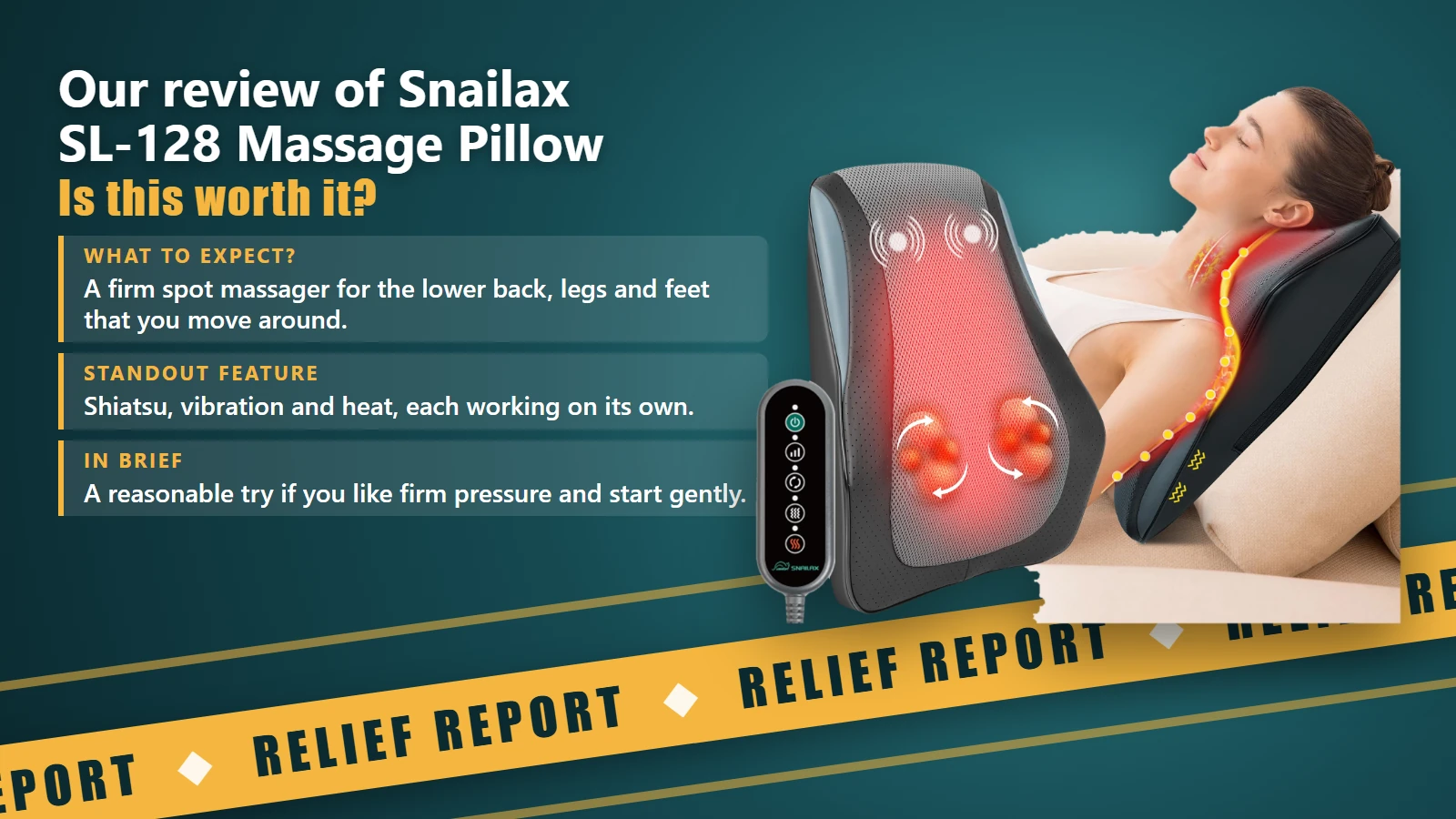
Our review of the Snailax SL-128 back and neck massage pillow ($59.99) found the same pattern. The pillow has a removable, washable cover that flips over to soften pressure, and a third of buyer reviews called the nodes hard or too intense.
The blanket layers one member uses do the same job as the flip-over cover reviewers like. Remember the nodes on that pillow start at the highest intensity, so check the level before you lean on it.
When it helps: you want to lie down and let the pillow work one spot without bruising the muscle. When to skip it: if you have arthritis or pressure sensitivity, since the nodes were unforgiving for several reviewers.
2. The Sock Strategy for Foot Massagers
Members consistently wear socks inside enclosed foot massagers. The socks dampen sharp roller pressure, make high heat tolerable and keep the interior fabric clean.
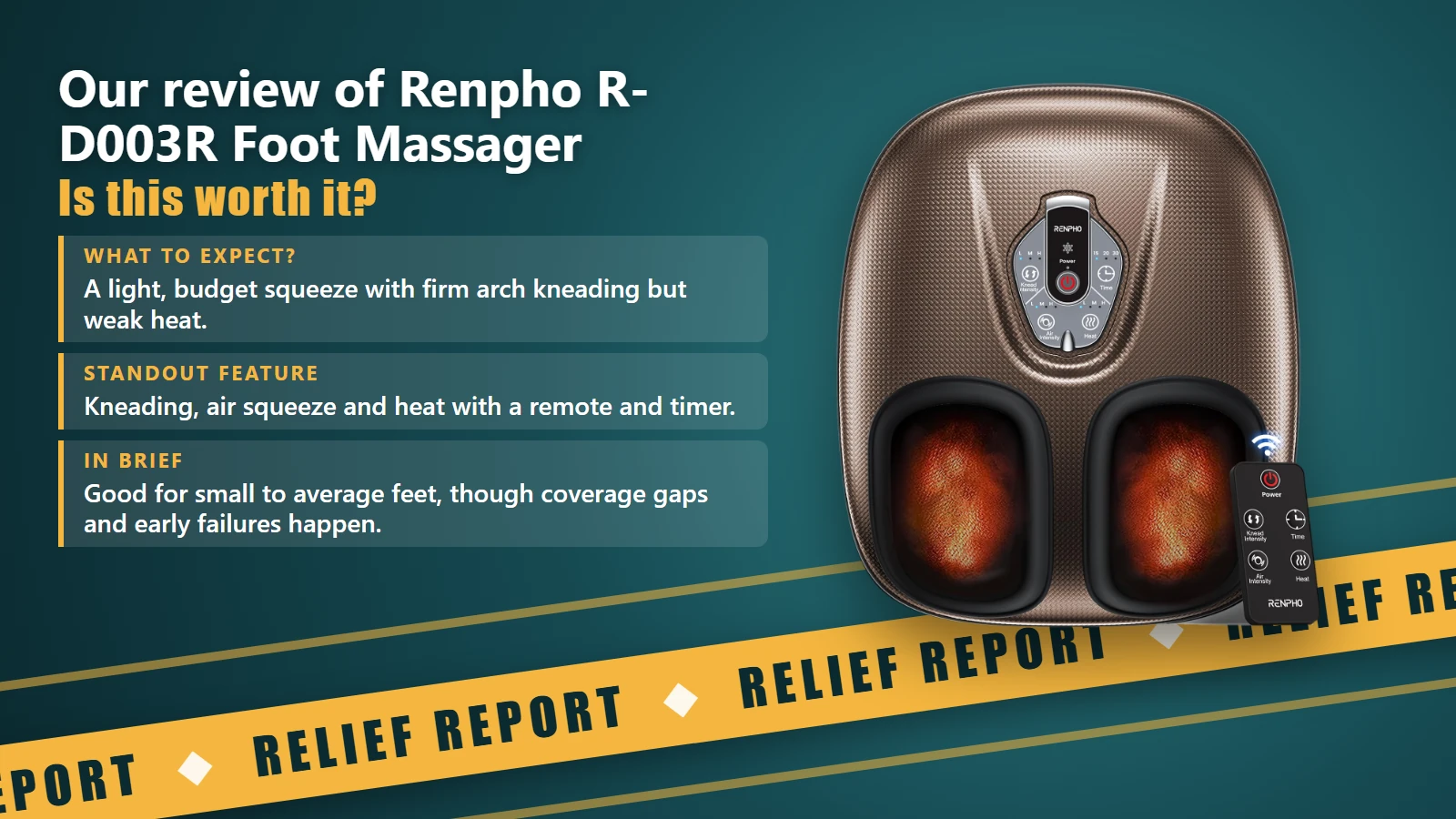
A member with US women's size 6 feet likes a hard squeeze and still wears socks, because they soften the kneading. Our review of the Renpho R-D003R foot massager ($84.98) found the squeeze strong even on level 1, and one client's size 10 husband stayed on the lowest setting the whole time.
Four of our seven clients named a spot the machine skips, whether toes, heel, front pad or the top of the foot. Socks will not fix coverage gaps, but they make the spots the rollers do reach feel less aggressive.
When it helps: every session, especially in the first two weeks while your feet adjust. When to skip it: if the rollers feel too weak even without socks, you may need a different machine.
3. Pre-Warming Hand Massagers
Built-in heating elements in hand massagers can be slow to reach temperature. Members power the unit on and let it run for a minute before putting a hand in.
Our review of the Comfier CF-4403 hand massager ($89.99) fits this. Group members say the heat takes a moment to build, and the warmth is the strongest feature of this glove.
Two of five clients rated it four stars or better, but two gave it two stars because the squeeze felt too hard on sore hands. Pre-warming means the heat is already there when the squeeze starts.
Start on compression level 1 with low heat, put your hand in palm down with fingertips near the top of the chamber, and flip the glove over for the other hand. Keep it charged too, since one client had to charge a flat battery for an hour before it would start.
4. The Gel Glove Routine for Sore Hands
For hands with arthritis or joint soreness, members apply an arthritis gel, put on a vinyl glove, and run the heated hand massager over it in the evening while they relax.
A member with psoriatic arthritis uses this routine most nights. It is good on medium days but too squeezy during a flare, which fits what our clients found.
Two of the five clients who tried the hand massager found even level 1 too hard for sore joints, and so did six of twenty-three buyers. This is a comfort routine and not a treatment.
If your joints are swollen, hot or sore to the touch, skip the massager and check with your doctor. The gel-and-glove combo is for days when your hands are tired but not inflamed.
5. A Towel Between the Heating Pad and Your Skin
Members put a folded shirt, towel or pillowcase between the bare pad and skin to prevent hot spots. That matters most for longer sessions or higher heat levels.
Our review of the Bob and Brad TheraHeat 2.4lb weighted pad ($49.98) found two of six clients called the heat too mild. The pad has six heat levels up to 150°F, and the soft weighted drape is the reason to buy it.
The far-infrared (a type of heat that claims to reach deeper than standard warmth, though you cannot check this at home) label is a marketing line. The towel is a safety step and not a comfort one.
Toasted skin syndrome (a net-like brown or red marking that can build up after long, repeated heat on the same spot) is why members layer a towel and avoid high heat for many hours a day. Skip heat on fresh swelling or a new injury for the first 48 to 72 hours, and use ice instead.
Start with fifteen to thirty minutes, the range many members use for general tightness, and build up only if your skin shows no redness or marks. When it helps: any session over fifteen minutes on medium or high heat.
6. Storing TENS Pads in the Fridge
Members store adhesive TENS (small electrical pulses sent through sticky pads on the skin) pads sealed on their plastic backings in the refrigerator. They say the cold preserves the gel across twenty to thirty uses.
Pad grip is a common complaint with budget TENS units. Our review of the Neocarbon TENS Unit Pro ($69.97) found some reviewers could not get the pads to stay on, while others, including our client, said they held well.
Members also clean the skin with alcohol wipes or plain soap and water before placing pads, to remove oils. They add a tiny drop of conductive gel or water to dry pads before use and before storage.
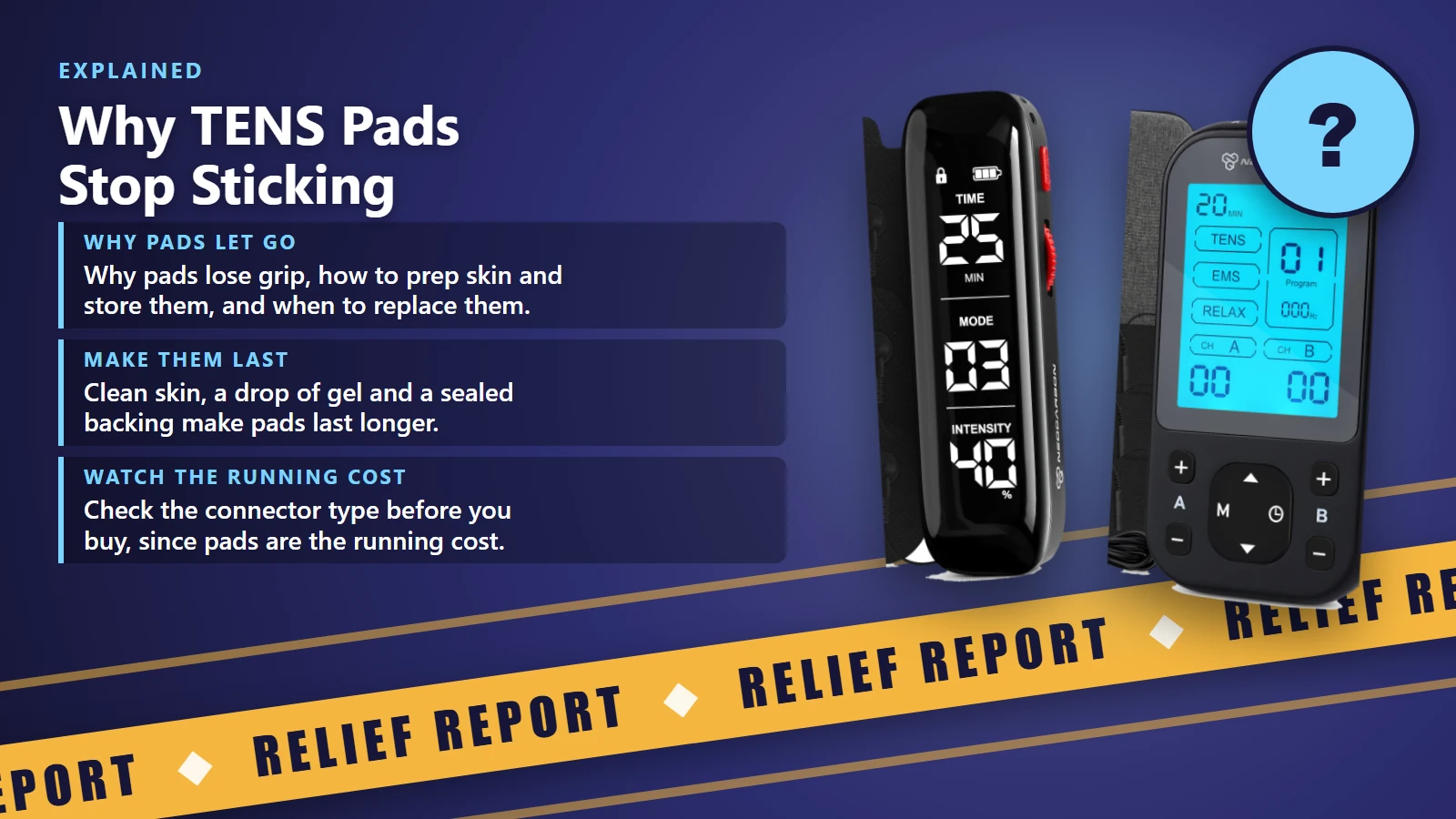
Our guide on why TENS pads stop sticking and how to make them last longer goes deeper. When it helps: always, if you want your pads to last more than a few weeks.
7. Clothing Under Compression Boots
Members wear lightweight capris, pajama bottoms or sweatpants inside compression sleeves to prevent deep skin indentations and red marks. Our review of the Quinear QN-072A full-leg compression massager ($129.99) found the same need.
Its foot section squeezed hardest even on low, and our client spent time loosening and tightening each strap. Compression boots squeeze in sections that move up the leg, a bit like a blood pressure cuff.
The pressure is measured in mmHg (millimeters of mercury, the same unit used for blood pressure, where higher numbers mean a tighter squeeze). Members generally use low to moderate levels, such as levels four to seven on a seven-point scale, or seventy to one hundred twenty mmHg on rated units.
Thin clothing under the sleeves is the simplest way to avoid marks without turning the pressure down so far that you feel nothing. Start on the lowest strength, wear thin cotton pants or socks, and loosen the Velcro anywhere it squeezes too hard.
If you feel tingling or numbness, stop and loosen things before you try again. Ask a doctor first if you have a history of blood clots or heart failure.
8. Feet Up: Removing Body Weight From Foot Massager Nodes
To reduce intense roller pressure, members kick their feet up onto a bed or sofa while keeping the massager on. That removes their downward body weight from the nodes.
It helps most in the early sessions. One client found the first sessions too strong and then settled, and the 71-year-old client mentioned earlier started on the lowest settings and found the squeeze on top of the foot hard to bear at first.
After two weeks that client's feet felt great and they moved up to the middle settings. When it helps: the first one to two weeks, or any time a session feels too intense.
9. Sliding Your Feet for Better Coverage
Members slide their feet forward and backward inside the pockets to alternate roller contact between the toes, arches and heels. This one fixes coverage, and comfort is a side benefit.
One client with size twelve feet had rollers that covered only the arch, with nothing for the first inch and a half from the toes. They had to hold half a foot in place for the whole session.
Move forward for the toes, back for the heel, and center for the arch. Sliding is a workaround, so if you need real toe or heel work, look for a machine that covers it.
10. The Thermal Sandwich Technique for TENS
Members pair electrical stimulation with temperature. They place TENS pads on the lower back while resting an ice pack or heating pad on the lower abdomen, or put ice over the area at the end of a session.
Many members also report better relief when they wear the unit while moving gently, such as light yoga, pelvic tilts or hamstring stretches, rather than lying still.
For settings, members with acute pain use high frequency (how many pulses per second the unit sends, measured in Hz) of seventy to one hundred Hz with short pulse widths (how long each pulse lasts, in microseconds; shorter feels less intense) of fifty to two hundred microseconds.
For chronic tightness or muscle relaxation they use one to ten Hz, often three Hz, with wider pulse widths of one hundred twenty to two hundred eighty microseconds. Dial power up slowly until a stinging or mild muscle contraction begins, then back it down a fraction to a strong, comfortable, non-painful buzz.
Who should skip it: anyone with a pacemaker, and ask your doctor first if you have nerve damage, epilepsy, a heart condition or are pregnant. When it helps: stiff, tight muscles where members like the combination of warmth or cold with the buzz.
11. Anchoring TENS Wires Inside Clothing
Members thread TENS leads up through tank tops or secure them with medical tape, so the weight of the cable does not peel the pads loose.
One client who upgraded a fifteen-year-old unit noted the pads were very sticky, while other reviewers could not get theirs to stay on at all. Wire weight may be part of that difference.
Keep the leads close to your body and tape or tuck them so they do not hang free. When it helps: any session where you move, stretch or walk with the unit on.
12. The Slow-Start Week for Neck and Shoulder Massagers
New users start on gentle mode for five minutes daily for the first week, then build up to ten or fifteen minutes as the muscles adjust.
Members sit upright in an armchair or office chair, slip their arms through the loops, and pull downward to set the pressure into their traps. In longer sessions they shift the unit every twenty to thirty minutes, from the base of the skull down the neck, shoulders, the muscles between the shoulder blades, mid-back and calves.
This fits what our clients found: the 71-year-old who started low and moved up after two weeks is the pattern, and the client who ran a pillow on one spot until sore is the warning.
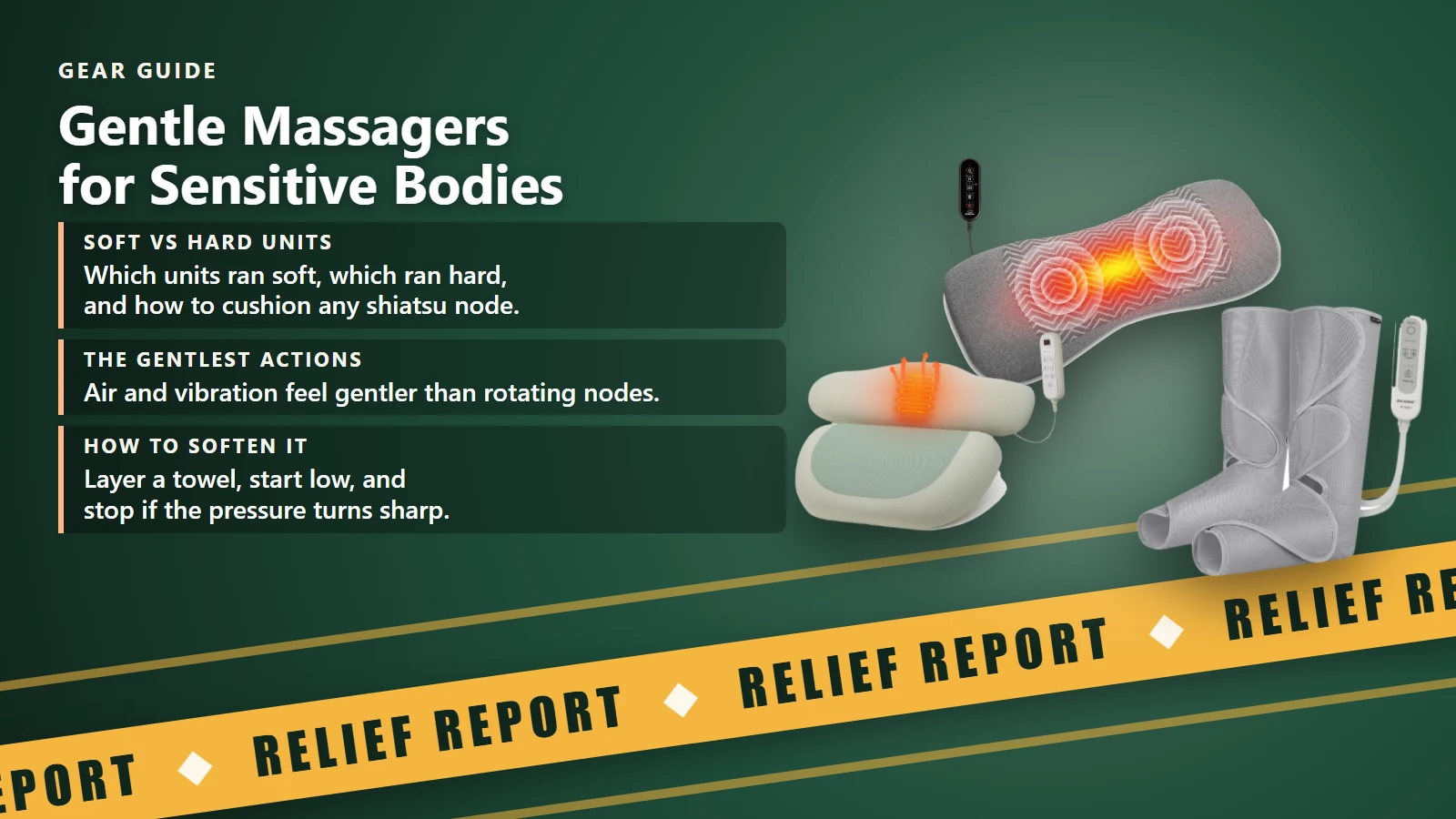
If pressure sensitivity is your issue, our guide on gentle options for sensitive bodies when shiatsu nodes feel too hard covers devices that start softer. When it helps: the first week with any new device, and who should skip it: nobody, because everyone should start low.
Hacks to Skip
Not every trick members post is a good idea. Some are risky, and some just do not work.
Skip running a massager for hours on one spot. One client ran a pillow on the lower back until sore and felt it for a couple of days, and even with the blanket bed you should shift positions every twenty to thirty minutes.
Skip using a hand massager on joints that are swollen, hot or sore to the touch. Even level 1 squeezed too hard for two of our clients and six of twenty-three buyers.
Skip falling asleep with a heating pad on. One member runs a knee wrap overnight on its lowest heat with the massage function off, but that is one member's habit and not a recommendation, and toasted skin syndrome is the reason members layer towels.
Skip pushing through numbness or tingling in compression boots. Stop and loosen the straps before you try again.
We have no long-term reports on some of these tricks, since members post what works today and not what happens after a year. Check with a doctor if you have a condition that affects circulation or nerve sensation.
Questions People Ask
Do I really need to wear socks in a foot massager?
You do not need to, but members consistently do. Socks dampen sharp roller pressure, make high heat tolerable and keep the interior fabric clean. They help most in the first two weeks, though four of our seven clients still found coverage gaps that socks cannot fix.
How many blanket layers should I use over shiatsu nodes?
Members use three or more layers of blankets or folded towels over the nodes when lying down. Start with three and add or remove layers based on how the pressure feels. Some pillows have a flip-over cover that softens pressure in a similar way.
Can I store TENS pads in the fridge?
Members do, sealed on their plastic backings, and say it keeps the gel hydrated across twenty to thirty uses. Clean your skin first, add a tiny drop of conductive gel or water to dry pads, and put them back on the plastic after each session.
How long should a session last?
It depends on the device. Members run foot massagers 10 to 30 minutes, hand massagers in 15-minute cycles, neck and shoulder units 10 to 15 minutes, TENS 20 to 30 minutes, and heating pads 15 to 30 minutes for general tightness. Start at the short end.
What to Do Next
Start with the hack that matches your biggest complaint. If pressure is too hard, try the pillow bed or the sock strategy tonight.
If heat is too weak, pre-warm your hand massager for a minute before you start. If pads fall off, clean your skin and anchor the wires inside your shirt.
Pick one trick and test it for a week before adding another. The clients who settled in comfortably started on the lowest settings, and the one who ran a pillow on a single spot until sore felt it for days.
If you are buying a device for someone else, set it up for them before you hand it over. Show them the lowest setting, hand them a pair of socks and put a towel nearby, because five minutes of setup gives a gift a much better chance of being used.
If a device hurts, stop, and check with a doctor if you have arthritis, neuropathy, circulation issues or any condition that affects sensation. These hacks make good devices easier to live with, but they do not make a bad device safe and they do not replace hands-on care.