

Key Takeaways
- Pad life ranges from one use to many sessions in our reviews, and skin prep plus a drop of gel seem to decide it.
- About 7 of 24 buyers of one wireless patch wrote that the pads stop sticking, and a replacement 3-pack costs $50.
- Check the connector before you buy: standard 2mm pin pads run about $5 for 20 in one report, while proprietary pads can cost far more.
- Members store pads sealed on their plastic backing, some in the fridge, and say this stretches them to 20 or 30 uses.
- If a pad lifts mid-session, turn the unit off before you touch it, because a partly stuck pad can cause sharp zaps.
Pads losing their stick was one of the top complaints in our TENS reviews. One buyer used up two sets of pads in under 24 hours even with the recommended gel, and a client's pads on another unit quit after about five uses with no gel in the box.
This guide pulls together what our clients, members of our Facebook group and buyers reported across the units we reviewed. You will learn why pads lose their grip, how to prep your skin, how to store pads, when to replace them, what connectors to look for, and how to avoid the sharp zap that comes when a pad peels mid-session.
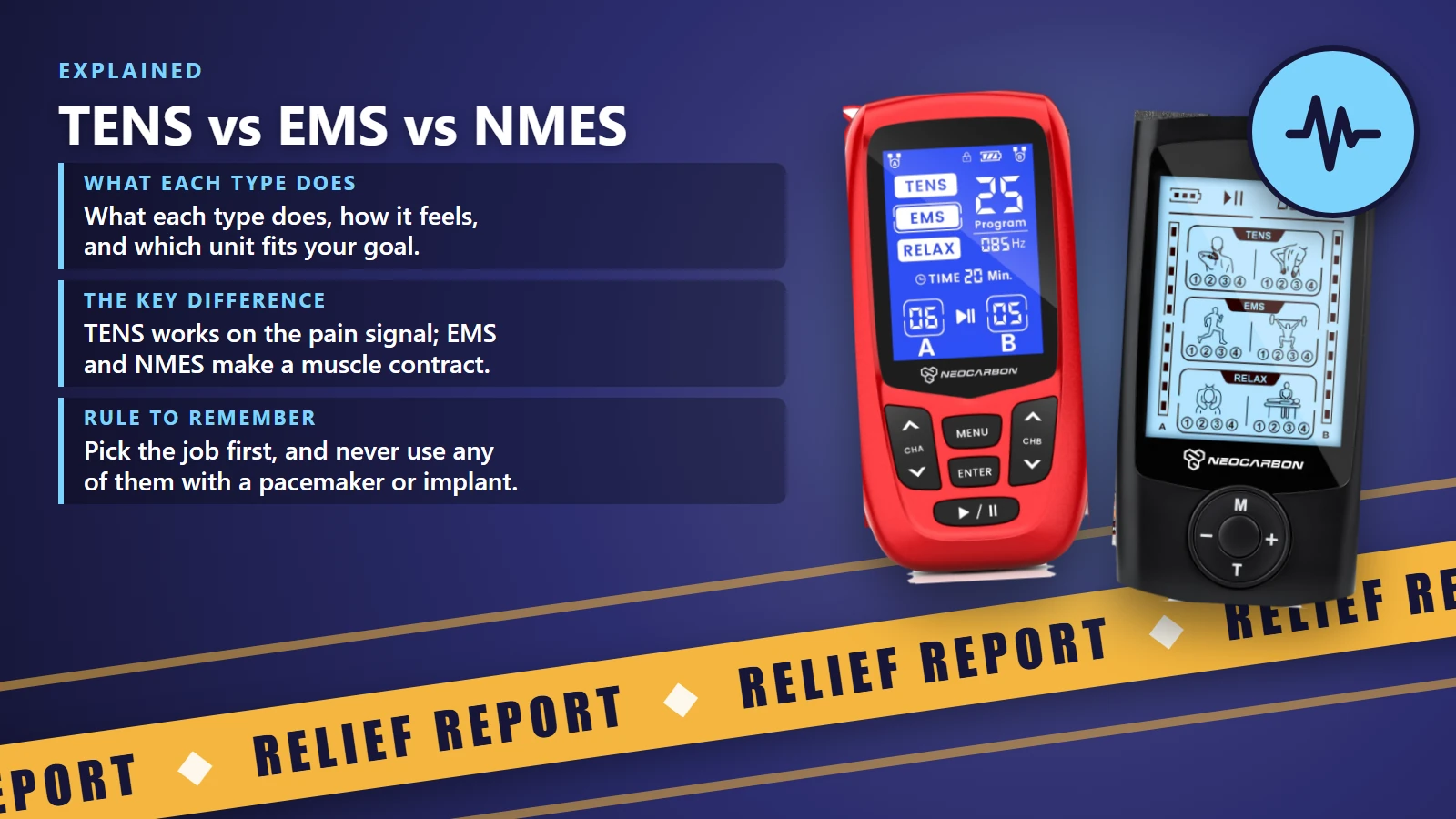
If you are still deciding which unit to buy, our guide to TENS versus EMS versus NMES walks through which type fits your goals. This article assumes you already have a unit or are close to buying one.
Why Do the Pads Stop Sticking?
The pads that ship with these units are coated with a conductive gel (a sticky layer that carries electrical current from the pad to your skin). That gel is what makes the pad cling and what lets the current spread across the whole surface.
When the gel loses its tack, the pad lifts, and the current is left with a tiny strip of contact. Members clean their skin before every session for this reason, to strip away oils.
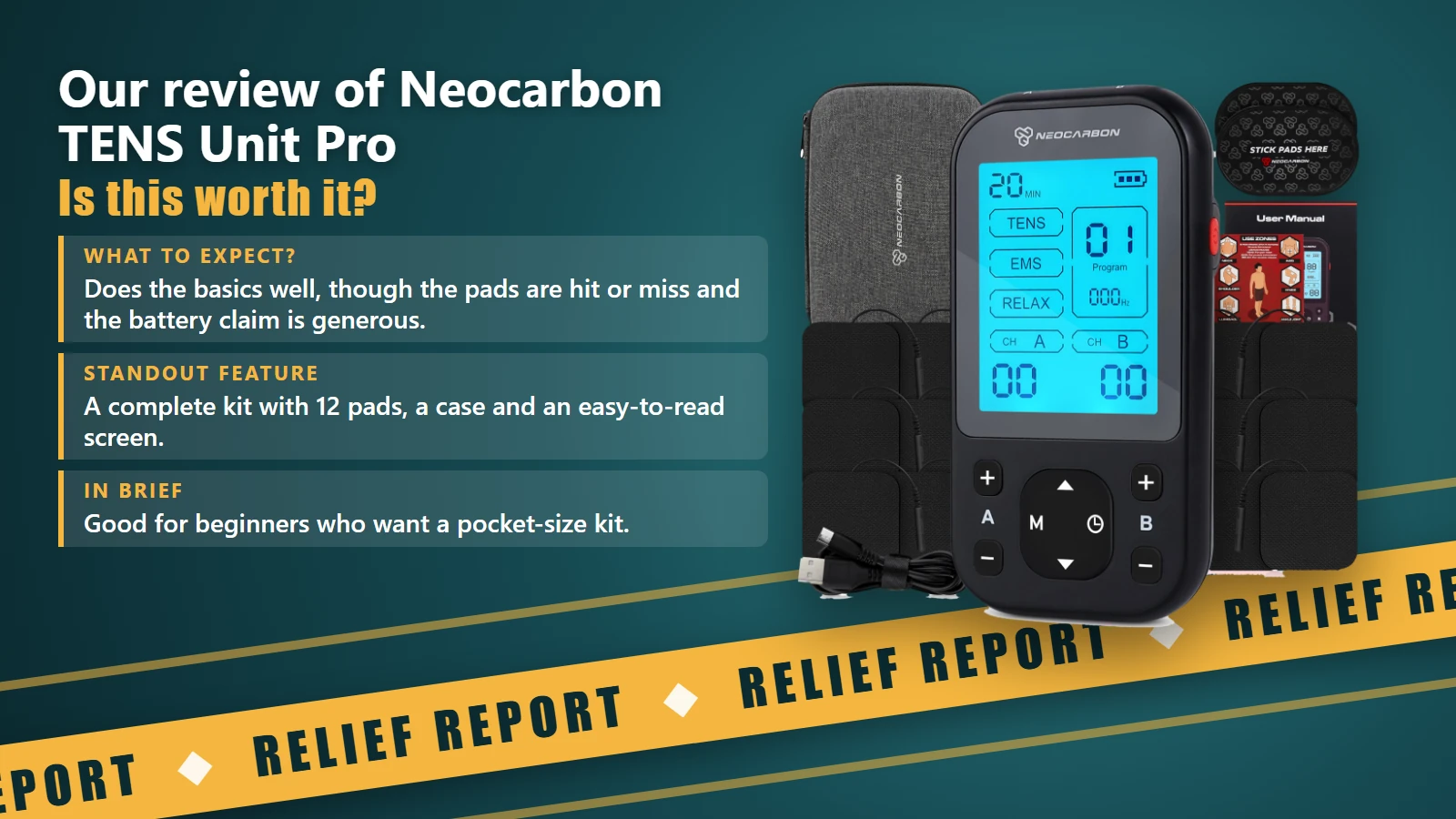
Pad quality varies, even within one brand. A client found the Neocarbon TENS Unit Pro pads very sticky, and one reviewer said they held with gel, yet other reviewers could not get them to stay on at all.
One reviewer tried the pads on several body areas and they kept peeling off, so they wrapped an ace bandage around them. They liked the case but gave the unit 2 out of 5, partly because the pads failed.
In a roundup of group comments about Neocarbon TENS units, 3 comments praised how long the pads lasted and 2 called them poor. That same split showed up in the reviews for the $69.97 Pro and the $59.97 Slim.
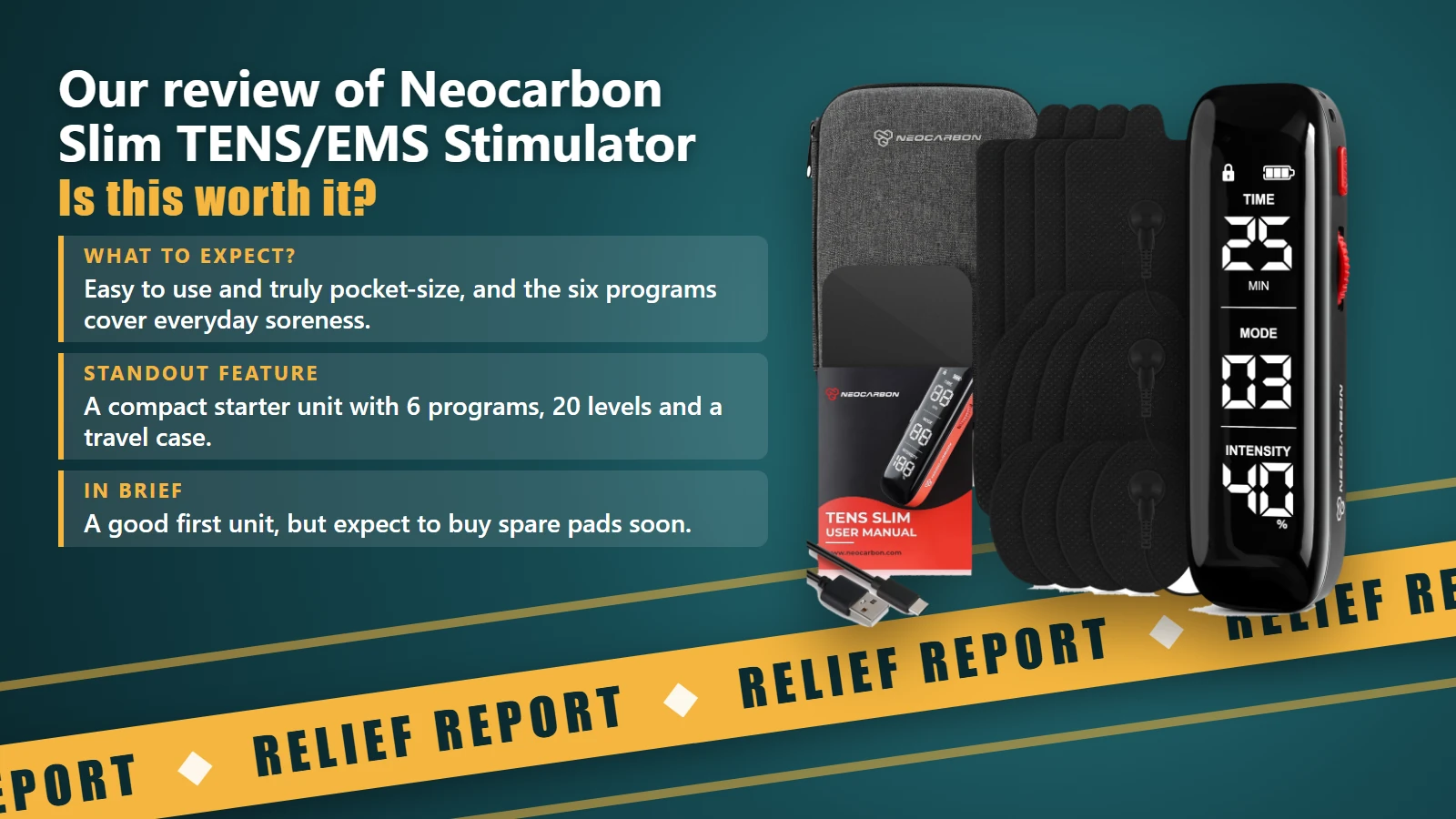
A reviewer who has used a few TENS units over the years said the Slim holds its own, with pads that stick well and a battery that stayed solid. That makes the pad story mixed, not a clear flaw.
No gel in the box is a pattern worth knowing about. The Slim ships with no gel, and a client's pads stopped sticking after about 5 uses.
The Neocarbon Ultra ships with 14 pads, and a reviewer who uses it 3 to 5 times a day found the pad conductivity fades quickly, so gel is a must. If your unit does not include gel, budget for it from day one.
Heat can also ruin pads. A member of our Facebook group paid $50 for a replacement 3-pack that arrived with melted adhesive, and the seller refused a replacement and offered 10% off instead.
So keep pads out of hot cars and sunny windows. One buyer also said the patches irritate older skin, so stop if your skin turns red or sore.
How Should I Prep My Skin Before Putting Pads On?
Members of our Facebook group have landed on a routine that works. Clean the skin with alcohol wipes or plain soap and water before the pads go on, to remove oils.
A tiny drop of conductive gel, or even plain water, on a dry pad brings the stickiness back. One member has used the same pads for about 5 years by wiping them with a wet rag after each use, which is an extreme case but shows the gel responds to moisture.
Placement matters as much as prep. Pads go over fleshy muscle, not bone or the spine, and pairs stay on the same side of the body.
Never place pads across the chest and upper back at the same time, because that routes current across the heart. Our review of the Neocarbon Slim TENS EMS describes a client who read the manual first and started low on the neck and lower arm, and felt good, but the pads still quit after about 5 uses.
Anyone with a pacemaker or another implanted electrical device should skip TENS and EMS units entirely. Pregnancy, epilepsy or a heart condition mean you should ask a doctor first, and these units can help sore muscles feel looser but do not fix anything underneath.
What Is the Best Way to Store Pads Between Sessions?
The most important rule is to put pads back on their plastic backing. Members also store sealed pads in the refrigerator to preserve the gel across 20 to 30 uses.
This table summarizes the pad care steps our clients and group members rely on.
| Habit | Why it helps | How often |
|---|---|---|
| Clean skin with soap and water or alcohol | Strips the oils from the skin | Before every session |
| Add a drop of gel or water to dry pads | Brings the stickiness back | When a pad feels dry |
| Store pads sealed on their plastic backing | Keeps the gel hydrated | After every session |
| Keep sealed pads in the fridge | Preserves the gel across 20 to 30 uses | Between sessions |
| Keep pads out of hot cars and sun | Heat can melt the adhesive | Always |
| Tuck wires inside your clothing | Cable weight can peel the pad loose | Every session |
| Wipe pads with a wet rag | One member's pads lasted about 5 years | After each use |
A client who tried the Neocarbon Ergo TENS EMS after shoulder surgery found that two pads were all they needed. The Ergo ships with 12 pads, but pooled group comments split on how well they stick.
Keep the wires tucked inside your clothing, threaded up through a tank top or secured with medical tape. The cable weight is enough to lift a corner, and a lifted corner is where trouble starts.
How Do I Know When It Is Time to Replace the Pads?
No fixed number exists, because pad life depends on skin prep, gel use and storage. Our data runs from one use to many sessions.
A client's pads on the Slim stopped sticking after about 5 uses with no gel, and one buyer used up two sets in under 24 hours even with the recommended gel. On the other end, a member has used the same pads for about 5 years with a wet rag, and 20 to 30 uses is what members report when they follow the care routine.
For the wireless NeuroMD SM9113, about 7 of 24 buyers wrote that the pads stopped sticking, one in as little as the fifth use. A member's figure of about 20 uses per pad is unverified, and our full write-up on the NeuroMD SM9113 covers the pad cost in detail.
One reviewer with years of constant back pain found the pads came off their backing and stopped sticking around the edges. A replacement did the same, and the return window had closed by then.
Test your pads early, inside the return window. Two buyers with no relief missed it, one by 3 days.
Replace a pad when a corner will not stay down, because members say a partly stuck pad is where the zaps come from.
What Connector Type Should I Look For?
This is where you can save real money or get locked into expensive replacements. Members stress checking the connector style before you buy.
Standard 2mm pigtail pin connectors (a thin wire with a small pin that pushes into the pad) let you buy cheap generic pads, about $5 for a pack of 20 in one report. Snap button connectors (a metal stud that snaps onto the pad like a clothing snap) are harder to find cheaply.
The Slim ships with snap-style pads, and a set of leads with standard pin connectors fixes that problem. One reviewer of the Pro suggested snap-pad replacements over the pigtail connectors, though the member advice leans the other way.
Proprietary pads are the trap. The NeuroMD wireless patch uses a single butterfly pad with the pod in the middle, and a replacement 3-pack costs $50.
Some prescription-based units lock users into recurring monthly shipments of pads and batteries costing $40 to $60 a month, which members found difficult and contentious to cancel. A member who has used a different brand's dual channel TENS for over a year buys cheap replacement pads, and standard connectors make that possible.
What Happens When a Pad Peels Mid-Session?
This is the complaint that makes people return their units. When a pad partly peels off, slips into underwear or loses contact while the unit is running, the full current routes through a tiny surface area.
The result is an intense, painful zap that members describe as a sharp shock. A client was blunt about it: the stickiness of the pads wears off, and without full contact you get a shock.
The difference between a shock and a good session often comes down to a drop of gel and a clean patch of skin. A reviewer whose quad shrank after ACL graft surgery uses their unit before and after work with ice, and bought extra pads and gel to keep the pads holding, which is one person's story and not a promise.
The fix is simple. If a pad lifts partway during a session, turn the unit off first, then reposition or replace the pad.
Falling asleep with the intensity turned up, or wearing pads for 5 to 6 hours or longer, can cause red circular skin burns, tape blisters and superficial skin ulcers. Placing pads (electrodes, the parts that deliver the current) on sensitive areas or spiking the intensity too fast can trigger nausea, dizziness or fainting, and members report falls with injuries.
Start low, stay awake, and keep sessions to about 30 minutes, which is where most of our group settles. Never place pads on the front or sides of the neck, across the temples or eyes, or over open wounds, because members flag a risk of neck artery spasm or disrupted blood flow to the brain.
Questions People Ask
Can I make TENS pads sticky again?
Often, yes. A tiny drop of conductive gel or plain water on a dry pad brings the stickiness back, and one member wipes theirs with a wet rag after each use and has kept the same pads for about 5 years. If a corner still will not stay down, replace the pad rather than risk a zap.
How many pads should come in the box?
The Pro and Ergo ship with 12 pads, the Ultra with 14 and the Pulse Massager with 16, while the Slim comes with only a couple of each of three sizes. Count the pads before you buy, and note that the Slim ships with no gel, so budget for gel or spares in the first week.
Are expensive replacement pads worth it?
Not usually. Generic pads with standard 2mm pin connectors cost about $5 for a pack of 20 in one report, while proprietary pads for the NeuroMD cost $50 for a 3-pack. The connector type decides your running cost, so check it before you buy.
What settings should a beginner start with?
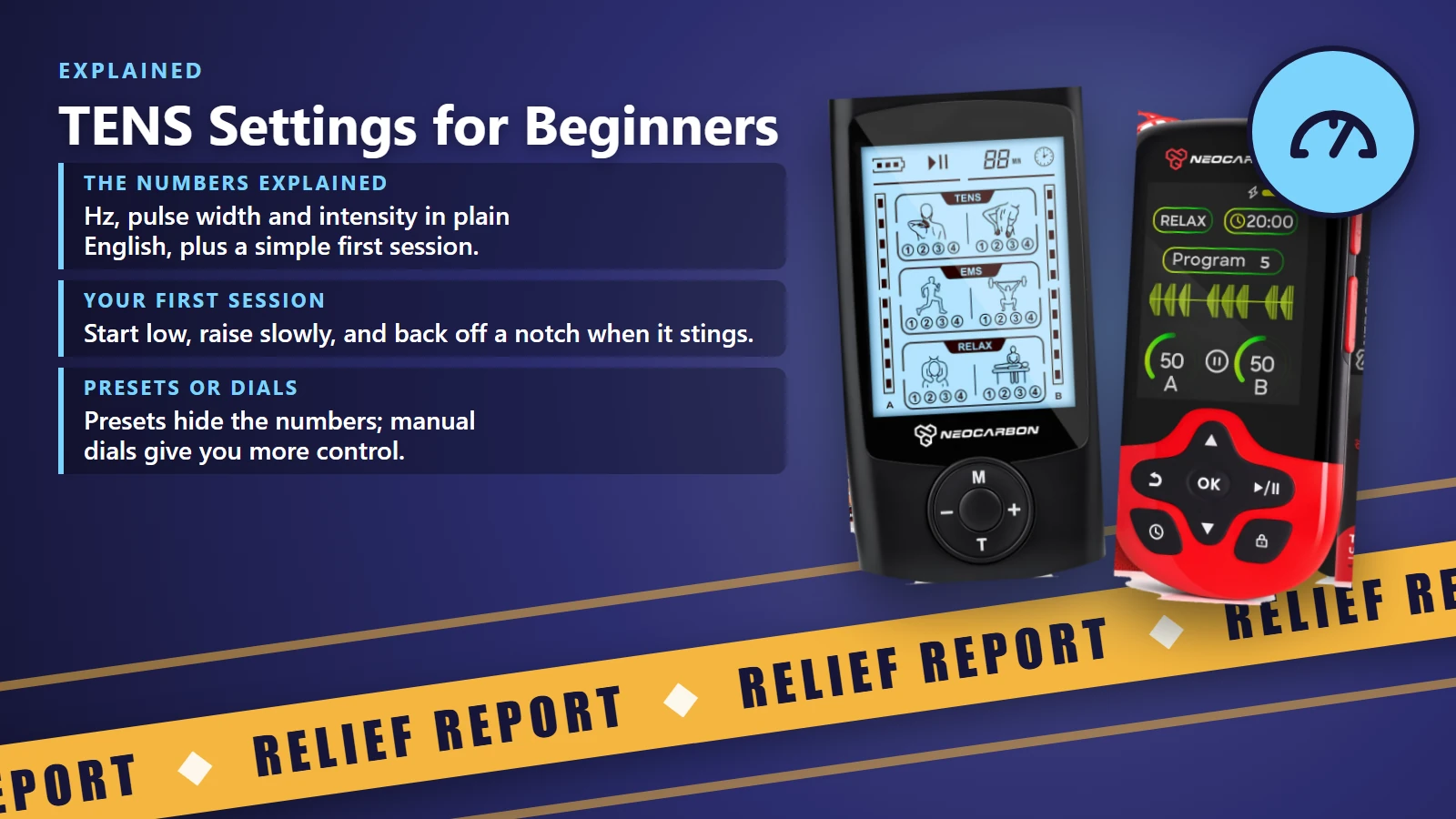
Start at the lowest intensity and keep your first session to about 30 minutes. Our beginner settings guide explains frequency and pulse width in plain words, and the NeuroMD brand schedule keeps you on Mode 1 for the first 4 to 7 days before Mode 2 takes over.
Bottom Line: What Should You Do Next?
If you already own a unit, the pads are the part you can control. Clean your skin before each session, add a drop of gel or water to dry pads, and store them sealed on their backing, in the fridge if you like.
Replace a pad when a corner will not stay down, and if a pad lifts mid-session, turn the unit off before you touch it. Keep sessions to about 30 minutes, and never fall asleep with the intensity turned up.
If you are still buying, check the connector type before you spend a dollar. Standard 2mm pin connectors let you buy cheap generic pads at about $5 for 20, while snap buttons and proprietary pads can lock you into higher costs, so add gel and spare pads to your cart from the start.