

Key Takeaways
- A massage gun belongs on the big muscles of the legs, hips, back and shoulders, and it does not belong on the neck, bones or joints.
- The stall force on the box (how hard you can press before the head stops moving) told our clients less than where they aimed the gun and how long they stayed there.
- Our group keeps it to 30 to 60 seconds per tender spot and 1 to 2 minutes per muscle group, and sharp pain means stop.
- One pregnant member of our group had a multi-day sciatica flare after using a gun on her lower back, so pregnancy is a reason to ask a doctor first.
- The calves are the riskiest spot if a blood clot is possible, which makes this the one area where "try it and see" is the wrong plan.
One pregnant member of our Facebook group used a massage gun on her lower back and ended up with a sciatica flare that lasted days. Another member felt nauseous after a gun landed on the kidney area, and a third needed an emergency room visit for vertigo after percussion near the base of the neck.
These stories are not rare, because the same danger zones keep coming up across our client reviews and group posts. This guide walks through each one, says what can go wrong, and gives you something safer to do instead.
The Short List: Where a Massage Gun Never Goes
The listings and manuals we read all give the same warnings. Keep the gun off the front and sides of the neck, the spine, all bones and joints, the kidney area of the lower back, fresh injuries and swelling, and anywhere a blood clot is possible.
Add the head and face, varicose veins, fresh bruises, broken skin, and the pelvic floor and other delicate areas. Our group members, including some medical professionals, agree on these zones, and the risks range from bone bruising and nerve pain to damaged arteries and life-threatening clots.
| Body area | Why to avoid | Do this instead |
|---|---|---|
| Front and sides of the neck | Arteries, veins and nerves; members report vertigo | Work the upper back and shoulder muscles |
| Spine, bones and joints | Bone bruising and rebound pain | Use soft heads on muscle beside the spine |
| Kidney area of the lower back | Nausea reported; organ risk | Stay higher; work glutes and hips |
| Head and face | Listings name them as off limits | Leave the gun off entirely |
| Fresh injuries and swelling | May worsen inflammation and delay healing | Wait until the acute phase passes |
| Varicose veins, bruises, broken skin | Listings name them as no-go areas | Skip the area; ask a doctor if unsure |
| Calves with possible clot risk | Percussion could dislodge a clot | Get a doctor's clearance first |
| Pelvic floor and delicate areas | Members warn of internal bruising and nerve damage | Leave the gun off entirely |
If you remember one thing from this guide, make it this table. The sections below explain why each zone is risky and what our clients and members do in its place.
The Neck: Arteries, Nerves and Vertigo
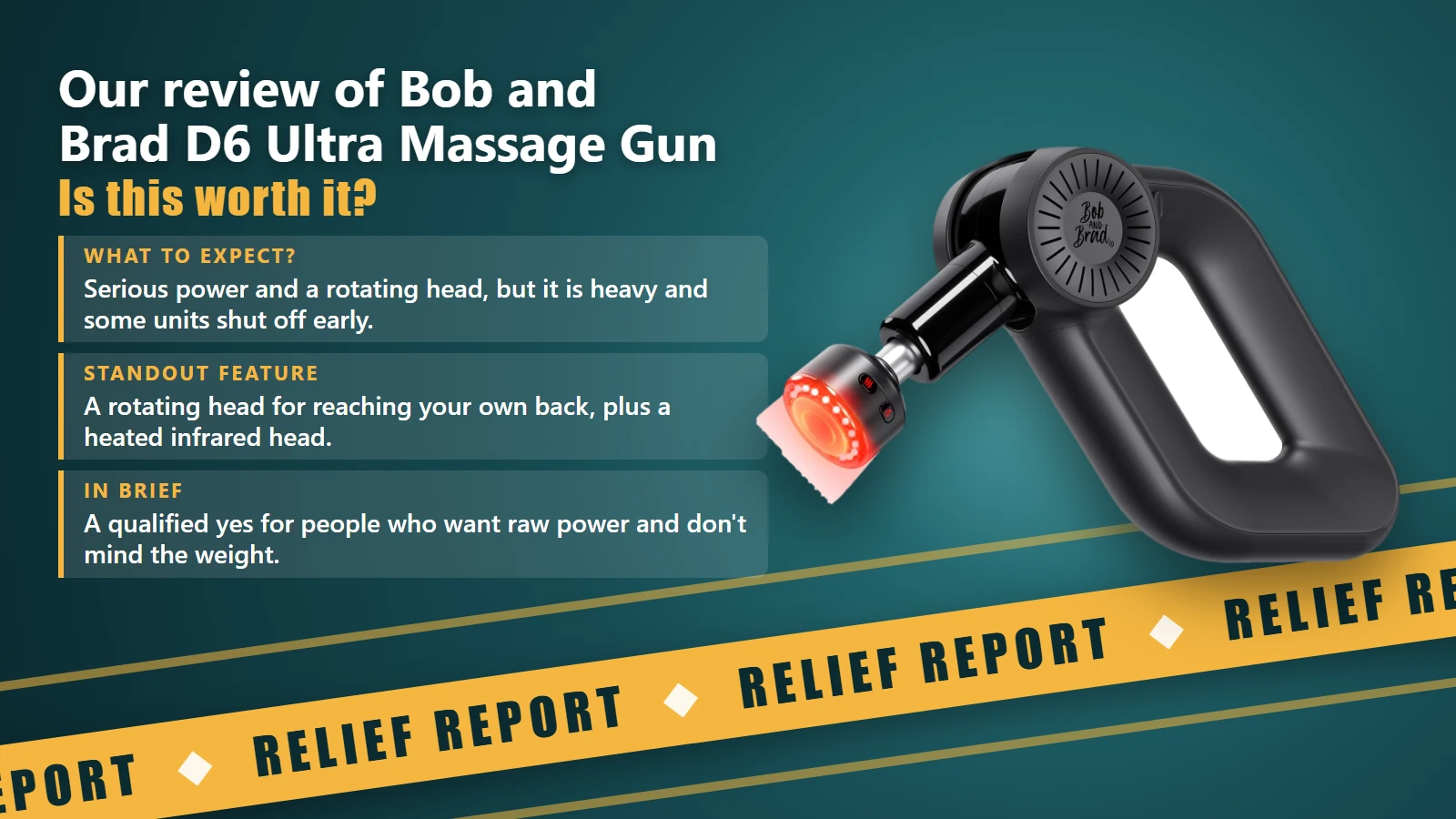
The front and sides of the neck are off limits. The Bob and Brad D6 Ultra listing says so plainly, and so does every other listing we read.
The front of the neck carries the carotid arteries and jugular veins, and members warn that percussion (rapid tapping or hammering) there risks carotid artery dissection (a tear in the artery wall that can lead to a stroke). The sides hold nerve bundles that can fire shooting pain or electric-shock sensations when hit.
One member of our group described vertigo, severe dizziness, brain fog and panic attacks after a gun was used near the upper traps and the base of the neck. The suspected cause was loosened inner ear crystals, and it took an emergency room visit and a scan of the neck arteries to rule out worse.
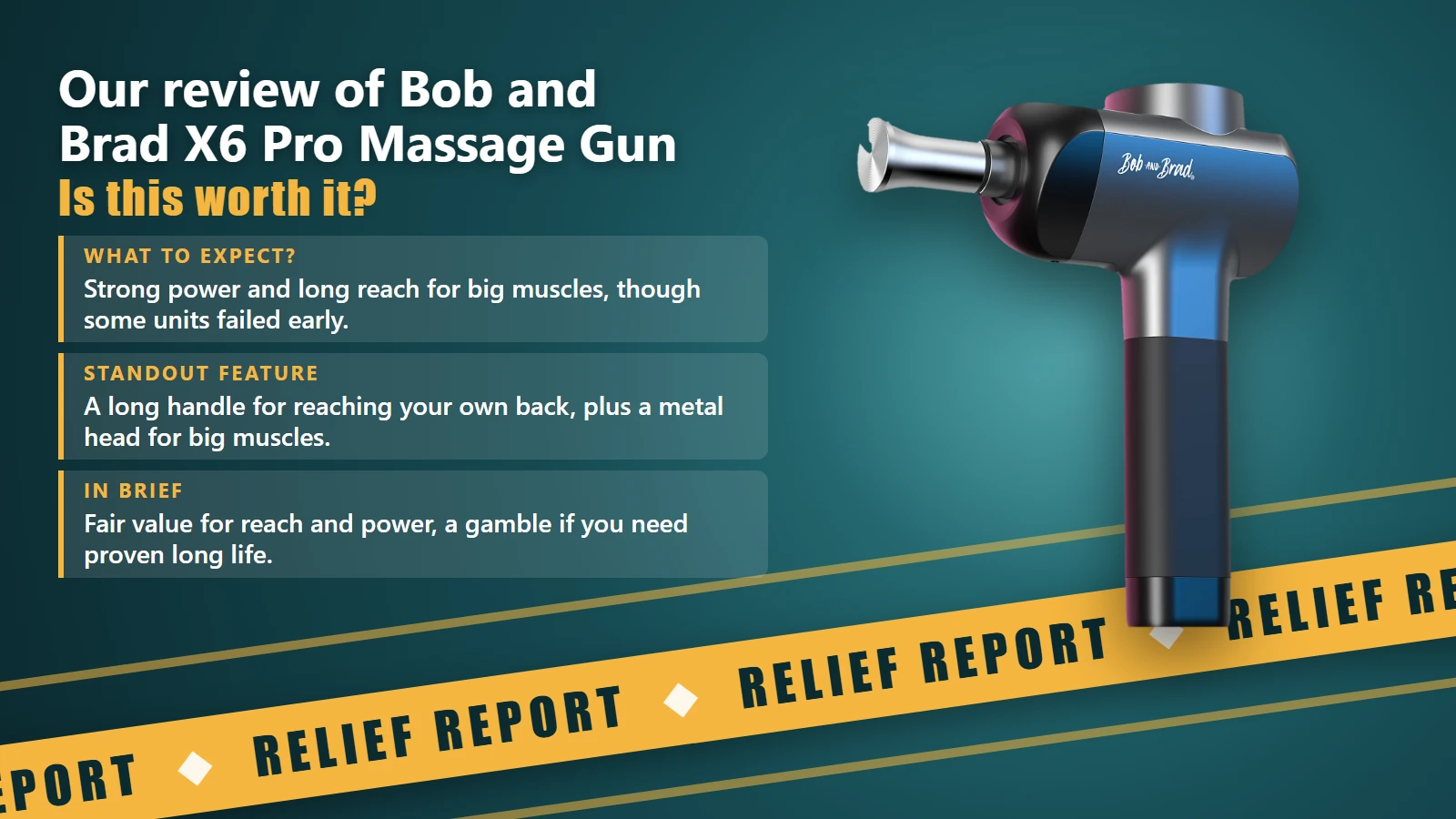
A member who bought the Bob and Brad X6 Pro specifically for neck work found it only so-so. If most of your soreness sits in the neck and hands, a seated or handheld massager is a better pick than a gun.
What to do instead: work the large muscles of the upper back and shoulders, which can help tight muscles feel looser without going near the neck itself. One reviewer said a gun felt nice for "tech neck" when it stayed on those upper back muscles and off the neck.
The Spine and Bones: Bruising and Rebound Pain
Every manual we read says to keep the gun off the spine itself and off all bones and joints. Members of our group warn that hammering knees, elbows, ankles or the small bones of the foot causes bone bruising and sharp rebound pain.
The flat plate head on the Renpho Thermacool Deluxe hurt when it crossed bone. It bounced painfully on a reviewer's thin friend and on another reviewer's bony ankle.
A U-shaped or fork head is made for the spine area, but the instructions are clear: keep it on the muscles beside the spine, about 15 seconds per point, never on the bone. A client who used the Renpho Foldable 2-in-1 reached the knots next to the shoulder blade this way, and a buyer said it gets to the top of the spine area where the knotting is, with both staying on muscle.
Metal heads are a different problem, because they pass force straight through with no cushion. The X6 Pro ships with a metal head for big muscles, and it has no heating or cooling element, so one reviewer called warming or chilling it yourself impractical.
A reviewer with osteoarthritis said hip work eased a bothersome ache for hours. Anyone with ongoing hip or nerve pain should still keep a clinician in the loop and keep the head on muscle.
What to do instead: use soft heads over joints and bony edges. The D6 Ultra comes with eight soft attachments that a client found not jarring on joints or bones.
The Lower Back and Kidneys: Nausea and Organ Risk
The lower back looks like a safe target because the muscles are big, but the kidney area sits just under the lowest ribs on each side. Members of our group reported nausea after a gun hit that area, and percussion over an organ is simply not worth the risk.
The pregnant member who had the multi-day sciatica flare was working her lower back. That area deserves extra caution for anyone pregnant, on blood thinners, with a clotting disorder, or with neuropathy (numb or tingling nerves, which can hide pain).
The large muscles of the lower back are fine to work, and the problem is drifting too low or too far to the sides. If you cannot tell where the muscle ends and the organ area begins, stay higher on the back and work the glutes and hips.
What to do instead: keep the gun on the large muscles of the back, shoulders, hips and legs, and stop at sharp or lingering pain rather than firm, dull pressure. For how long to stay in one place, our guide on safe session lengths for every type of massager goes into more detail.
Fresh Injuries and Swelling: When to Wait
The listings we read agree on this one: skip varicose veins, fresh bruises, broken or inflamed skin, swollen skin, open wounds and any recent injury. Our group members are blunt that high-speed percussion on a freshly pulled muscle, an acute sprain or an inflamed joint can make inflammation worse and slow healing.
Digging in too hard also backfires. Staying on one acute knot for 5 to 10 minutes brought severe soreness, inflammation and skin bruising for members who tried it.
The Renpho Foldable listing says to ask a doctor if you had a fracture or joint surgery in the last 90 days. The Thermacool Deluxe listing names fractures and recent joint surgery as reasons to check first.
What to do instead: wait until the sharp, early phase of an injury has passed. A massage gun can make tight, tired muscles feel better, but it is a comfort tool and not an answer to an injury, so see a professional if something hurts in a sharp or lasting way.
Blood Clot Warning Signs: The Most Serious Risk
This is the most serious risk on the list. Medical professionals in our group warned against hard calf percussion for anyone at risk of deep vein thrombosis (a blood clot deep in a leg vein).
Percussion can dislodge a clot and send it to the lungs, a pulmonary embolism (a clot that blocks blood flow in the lungs) that can be life-threatening. The calves are the highest-risk area, but the warning applies anywhere a clot is possible.
Check with your doctor first if you take blood thinners, have a clotting disorder or have ever had a clot. The Thermacool Deluxe listing adds poor circulation to that list, and the Foldable listing adds heart disease and metal implants.
A pacemaker belongs here too: a licensed massage therapist among our clients would not recommend that gun to anyone with a pacemaker, so keep any gun well away from the device site and ask your doctor first. Do not try a gun first and ask later.
Swelling, warmth, redness or pain in one leg, especially the calf, needs a doctor before any massage. Those can be signs of a clot already in progress, and percussion could make things worse.
Safe Technique: What Our Clients and Members Actually Do
Session length matters more than most people expect. The D6 Ultra listing suggests 10 to 15 minutes per muscle group, which is far longer than our group uses.
Members spend 30 to 60 seconds on a tender spot and 1 to 2 minutes on a larger muscle, and they rarely go past 5 to 10 minutes in a whole session. Start on the lowest speed and build up only once you know how the muscle responds.
Members also stress slow passes, letting the weight of the gun do the work instead of pressing down. Keep the head moving, because bearing down hard on a sore muscle can cause bruising, broken capillaries or irritated tendons.
Some guns will not go gentle: the D6 Ultra starts at a 1500 RPM (how many times per minute the head strikes) floor, and the Thermacool Deluxe will not go below 1800 RPM, which one client found too aggressive on big muscles. If the lowest speed is still strong, fold a towel twice between the gun and your skin, as one group member did.
Pick the head for the job: soft heads for bony areas, and shirt-friendly shapes, since rubber-coated heads can grab clothing. A gym-goer in the user reviews uses the air-filled head almost exclusively because the harder heads seemed likely to bruise.
Use the gun on yourself rather than handing it to someone else. A client's father-in-law tried it on his wife and found the lowest setting too aggressive, and a thin friend ended up with pain over bone, while self-use lets you steer around bone and control the pressure.
Prolonged vibration on one spot, especially the soles of the feet or an injured limb, can leave nerve tingling or buzzing that interferes with sleep. Keep the head moving and the session short.
Numbers on the box are worth a pinch of salt, since the D6 Ultra claims 85 lb of stall force and a client who has tried three guns watched it shut off under firm pressure. A member measured a D6 Pro nearer 60 lb, and our guide to massage gun specs explains what the numbers mean, but the real test is how the gun feels on your muscle at a speed you control.
Comfort varies too. One client heard a high-pitched whine from the Thermacool Deluxe that doubled in loudness against the muscle, while another found it quiet, so try any gun on a large muscle before you build a routine around it.
Questions People Ask
Can I use a massage gun on my neck at all?
Not on the front or sides of the neck, and not on the neck bones. The carotid arteries, jugular veins and sensitive nerves make that area too risky for percussion.
If you want neck relief, stay on the large muscles of the upper back and shoulders, and stop if you feel sharp or lasting pain.
What if I am pregnant or on blood thinners?
Talk to your doctor first. Every listing we read names pregnancy, blood thinners, clotting disorders and neuropathy as reasons to get medical clearance before using a gun.
The pregnant member of our group who had a multi-day sciatica flare was using it on her lower back, so that area deserves extra caution.
How long should each session be?
Start with 30 to 60 seconds per tender spot and 1 to 2 minutes per muscle group. Group members rarely go beyond 5 to 10 minutes total in one session.
Some listings suggest 10 to 15 minutes per muscle group, but our clients and members stay with the shorter numbers to avoid bruising.
Is it safe to use a gun on my calves?
Only if you have no clot risk. Medical professionals in our group warn that hard calf percussion can dislodge a deep vein clot, which can be life-threatening.
If you have swelling, warmth, redness or pain in one leg, see a doctor before using any massager on your calves.
The Bottom Line
A massage gun can help sore muscles feel looser and tired legs feel lighter when you aim it at the right places. The large muscles of the back, shoulders, hips and legs are where it belongs.
The neck, spine, bones, kidney area, fresh injuries and anywhere a clot is possible are where it does not.
If you are buying for someone else, tell them the danger zones before the first session. If you have a clotting disorder, neuropathy, a pacemaker or a pregnancy, talk to your doctor first. The gun is a comfort tool and not a treatment.