

Key Takeaways
- Most routines we heard about sit between 10 and 30 minutes, a few times a week to daily, and the very long ones come from people with chronic pain.
- Check a device's default timer before you buy, because the auto shut-off is a ceiling and not a target.
- A sore spot the next morning is the simplest sign you overdid it, so look at the area before you add any time.
- New neck-massager users in our group start on a gentle mode for 5 minutes a day in the first week, then work up to 10 to 15.
- Stop at sharp pain, a sting or numbness instead of jumping to the maximum, and keep early sessions short.
One reviewer found level 3 on a foot massager crushing enough to make walking hard for the next day, while levels 1 and 2 felt pleasant. Another member ran a heated neck massager one to four hours a day and ended up sore.
This guide pulls together the real session lengths members use, the auto shut-off defaults we saw in our reviews, and the signs you overdid it. It covers massage guns, compression boots, foot, back and neck massagers, heating pads, TENS, red light and rollers.
These are comfort tools, and the numbers below describe how members and clients use them, not medical advice. Ask your doctor if you have a health condition.
Why is more not better?
Massagers press, heat or stimulate the same patch of body again and again. A tender muscle that feels good for five minutes can feel bruised the next morning if the session runs on.
That is why almost every device has an auto shut-off. One LMT (licensed massage therapist) saw a gun's auto-off as a plus, since it stops you overdoing a sore area, and members say short cutoffs also protect the motors.
The timer is only a ceiling. Members of our Facebook group say more light is not better on red light gear either, and they warn against running a neck massager longer than its timer.
How long and how often for each device?
This table is the cheat sheet, built from what members say they actually do.
| Device | Typical session | How often | Overdoing it looks like |
|---|---|---|---|
| Massage guns | 1 to 2 minutes per muscle; 5 to 10 minutes total | 3 to 6 times a week, or short daily bursts | A spot that is still sore next morning |
| Compression boots | 15 to 30 minutes; 45 to 60 after heavy days | Daily or 4 to 6 times in peak weeks | Pressure that feels too strong |
| Foot massagers | 10, 15, 20 or 30 minutes | 1 to 2 times a day | Soreness the next day on high levels |
| Back massagers and mats | 10 to 30 minutes | Daily is common | Itchy skin; motors feel hard on a sore back |
| Neck massagers | 10 to 15 minutes | Once or twice a day | Soreness after 1 to 4 hours a day |
| Heating pads | 15 to 30 minutes | Pre-bed 20 to 30 minutes, mornings, desks | Burns, especially with numb skin |
| TENS and EMS | 20 to 30 minutes standard; up to 45 | Daily; flares run longer | A sting in a tight muscle |
| Red light | 5 to 20 minutes per zone; mats up to 30 | 3 to 5 times a week | More light is not better, members say |
The honest read is that most routines cluster between 10 and 30 minutes, and the long outliers belong to people with chronic pain who should be working with a clinician.
Massage guns
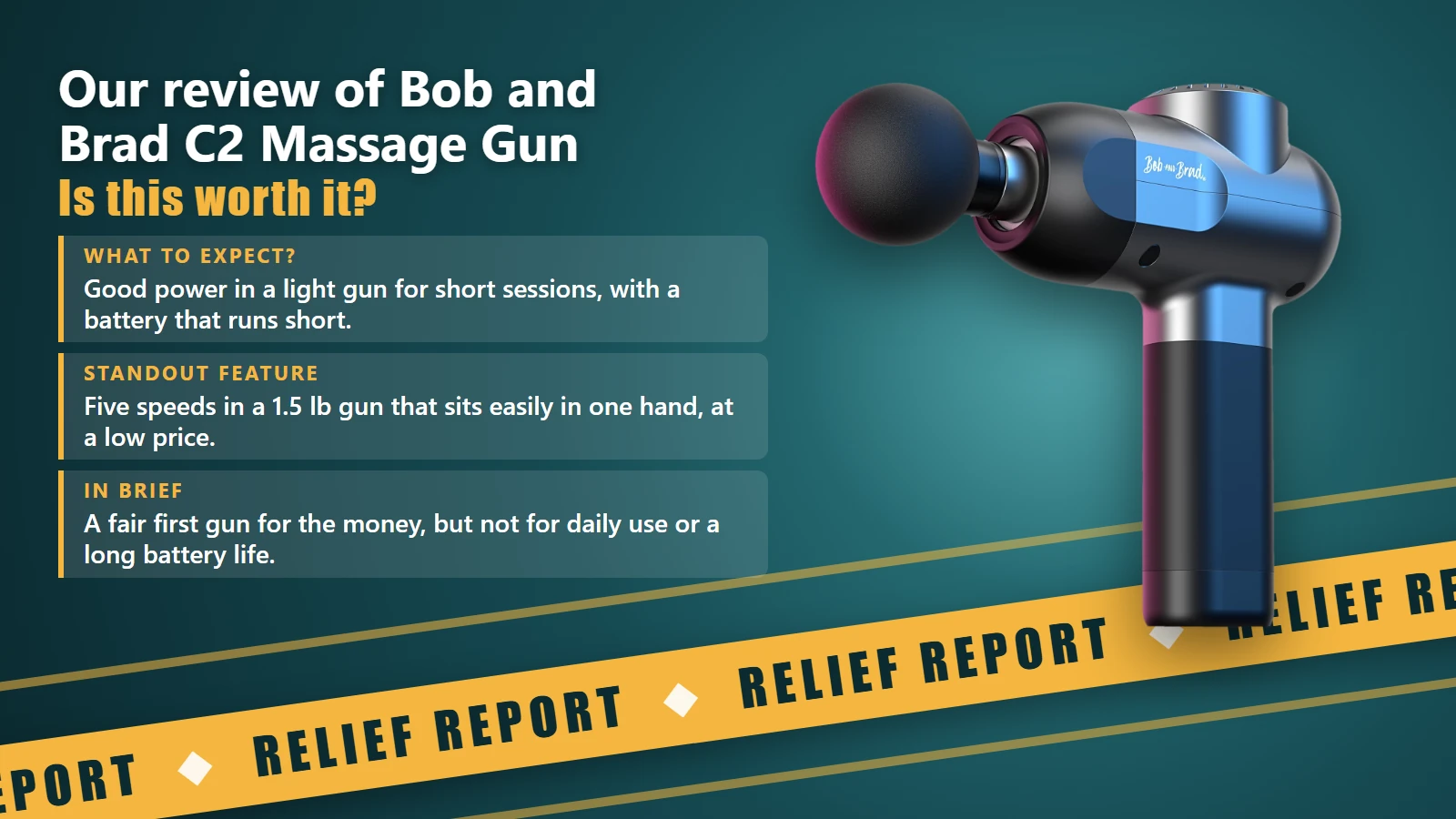
Members use guns in brief bursts, 30 to 60 seconds per tender spot and 1 to 2 minutes per muscle area, and they rarely go past 5 to 10 minutes in total. The Bob and Brad C2 carries a 10-minute auto-off, and its listing says not to use it for more than 10 minutes at a time.
The clients who were happiest used it a few times a week for about 10 minutes. One reviewer who did that 3 to 4 times a week had not needed a recharge, while daily whole-body use is where the battery gave out.
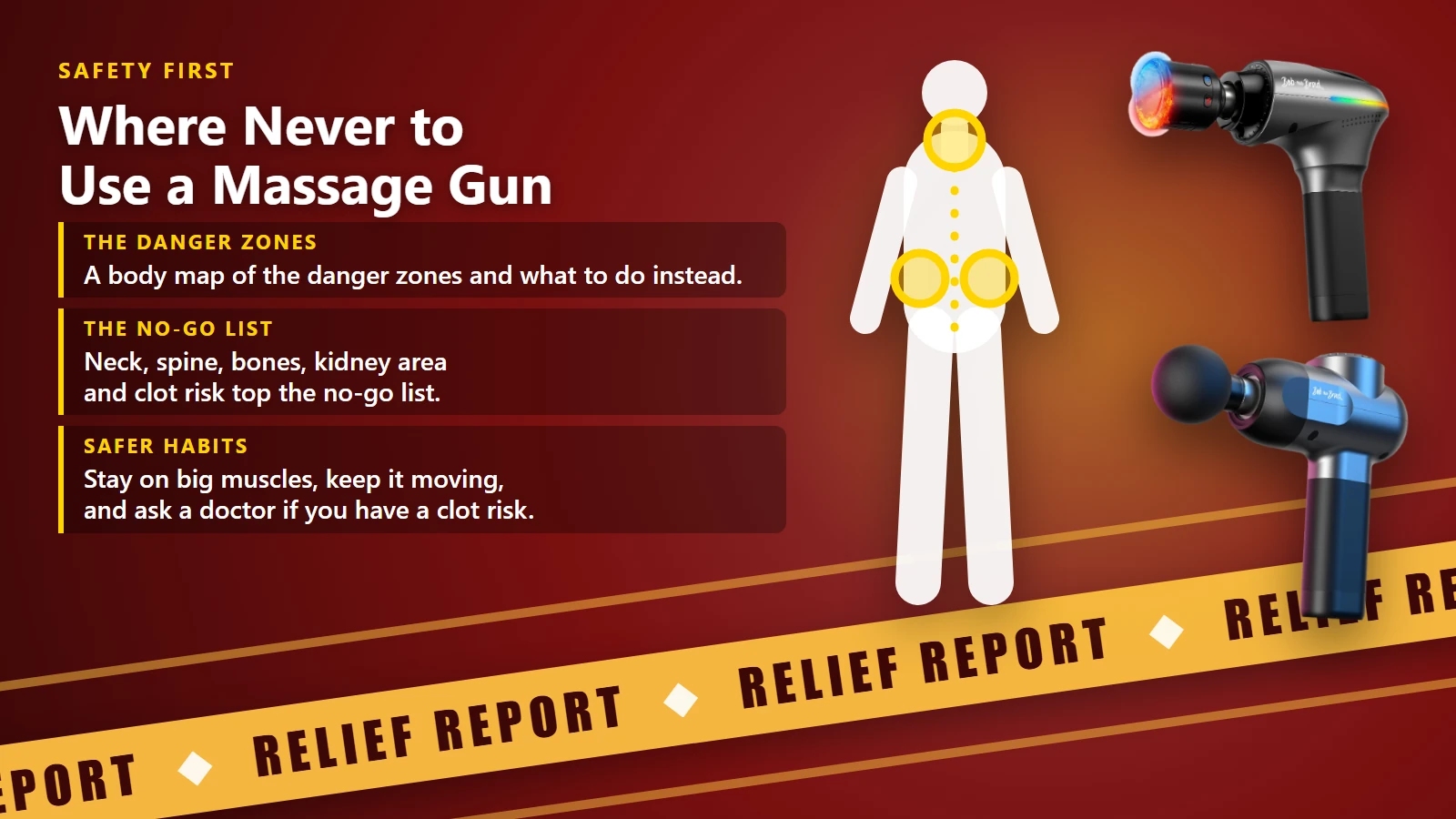
Rest any spot that feels sore the next morning. Our guide on where never to use a massage gun shows the danger zones to avoid.
Compression boots
Members run 15 to 30 minutes for standard recovery and 45 to 60 after heavy days, mostly in the evening. They go daily or 4 to 6 times a week in peak training and 2 to 3 times a week for upkeep.
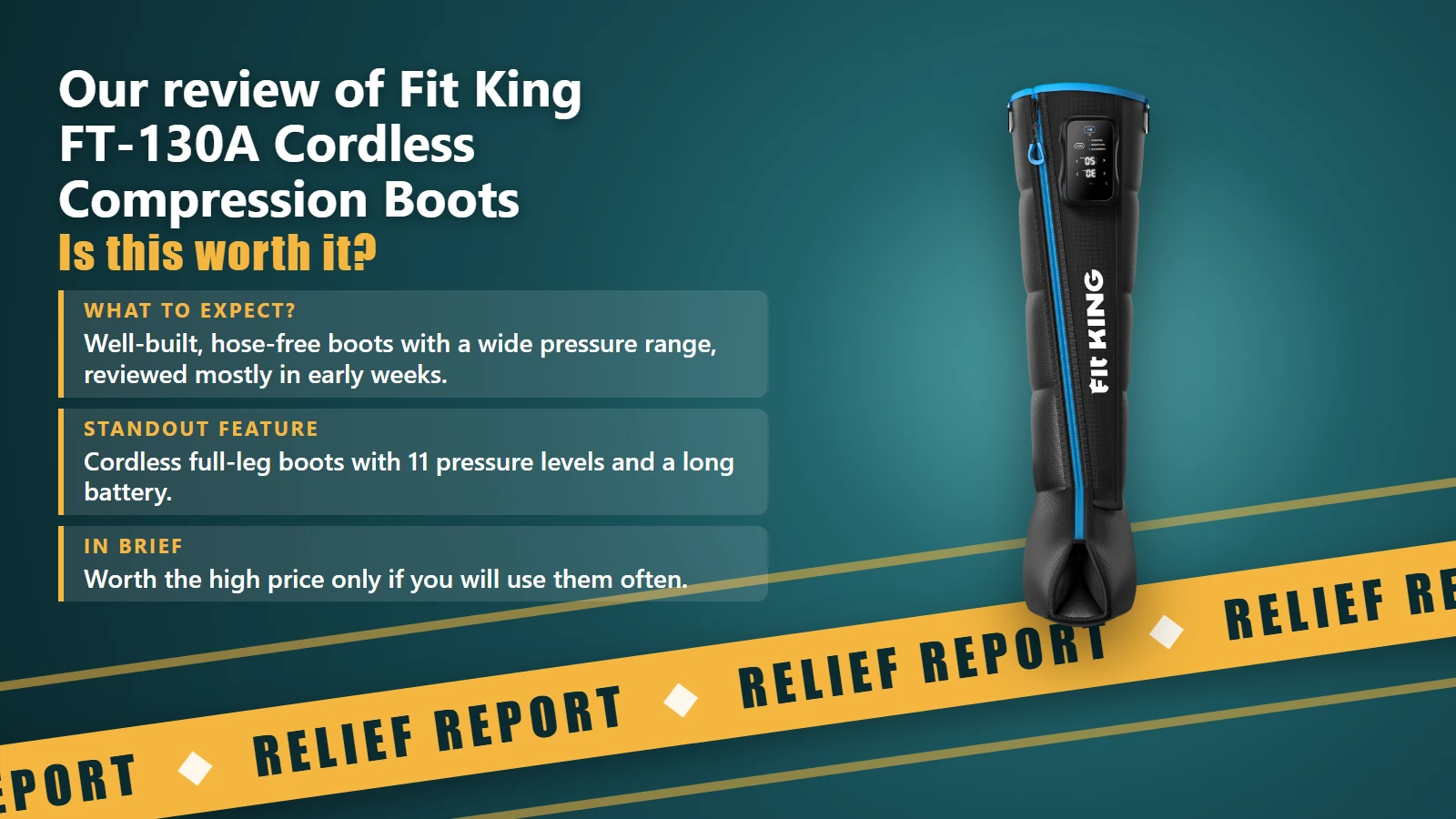
On the $699.99 Fit King FT-130A, a client used 30 to 35 minutes for several weeks, a strength coach uses 80 to 100 mmHg for 45 minutes after heavy legs, and a reviewer runs Combination mode (alternating full and partial squeezes up the leg) for 15 to 30 minutes on long run days. The default is 50 mmHg, and another client found 80 a bit strong.
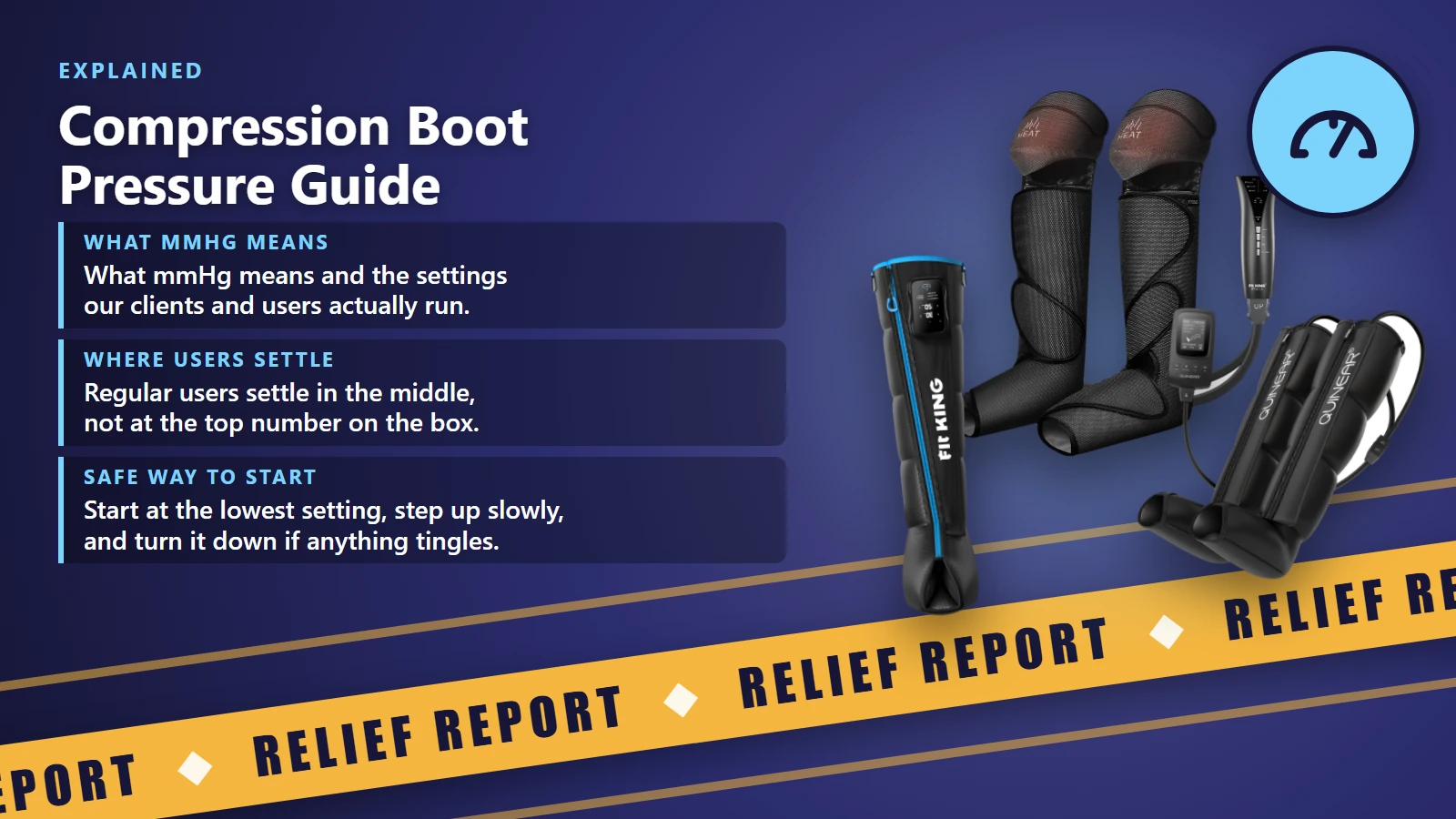
Members also say the first sessions can feel tight, like a blood pressure cuff on the whole leg, and that most people adapt over a few sessions. Our guide to compression boot pressure and mmHg settings (millimetres of mercury, the unit a blood pressure cuff uses) explains where to begin.
Foot massagers
Most members run automated sessions of 10, 15, 20 or 30 minutes, once or twice a day: once in the morning to loosen stiff feet, and once in the evening. Some use it only 3 to 4 times a week in front of the TV.
The Renpho RF-FM059 defaults to a 15-minute session with a 30-minute option, and it has no memory, so every start returns to the lowest level with heat on. That is a good habit to copy: begin on low for both kneading and squeeze.
The same machine shows what overdoing looks like. A reviewer found levels 1 and 2 pleasant but level 3 crushing, and one client warned its heating element does not regulate itself, so check the heat after ten minutes.
Back massagers and mats
Standard sessions run 10 to 30 minutes, often matching a built-in 15- or 20-minute auto-off. Some power users run multi-hour sessions of 1 to 4 hours by shifting the device across muscle groups every 20 to 30 minutes.
The Snailax SL-363M mat stops after 30 minutes and then rests 15 to 30 minutes, which sits at the top of the range members suggest. Members keep to 15 to 30 minutes per session.
Start on the lowest intensity and heat, and see how your back feels the next morning. One client felt itchy after a few minutes, and another felt the motors as hard on a sore back, so try a short session first.
Neck massagers
Members commonly run 10 to 15 minutes, once or twice a day, and match their timer. New users start on a gentle mode for 5 minutes a day in the first week and work up as the muscles adapt.
Members like a 15 to 20 minute auto shut-off to avoid over-massaging a delicate neck. One member who ran a heated shiatsu 1 to 4 hours a day ended up sore, which is why we say to stop when the timer does.
Heating pads and TENS
Routine pad sessions run 15 to 30 minutes for general tightness. Members with chronic pain run pads for 2 to 12 hours, and a few run them far longer, but that is where burn risk rises.
The auto shut-off is there for safety, not as something to work around by turning the pad back on all night, and anyone with diabetes, neuropathy or reduced feeling should keep the heat low or skip it. Most pads in our reviews stop at 30, 60 or 90 minutes.
For TENS (sticky pads that send small electrical pulses through the skin), the usual session is 20 to 30 minutes, with up to 45 minutes for some members. During chronic pain flares some run back-to-back cycles for 1 to 3 hours.
The $89.97 Neocarbon Ultra does not state its timer length, and one reviewer's 3 to 5 sessions a day were of unspecified length, so we would not use that as a target. Start low, raise the intensity slowly in 15-minute steps, and back off if a tight muscle stings.
Red light and rollers
Members keep red light sessions to 5 to 20 minutes per treated zone, with mats, pods and wraps at 15 to 30 minutes against the skin and joint wraps at 10 to 15 minutes. The most widely recommended routine is 3 to 5 times a week.
For the $499 Kineon Move+ wrap, the brand suggests 10 to 15 minutes per area daily. Members add that more is not better, so start at the low end and take about one rest day a week.
Rollers and vibrating tools are used in short bouts. Members hold a ball or cane on a knot at about a 4 out of 10 pain level for 15 to 25 seconds.
A vibrating roller with a 10-minute auto-off is used at bedtime to ease a cramp. We would read that 10 minutes as a ceiling and start with 5 on low.
What are the signs you overdid it?
Watch for these signals, from the stories in our reviews.
- A spot that is still sore the next morning.
- Itchy skin after a few minutes, or motors that feel hard and sharp on a sore back.
- A pressure level that makes it hard to walk or stand the next day.
- Skin that itches, stays red or marked, or a hot spot that feels like it is burning.
- A sting or sharp feeling in a tight muscle, in the middle of a session.
- Heat that does not regulate itself and leaves feet or skin very hot.
If you notice any of these, shorten the next session, drop the intensity and give the area a day off. Sharp or lingering pain, as opposed to firm, dull pressure, is the cue to stop.
How do you build up gently?
Use this simple plan for any new device.
- Start at the lowest intensity and heat, and keep the first sessions to 5 minutes or less.
- Check how the area feels the next morning before adding time.
- Add time or intensity in small steps, up to the usual 10 to 30 minutes.
- Use the auto shut-off as a ceiling, not a target.
- Take a rest day now and then; about one a week is the advice for red light.
- Ask your doctor first if you have diabetes, numb skin, nerve problems, an implant or a recent injury.
Questions People Ask
How long should a massage gun session be?
Members keep it to 15 to 60 seconds per tender spot and 1 to 2 minutes per muscle, and rarely go past 5 to 10 minutes in total. The C2 listing says not to exceed 10 minutes at a time.
Can I use a massager every day?
Many members do with foot, back and neck units, at 10 to 30 minutes. For guns and red light, members suggest 3 to 6 times a week, and rest any area that still feels sore.
Is the auto-off long enough?
Sometimes not, since a mat that stops at 30 minutes cut one client's heated evening routine short. Short cutoffs protect motors and anyone who dozes off, but they are no reason to restart all night.
What if I have a medical condition?
Ask your doctor before you set your own routine. The longest sessions in our group, such as heat for 2 to 12 hours, come from people with chronic pain, and we cannot call them safe for everyone.
So how long should you go?
For most devices, 10 to 30 minutes, a few times a week to daily, starting at the low end, matches what members actually do. Use the timer as a ceiling, check the area the next morning, and stop at sharp pain.
If a routine needs hours a day, that is a conversation to have with a clinician.