

Key Takeaways
- Cords and hoses top the list: a strength coach in our group skipped sessions on a corded set until switching to cordless, and members say hose-free sets get used far more.
- Five of 11 buyers on one corded full-leg set said the unit stopped working, so test every function in the first week while returns are still easy.
- Measure your inseam, calf and thigh before ordering, because fit complaints came from short, tall and large-thigh users alike.
- Two reviewers found even the lowest setting too strong on a set that starts at 50 mmHg, so check that you can turn the foot squeeze down or off.
- Sudden swelling in one calf, pain or shortness of breath means stop and call a doctor, and the makers' own warnings list DVT, heart conditions and pregnancy.
Five of the 11 buyer reviews we read on one corded full-leg set said the unit had stopped working. That was the worst count we found, but the same few problems turned up again and again across our reviews of air compression leg massagers (sleeves that fill with air and squeeze your legs, usually from the foot upward).
This guide ranks the ten complaints we saw most, drawing on what our clients reported, the buyer reviews we read, and what members of our Facebook group posted. For each one you get which kind of unit it hits and what to check before you pay.
Why do compression leg massagers draw so many complaints?
These devices ask a lot of one product. They have to fit legs of very different lengths and widths, hold air under pressure for 20 to 30 minutes, and keep a pump, hoses, zippers and straps working session after session.
Each of those parts is a place where something can go wrong, and budget units cut corners on the parts you cannot see in a photo. The other source of trouble is the word "massage" on the box, because most of these sets squeeze like a blood pressure cuff and do not knead like hands.
We ordered the complaints by how widely they came up across our reviews, then by how much they hurt the people who ran into them. Pressure on these devices is measured in mmHg (millimetres of mercury, the same unit a blood pressure cuff uses), so you will see that number below.
What are the 10 complaints, ranked?
Here is the scorecard first, then the detail on each one underneath.
| Complaint | How often it came up | Units most affected | What to check first |
|---|---|---|---|
| 1. Cords, hoses, separate controller | Came up on corded sets of every price | Corded full-leg sets | Is there an outlet where you will sit? |
| 2. Fit, from thighs to inseam | 11 of 24 buyers on one knee wrap | Full-leg boots, thigh sleeves, knee wraps | Measure inseam, calf and thigh first |
| 3. Units that quit | 5 of 11 buyers on one set | Budget corded sets | Test every function in week one |
| 4. Zippers, Velcro, air chambers | One zipper failed at 3 weeks | Budget boots, Velcro wraps | Open and close every fastener on day one |
| 5. Heat weak, missing or uneven | 3 of 6 clients on one wrap | Heated wraps with knee pads | Run the heat on day one |
| 6. Squeeze too strong, even on low | Two reviewers on one set | Sets with a 50 mmHg floor | Find the lowest setting and a foot-zone off switch |
| 7. "It only squeezes" | Several reviewers said it flat out | Any set that only squeezes | Search the listing for "kneading" |
| 8. Pump noise | A handful of reviews | Budget corded pumps | Will you use it beside a TV or partner? |
| 9. Setup, tangles, storage | 2 of 5 clients on one set | Sets with two hoses and a controller | Picture where it lives between sessions |
| 10. Price versus benefit | 2 of our clients on one premium pair | Premium cordless boots | Count how often you will really use it |
The top three are about daily hassle, fit and reliability, and the bottom half is mostly about comfort and expectations. If one row on this table describes you, jump to that complaint below.
1. Cords, hoses and a separate controller
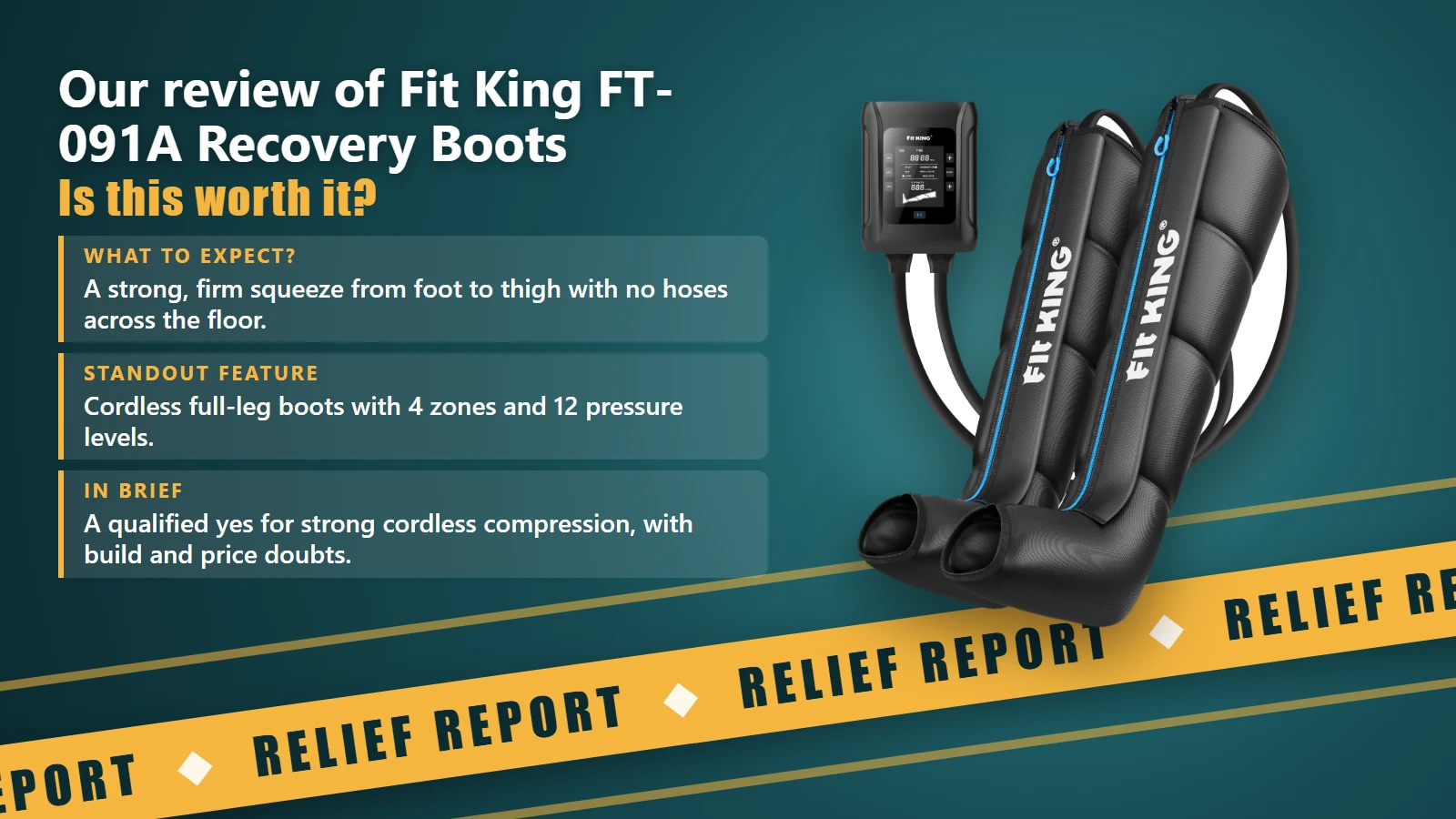
A strength coach in our Facebook group, who trains five to six days a week, moved from a corded set to a cordless pair because the controller, cord and hoses made the sessions tedious enough to skip. Members say hose-free sets get used far more, and a pair of skiers who reviewed one wrap called its cables cumbersome.
The same coach still says a corded set makes sense if you only use it once or twice a month. If you plan four or more sessions a week, count a cord as a real cost, not a small one.
2. Fit, from thighs to inseam
Fit is the complaint that shows up in the most different reviews. About 7 of the 31 reviews of one budget wrap mention it, and 11 of the 24 buyers of a knee wrap wrote about straps or fit.
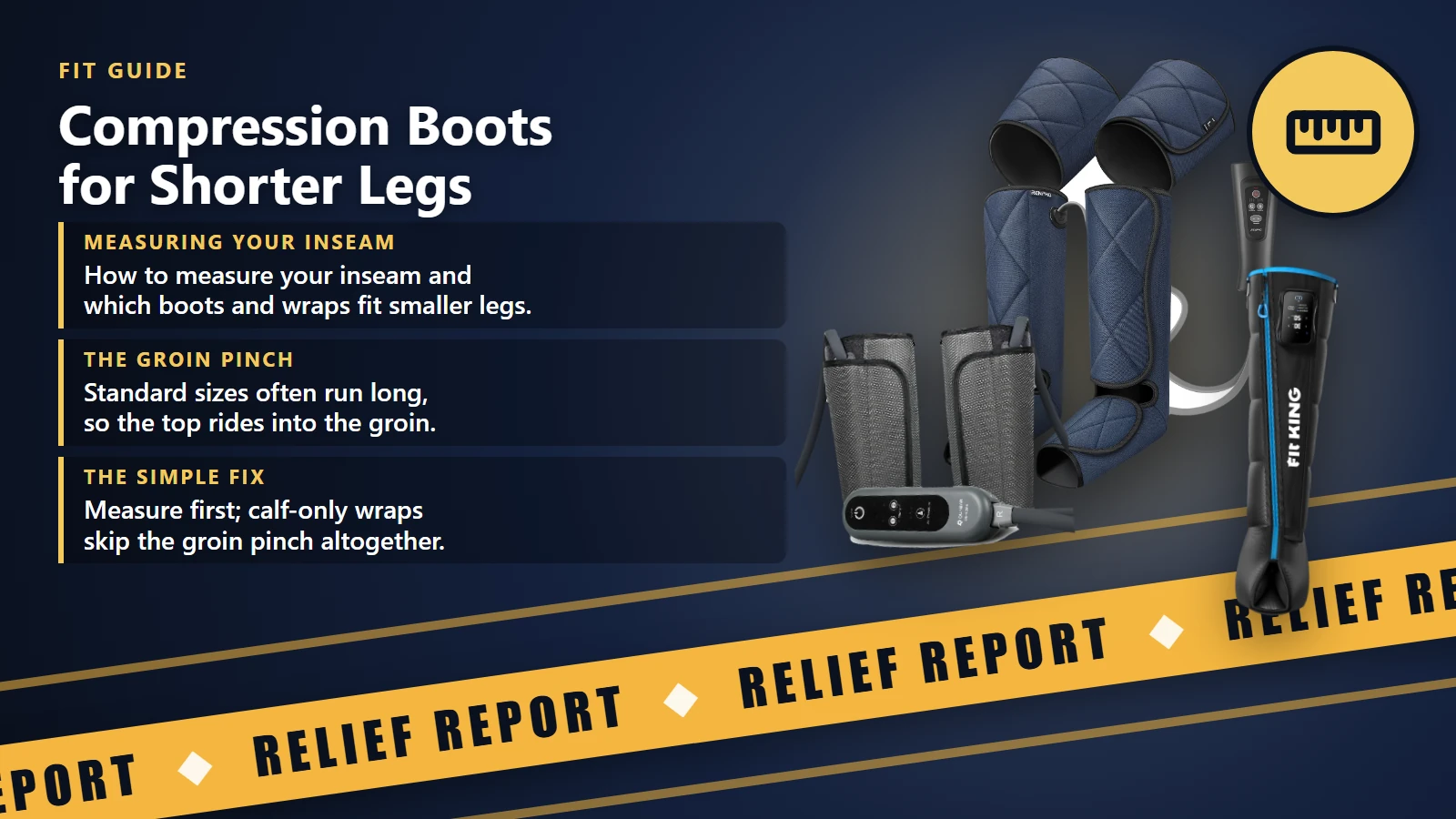
One reviewer's 29-inch thighs barely closed the large size and a 6'7" user barely fit another set, while members say standard sizes often run long for people between 5'3" and 5'8", so the boot rides up into the groin.
A cordless wrap that stops at the calf gave a 5'8" reviewer squeeze on only the lower part of the muscle. If you are on the shorter side, our guide to compression boots for shorter legs covers the inseam (the length of your leg from groin to ankle bone) numbers in detail.
3. Units that quit
This is the complaint that costs real money. On the corded full-leg set in our Quinear Leg Recovery write-up, five of 11 buyer reviews described a unit that stopped working, from one that lost pressure in some zones under a year in, to one that lost its control box after two months.
Other sets showed the same pattern: 3 of 26 buyers of a $58.99 calf wrap said their unit quit (one after just 4 weeks), 1 of 4 clients lost a unit after five months, and 3 of 6 buyers of a pair of corded boots reported failures. Keep the receipt and test every function in the first week, while returns are still easy.
4. Zippers, Velcro and air chambers
Fasteners and air chambers (the separate air pockets inside each sleeve) fail often enough that members now list them as a top regret. One client's zipper on a $399.99 cordless pair came apart on one leg at three weeks, and members report zippers breaking after 4 months and chambers bursting after 5.
Velcro has its own problem. Members say it can pop open under high pressure and snag in storage, and one reviewer said the snapping motion needed to open a strong Velcro strap hurt their shoulder.
5. Heat that is weak, missing or uneven
Heat is the feature that disappointed our clients most often. On the wrap in our knee-heat review, the pad never worked, quit or ran faint for three of our 6 clients, and 5 of 19 buyers described heat that was missing, one-sided, faint or too hot.
One reviewer's maximum heat setting caused a blister, which is why our advice there is to stay on the minimum. Some sets mention heat in the manual and have none at all, and one buyer returned a pair that said "without heat" on the brand page.
Run the heat on day one so you know before the return window closes.
6. A squeeze that is too strong, even on low
One corded full-leg set lists eight settings starting at 50 mmHg, yet two reviewers said even the lowest felt like too much, and one felt it painfully around the ankles and the top of the foot. On a premium pair the maker's default is also 50 mmHg, and 80 already felt strong to one client.
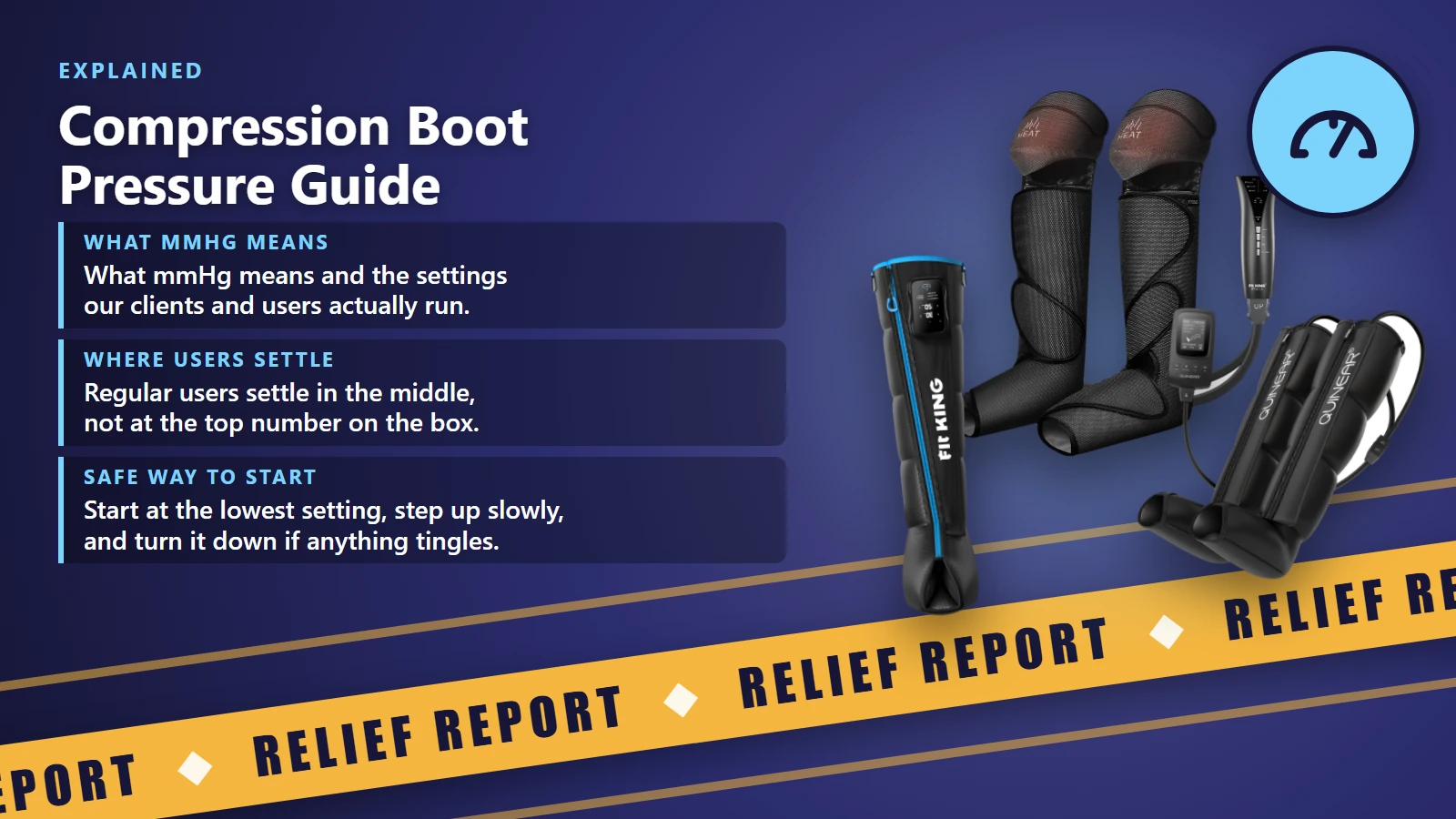
Members say too much pressure can bring on pain, nausea, tingling or pinching, and some returned cheaper units because the foot zone squeezed painfully with no way to switch it off. Our compression boot pressure guide explains what setting to start on, and lower is the right place to begin.
7. "It only squeezes"
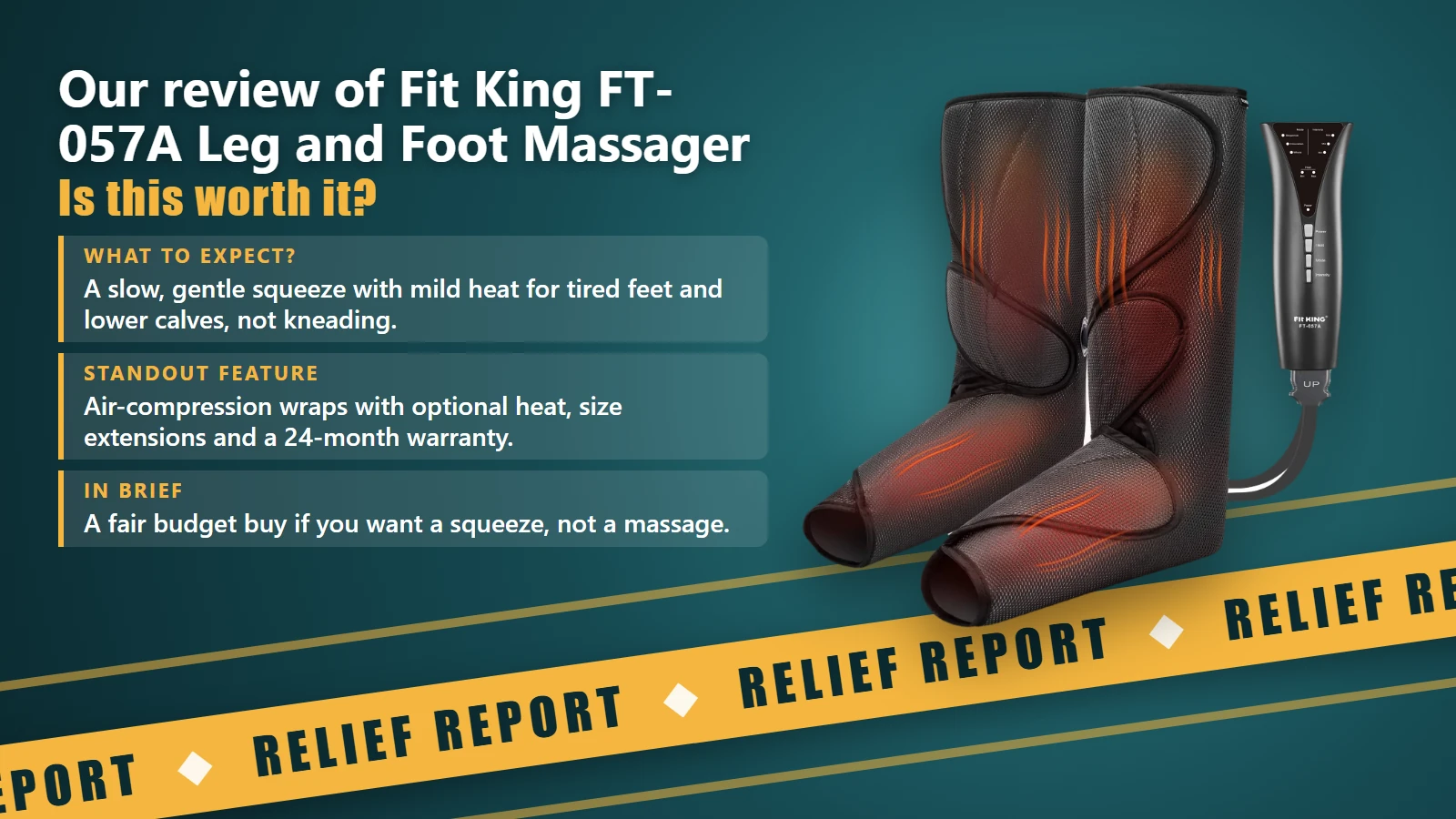
Several reviewers said it flat out: the Fit King FT-057A we reviewed squeezes and does not massage, and one even suggested a shiatsu foot machine for anyone who wants kneading. A buyer of a knee-heat wrap called theirs "just a compressor with heating pads", and a reviewer likened another set to a blood pressure cuff around the whole leg.
Members who expected a massage or big performance gains returned units after finding only a passive squeeze. If kneading is what you want, air compression is the wrong category.
8. Pump noise
Noise comes up less often than fit or reliability, but it can end a habit. One reviewer of a $58.99 corded calf wrap has to turn the TV up to hear over it, another client said a different wrap drowned out the TV, and one reviewer called a third pump extremely loud.
Members add that pump hum can disturb a partner or make it hard to doze through a cycle. A quiet corded set does exist in our reviews, so noise is worth checking before you buy.
9. Setup, tangles and storage
One corded set means two sleeves, two hoses and a controller that dangles between your knees, and at least 2 of our 5 clients who tried it called it cumbersome, clunky or a hassle. A reviewer of a different set had the tubes tangle in storage.
Members also mention bulky sleeves eating closet space and, on some cordless models, about 3 minutes per leg of rolling the air out by hand. Annoying setup is a common reason people stop using their boots.
10. Price versus benefit
On the $699.99 cordless pair we reviewed, four of our clients gave 4 or 5 stars, but two flagged the price, and one client and a few reviewers could not tell what the premium bought them at home. A long-course athlete in our group chose Fit King over a $999 Normatec (a well-known premium brand) on price alone.
Members and reviewers also agree that a budget set can feel close to an expensive one for plain squeezing. The premium models make the most sense for people who train hard several times a week.
Which complaints are deal-breakers, and which can you live with?
These are the deal-breakers: a unit that quits early, a lowest setting that is too strong for you, a fit that will not close on your leg, and any medical warning in the manual that applies to you. They cost money or comfort and no setting fixes them.
You can usually live with pump noise, a cord (if you sit near an outlet), missing heat (if you knew), and a squeeze that does not knead (if you wanted a squeeze). Heat that is uneven or missing is only a deal-breaker if warmth was the reason you bought.
Price sits in the middle. A $699.99 pair makes sense for someone who trains hard several times a week, and much less for someone who exercises now and then.
What should you check in the first five minutes?
These checks take less time than a return does.
- Measure your inseam, widest calf and thigh, and compare them with the size chart.
- Run the lowest setting first and confirm you can lower the foot squeeze or turn it off.
- Open and close every zipper and Velcro strap, looking for loose stitching.
- If the set has heat, run it on the lowest level and check every pad warms.
- Check where the cord and hoses will reach from your seat.
- Read the warnings page (not just the quick-start card) before the return window closes.
That last step matters: one buyer of a $99.99 corded set found the warnings about DVT (deep vein thrombosis, a blood clot in a deep leg vein), irregular heartbeat and high blood pressure only after 30 days, and was left with a set they could not use. Look for sequential inflation too (air fills the foot first, then the calf, then the thigh), since members prefer it to sets that inflate everything at once.
Questions People Ask
Are air compression leg massagers worth buying?
They can be, if you want a slow squeeze to help tired legs feel lighter and you are not expecting kneading. Our clients praised the squeeze itself, while the hardware, the cords and the fit drew most of the complaints, so check those three before you pay.
Is cordless worth the extra money?
It is worth it if you plan four or more sessions a week, because members say cordless sets get used more. If you will only use it once or twice a month, a cheaper corded set is a sensible choice, and members expect a built-in cordless battery to last about 3 years.
What pressure should I start on?
Start on the lowest setting and move up only if it feels comfortable. Members use somewhere between 70 and 120 mmHg for standard sessions, and several say pushing the pressure higher is not better.
Who should skip air compression sets?
Skip them, or ask a doctor first, if you have a history of DVT or blood clots, a heart condition, or pregnancy, because makers' own warnings list these. Sudden swelling in one calf, pain, tingling, numbness or shortness of breath is a reason to stop and call a doctor.
So what should you do next?
Pick the one complaint on the list that would annoy you most, and shop around it. If it is the cord, spend more on a cordless pair or accept the cord and buy a cheaper set you will use less often.
If it is fit, measure first and read the sizing notes in the reviews linked above, and if it is reliability, count the return window as part of the price. Start low, check the fasteners and heat in week one, and stop if anything tingles or goes numb.