

Key Takeaways
- Buy in this order if money is tight: a roller first, a massage gun second, and compression boots last, once your training volume justifies $169.99 to $399.99.
- Rollers and guns do different jobs: a 57-year-old runner and lifter in our group uses the gun for quick post-run relief and the roller for deep shin and hip soreness.
- Budget guns trade battery for price, since 2 of 4 clients had battery trouble with the $69.94 Bob and Brad C2, with runtimes of 20 to just under 40 minutes.
- Skip boots if you run casually a few times a month, because members who get the most from them are in back-to-back training blocks.
- Keep any gun off the front of the neck, bones and fresh injuries, and ask your doctor before using one on your calves if you have a clot history.
One runner in our Facebook group paid about $200 for compression boots and ran 20 to 30 minute sessions after long runs. They said soreness dropped a lot.
Another member paid $150 for a different brand, returned it after a month, and called it hard to get into and store. Same category, opposite outcomes, and that gap is why the order of buying matters for runners.
I am Darryl Anderson, an ACSM-certified personal trainer. This guide compares a foam roller, a massage gun and compression boots using our published reviews, what my clients report back, and what members of our recovery-gear group say worked, what broke and what they would buy again.
What Should I Buy First on a Runner's Budget?
Most runners should start with a roller, add a massage gun second, and save compression boots for when they are training hard enough to justify the cost. That order matches what our clients and group members actually use, not what marketing pages promise.
A roller has no battery or motor to fail, and the two price points we saw are a knobby Rumble Roller at about $70 and the Zyllion ZMA-22 vibrating foam roller at $99.95. Guns run from $69.94 for a budget model to $129 for a mid-range one like the Renpho Power+.
Compression boots start at $169.99 for a corded foot-and-calf pair and reach $399.99 for a cordless full-leg set, with premium pairs costing more. The table below puts cost, time and best fit side by side.
| Tool | Cost tier | Time per session | Best for |
|---|---|---|---|
| Foam roller | About $70 knobby; $99.95 vibrating | A short round after a run | Deep shin, hip, quad and calf soreness |
| Massage gun | $69.94 budget; $129 mid-range | 15 to 20 seconds per tight spot | Fast relief in spots a roller cannot reach |
| Compression boots | $169.99 corded; $399.99 cordless | 15 to 30 minutes; 45 to 60 after heavy days | Hard training blocks and heavy, tired legs |
The pattern is that rollers and guns are not substitutes. Boots sit on top of that stack as a comfort tool for heavy training blocks, which is why they come last.
Why a Foam Roller Comes First
A roller covers the muscle groups a runner cares about, and group members use it nearly every night or right after running. They roll calves, the deeper calf muscle that pushes off the ground, quads, hamstrings and glutes to ease tightness after long runs.
The group warns against rolling the IT band directly (the thick strip of tissue running down the outside of the thigh from hip to knee). They roll the surrounding hip, glute and quad muscles instead, which is the kind of detail you only learn from people who tried it both ways.
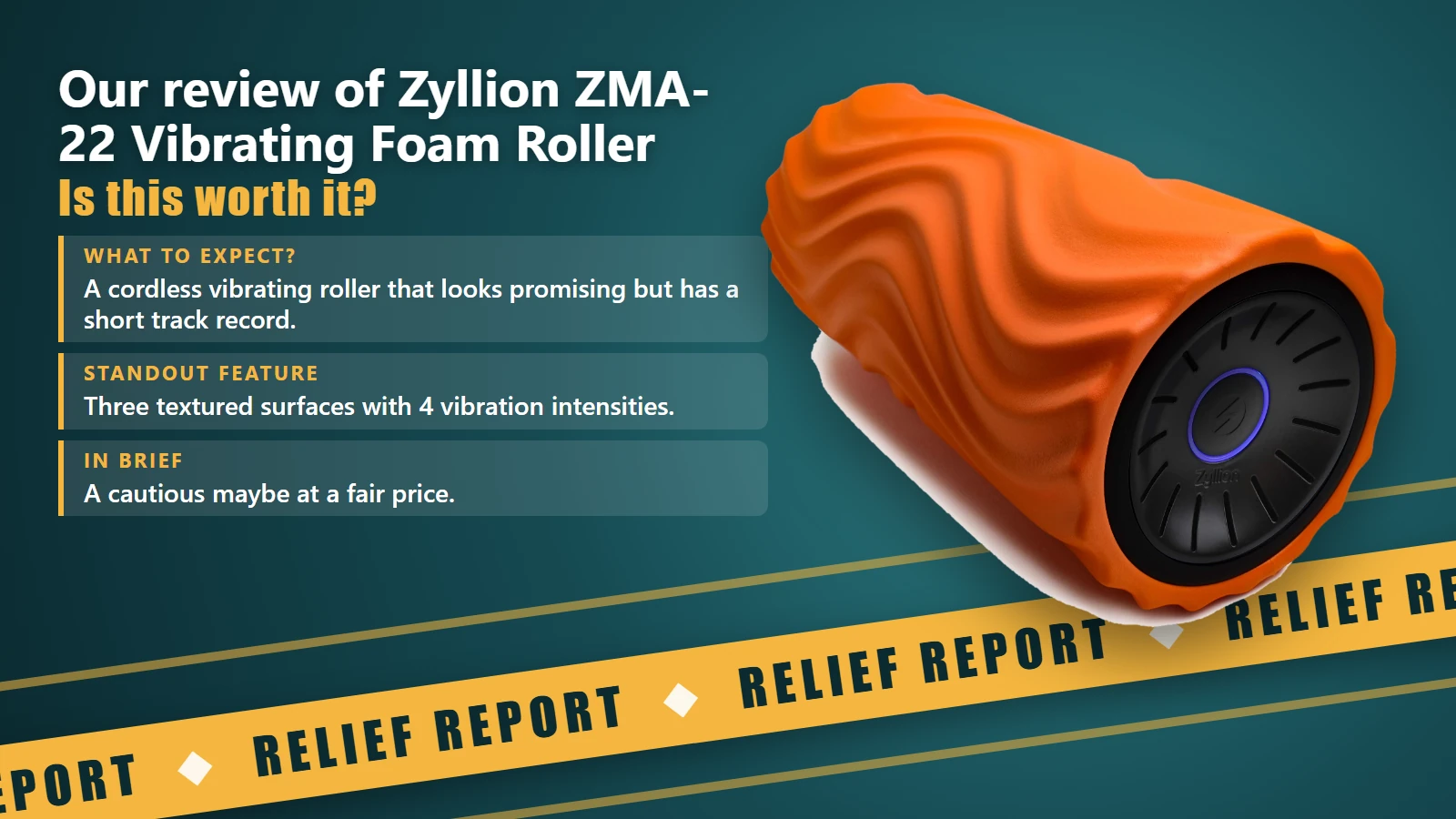
If you want vibration, the Zyllion ZMA-22 is a cordless vibrating roller with four speeds and three textured surfaces. Our review found only five-star praise from eight buyers and no critical reviews, so the evidence is too thin to call it more than a cautious bet.
Nobody has reported noise, battery hours or how long it lasts, so treat the "bigger, more powerful" motor claim as unproven. The brand gives one year of warranty automatically and one more if you register online, and I tell every client to register on the day it arrives.
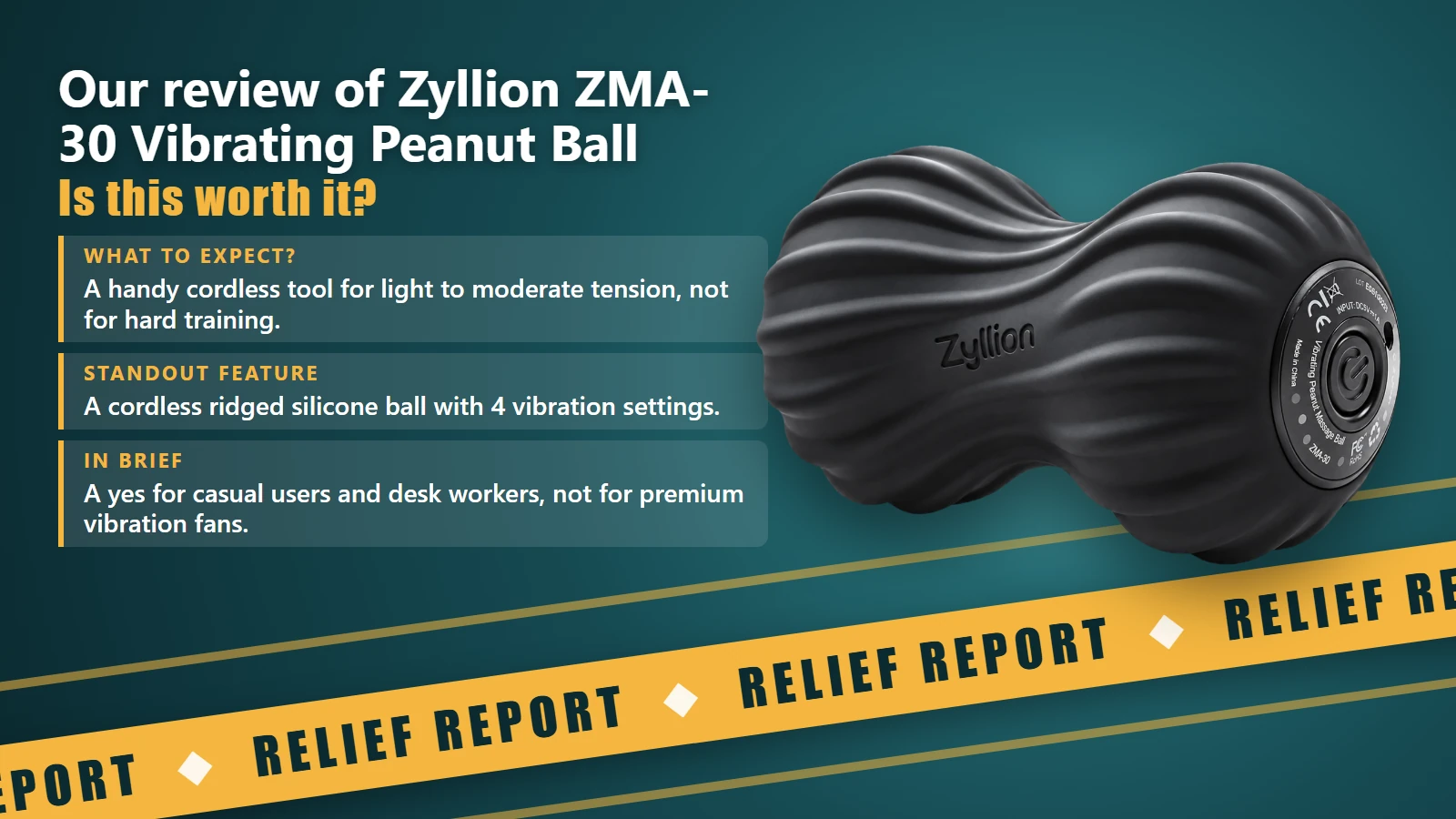
For lighter tension on the go, the Zyllion ZMA-30 peanut ball costs $59.95. A reviewer new to strength training gets quick relief between the shoulder blades and carries it to work, and on high they say it shakes the walls at home.
It is not a roller replacement for runners, though. A small buyer found the 4-inch body wider than a thigh, which made leaning over it for spine work awkward.
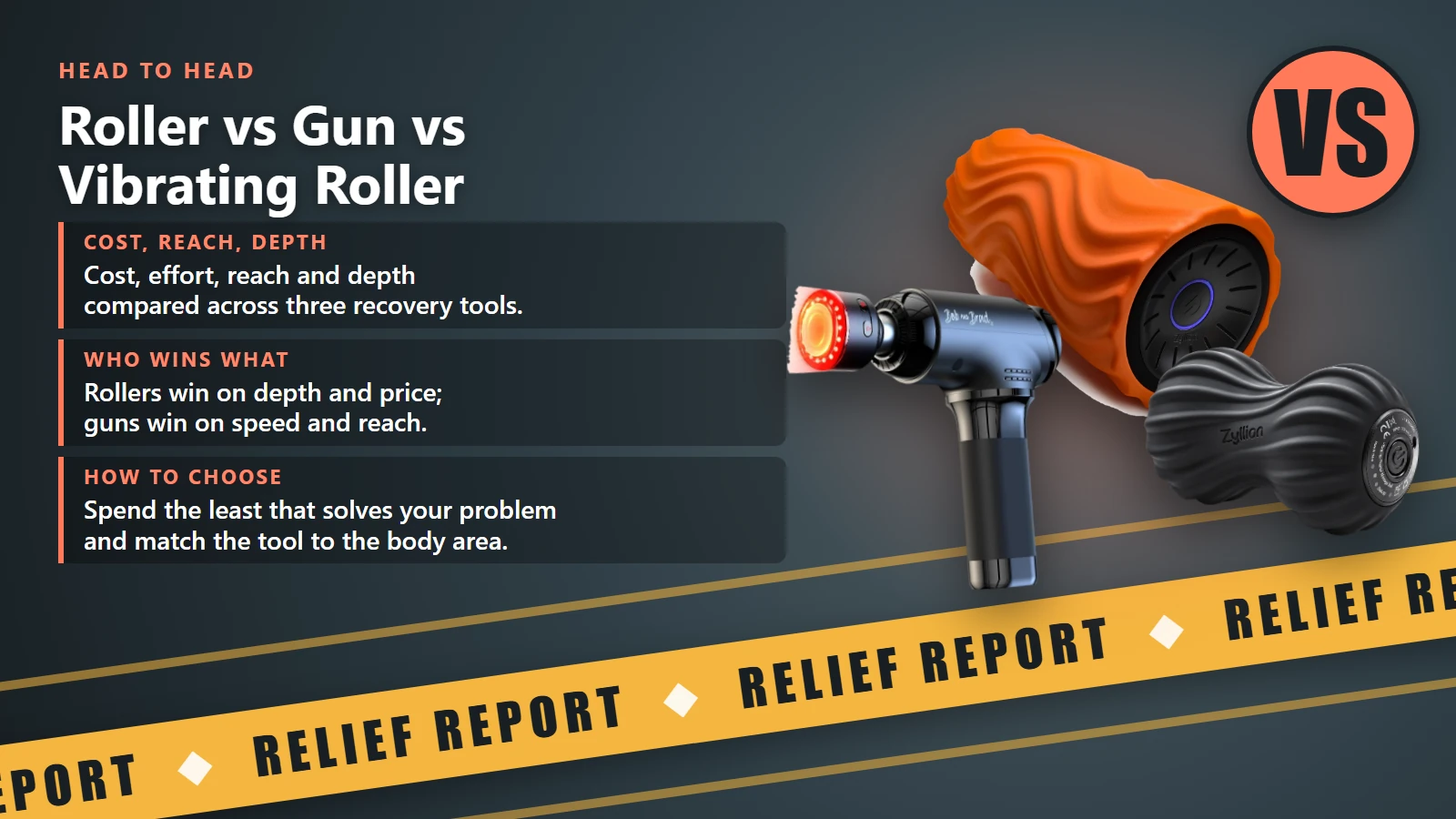
To compare the three tools in more depth, see our guide to foam rollers, massage guns and vibrating rollers.
When a Massage Gun Makes Sense as a First or Second Tool
A massage gun is the tool runners reach for when they need fast, targeted relief in spots a roller cannot reach. Group members use guns for calf stiffness, quad soreness, foot ache and glute fatigue after long runs or marathon training.
Before a run, they make fast, light passes over calves, glutes and hips to wake the muscles up. After a workout, once they have cooled down, they slow down and spend more time on tight spots, rather than working while everything still feels inflamed.
The group includes weightlifters with heavy soreness after leg day (DOMS, delayed onset muscle soreness, the ache that peaks a day or two after hard exercise). Most members use a gun a few times a week around training, and some use it daily in short bursts.
For a budget first gun, the Bob and Brad C2 costs $69.94 and weighs 1.5 pounds. Two of our four clients complained about the battery, and one reviewer described about 5 hours of charging for about 30 minutes of use.
It is a light gun for 10-minute sessions a few times a week, not a daily full-body tool. One gym member used a C2 regularly for nearly two years and called it excellent for deep tissue work, and when the battery stopped charging, support confirmed the two-year warranty and sent a new unit.
If you can spend more, the Renpho Power+ at $129 is strong and quiet with six heads. I start clients on level 1 with the flat or air head, since 2 of our 4 client reviews stayed at level 1 or rarely went above it.
The risk is the battery. One of our four clients and 6 of 20 buyers hit charging or power failures, and one client's gun was dead at 6 months of use every 1 to 2 weeks.
Next to a $60 to $70 gun, the extra money buys a Bluetooth app rather than more power, and one reviewer called that app a gimmick. A training partner who checks whether gear is worth the price found it average in strength and advised waiting for a price drop.
For depth, members look for higher stall force (how hard you can press before the head stops moving), with at least 35 lb for general use. Weak motors stall on quads and glutes, and our guide to massage gun specs explains stall force and why 16mm matters.
What About Compression Boots?
Compression boots are the most expensive tool here and the one I would buy last. They use sequential compression (air chambers that inflate one after another, starting at the foot and moving up the leg) to squeeze and release.
Group members who use them are high-volume runners, marathoners, ultra runners and cyclists in back-to-back training blocks. They report less perceived soreness, relief from the heavy "concrete leg" feeling, less puffiness in the ankles and calves, and forced rest, since you have to sit still.
Members generally use low to moderate pressure, such as levels 4 to 7 on a 7-point scale, or 70 to 120 mmHg (millimeters of mercury, the same pressure unit as a blood pressure cuff) on rated units. They use higher settings right after long runs and lower ones once soreness sets in.
The default on one premium pair is 50 mmHg, and 80 already felt a bit strong to a client, so begin low even if the range runs higher. Members run compression daily or 4 to 6 times a week in hard training blocks, and 2 to 3 times a week for upkeep.
For a first pair, the Quinear Air Compression Boots cost $169.99, are corded, and cover the foot and calf up to the knee. Setup took one family under 10 minutes, and you must zip each sleeve fully or the manual says the boots will not run.
Most people liked the firm squeeze, but 3 of 6 buyers reported failures. A client and a spouse both liked them after long runs, then after two weeks away the compression felt very weak and the client sent them back.
The listing says "one size fits all", but the manual says "fits most", and extenders have to be requested from the maker. A marathoner warned that on high pressure your legs can fall asleep for a while, so do not stand up mid-session.
For cordless full-leg compression, the Fit King FT-091A costs $399.99 and gives a strong, firm squeeze from foot to thigh. A reviewer training for a 10K runs it at a light setting of 40 to 50 and says the knee and calf feel much better.
The doubts are the build and the price. A client's zipper came apart on one leg at three weeks, and another reviewer found the pump painfully slow, with sleeves that lock the knees straight so a semi-reclined pose is unavoidable.
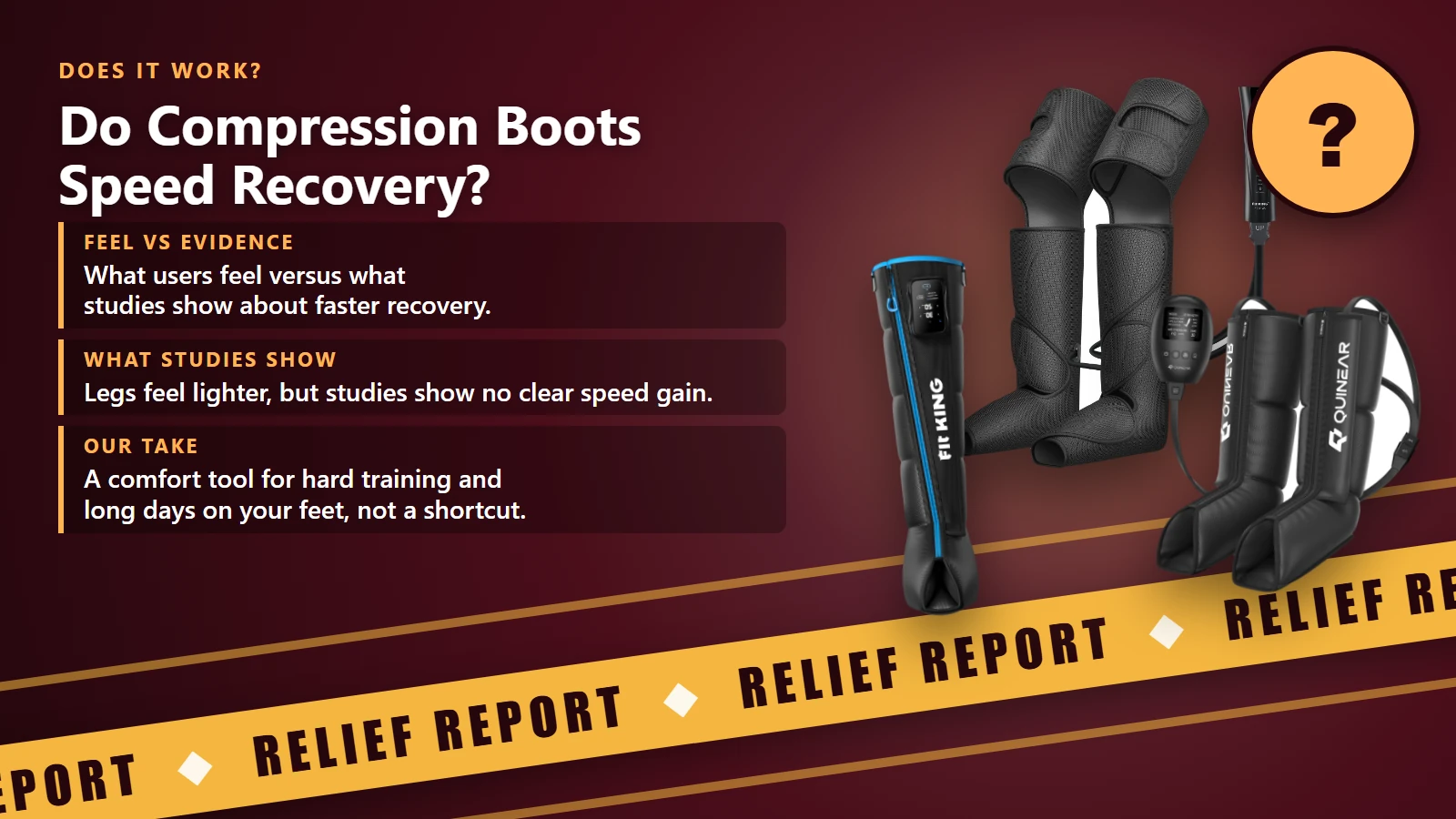
It has no heat, and the listing says so plainly, yet one buyer still returned the boots for missing it. For what the research says compared with what users feel, see our guide on whether compression boots speed recovery.
When Should I Add the Next Tool?
Add a second tool when your first one no longer covers what you need. A runner who rolls and still has tight calves or foot ache has a reason to add a gun, and a marathon trainee with heavy, dead legs after every long run has a reason to add boots.
Members who use both a roller and a gun say the roller wins for deep soreness in shins, hips and thighs, and the gun wins for fast relief where the roller cannot reach. If you find yourself wishing for both jobs, that is the practical test.
For boots, the trigger is training volume. A strength coach in our group who trains 5 to 6 days a week upgraded to a cordless model because the hoses of an older pair made them skip sessions.
If you are not training that hard, boots are a comfort item, not a necessity. The same goes for guns: one recreational tennis player among our clients used theirs mostly on level 1, so buy the next tool only when the current one is not enough.
Keeping Expectations Honest
None of these tools replaces sleep, food or sensible training load, and they are comfort tools for sore muscles. They can help sore muscles feel looser and may help tired legs feel lighter.
If you have plantar fasciitis, neuropathy, arthritis, sciatica or swelling, talk to your doctor before using any of them. Heel pain is a job for a podiatrist, and the group's posts say hammering the sole can backfire.
One member who used a gun's metal head on the arches 2 to 3 times a day said walking returned to about 80 to 90 percent of normal within days. That is one person's story, not a routine, and another member found the same approach too vigorous on a sore foot.
Calves need extra care. Medical professionals warned members against aggressive calf work with a gun for anyone at risk of deep vein clots.
Anyone with a clot history, a clotting disorder, neuropathy, pregnancy or blood thinners needs their doctor's clearance first. Keep a gun away from the throat area, the sides and front of the neck, bones, bruises and recent injuries.
Unplug a gun and stop using it if the charger or handle gets hot, as it did for one Power+ reviewer. Most failures in our reports showed up early, so test any new gun hard in the first few weeks while a return is easy.
For boots, start at the lowest setting, because one client warned that full blast on day one leaves you scrambling to get them off. Nothing in the listings we reviewed clears compression in pregnancy, so anyone expecting should ask their doctor first.
Questions People Ask
Can I use a massage gun on my calves after every run?
Yes, but keep it gentle. Group members use guns on calves morning and night to loosen them and say it helps a little. Anyone with a clot history, a clotting disorder, neuropathy, pregnancy or blood thinners needs a doctor's clearance before using a gun on the calves.
Do compression boots replace stretching and foam rolling?
No. Boots squeeze the legs and make you sit still, which can help tired legs feel lighter. They do not work on tight spots or range of motion the way a roller does, and members who use both say boots are for heavy training days while rollers are for daily upkeep.
How long should a session be with each tool?
Members hold a gun or vibrating tool on a tight spot for about 15 to 20 seconds, so a few short passes beat one long session. Boot sessions run 15 to 30 minutes for standard recovery and 45 to 60 minutes after heavy days. Our data does not give a set time for rolling.
Are cheap massage guns worth trying?
A $69.94 gun like the Bob and Brad C2 works for short, occasional sessions on large muscles. Two of our four clients had battery trouble, with runtimes as low as 20 minutes. If you plan to use a gun daily or want deep work, spend more on a model with a better track record.
Bottom Line: What to Do Next
If you are a runner on a limited budget, buy a roller first. It has no battery to fail and covers the muscle groups runners complain about most.
Add a massage gun when you need fast, targeted relief a roller cannot give, and start with a budget model if you are unsure you will use it. Save compression boots for when you train hard enough to feel the difference, because a casual runner will find the price hard to justify.
Whatever you buy, register the warranty on day one, start on the lowest setting, and stop if anything feels wrong. The best recovery tool is the one you actually use, and that is usually the simplest one within arm's reach.