

Key Takeaways
- At the premium end you are paying extra for motorized vibration and cordless convenience, and for most sore muscles a $12 manual roller gets you most of the way there.
- Pressure is the real reason to buy a manual roller. The three texture zones on a vibrating roller were not mentioned by any of its 8 buyers.
- Nobody has reported long-term durability on the vibrating rollers yet, so take the "bigger, more powerful motor" claim as unproven.
- Skip the vibrating peanut if you train hard and want real depth, because one elite athlete in our group found a plain lacrosse ball beat it.
- Four buyers of one gun said they needed a helper to reach their own back, so a long handle matters more than extra speed settings.
A marathon runner in our Facebook group had a massage gun that could not budge a hamstring knot. A $12 Amazon Basics foam roller worked it out, painfully, and that story shows up again and again in this debate.
This guide compares what our clients reported on the rollers, balls and guns we reviewed with what members of our Facebook recovery-gear group posted over months of real use. It covers cost, effort, reach and depth across three kinds of tool.
The Quick Verdict
Manual tools and guns do different jobs. Members of our Facebook group who own both a Theragun and a foam roller say the gun wins for fast relief on spots a roller cannot reach, while the roller wins for deep soreness in shins, hips and thighs.
The price spread is wide. A cheap foam roller runs $8 to $30, a budget massage gun like the Bob and Brad Q2 Mini sits at $69.98, a mid-range gun like the Renpho Active costs $119.99, and a vibrating foam roller like the Zyllion ZMA-22 lands at $99.95.
So the useful question is which tool solves your specific problem for the least money and effort. The table below sets the three types side by side.
| Factor | Foam roller | Massage gun | Vibrating roller |
|---|---|---|---|
| Cost | $8 to $30 | $69.98 to $119.99 | $59.95 to $99.95 |
| Effort | You lower your body weight and hold | Low; you guide it with one hand | Body weight plus a motor's comfort |
| Reach | Hard to angle for some spots | Fast; solo back reach needs a long handle | Wall or bed for upper back |
| Depth | Sustained pressure; a lacrosse ball goes deeper | Depends on stroke; 12 mm and up feels real | Comfort more than depth |
| Evidence so far | A member's ribbed roller lasted five years | Battery trouble in some reviews | Thin; no long-term reports |
| Best for | Deep shin, hip and quad soreness | Fast relief on spots a roller misses | Cramps and easier rolling |
If your budget is tight and your patience is long, a manual roller or ball is hard to beat. If you want speed and reach without getting on the floor, a gun is the better tool.
Vibrating rollers sit between the two, adding motorized comfort to body-weight pressure. The reports on the premium options are still thin, so be careful with bold claims.
Foam Rollers and Balls
The cheapest tools in this guide keep surprising people. The marathon runner above found that slow body-weight pressure on a $12 foam roller reached a hamstring knot that a gun could not.
An elite athlete in the same group went further and said a plain lacrosse ball put more targeted pressure into deep tissue than any roller or gun. The strength of a manual tool is sustained pressure: you lower your body weight onto a knot and hold it there.
Members describe holding a 4 out of 10 pain level for 15 to 25 seconds until the referred pain (discomfort that shows up away from the tight spot itself) drops by about half. A gun struggles to match that kind of patient, steady pressure because its head keeps moving.
The weakness is effort and reach. You are on the floor, shifting your weight, and some spots are hard to angle.
A hook or cane lets you press harder on the upper back, neck and traps without lying down. For broad areas like quads and hamstrings, you are still doing the work yourself.
Texture matters less than you might think. Smooth, solid foam rollers are budget-friendly and softer, while grooved or ribbed models dig in more.
Deeply knobbed rollers like the Rumble Roller can cause bruising if you are not used to them. One member has used the same 26-inch ribbed TriggerPoint Grid for at least five years, and no vibrating roller we reviewed has had the time to match that.
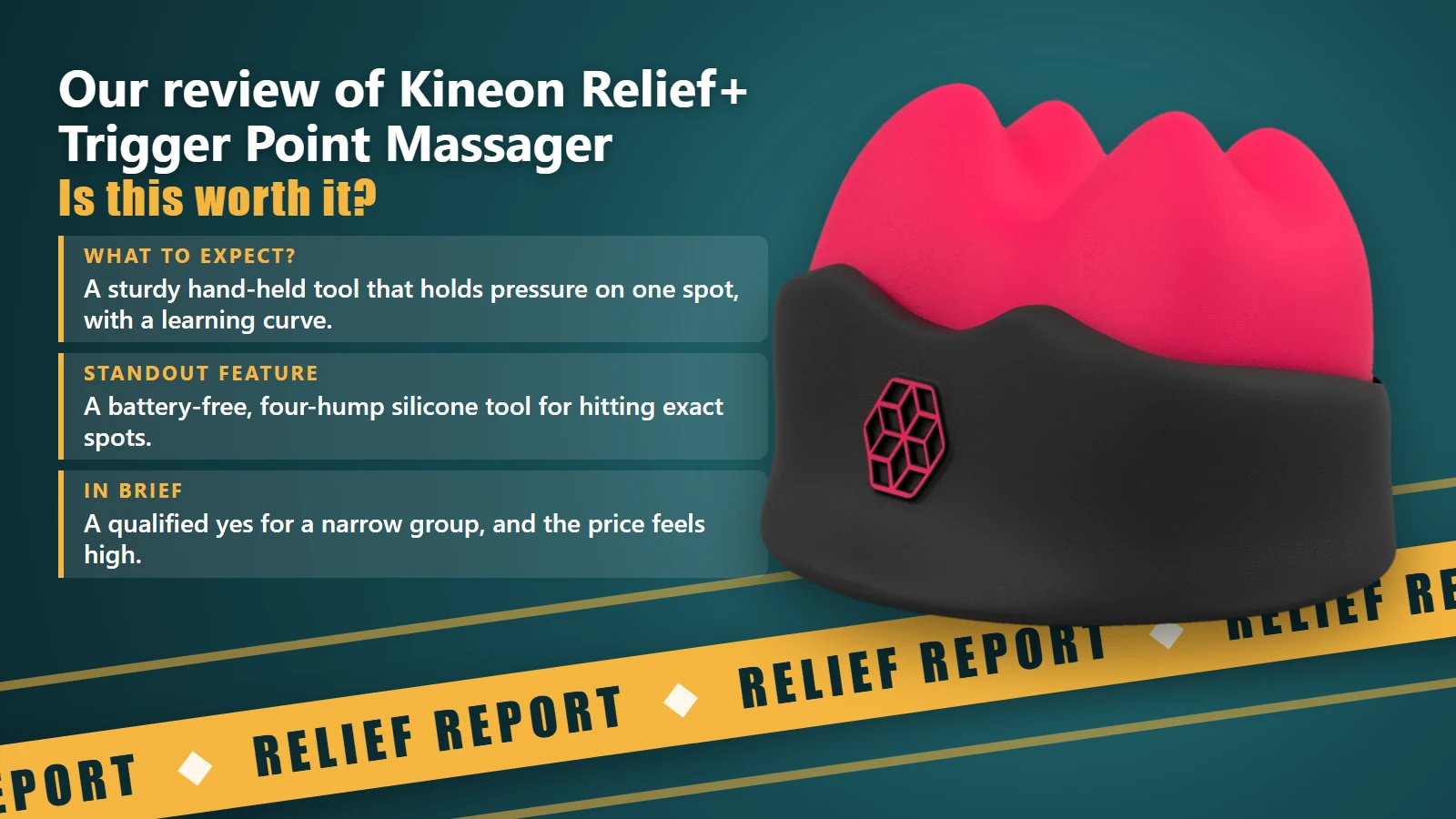
For a manual tool that goes beyond a simple roller, our review of the Kineon Relief+ Trigger Point Massager covers a $99.00 option that uses your body weight instead of a motor. One of our clients compared lying on it cold to a stack of Legos, and the directions say 10 to 15 seconds per spot.
It holds still on a trigger point (a tight, tender knot in a muscle) better than a rolling ball does, but it has a real learning curve and no motor, heat or vibration. Skip it if you expect effortless relief or find lying on hard rubber unpleasant.
Members with physiology and chiropractic backgrounds say foam rolling does not break up fascial adhesions (spots where connective tissue sticks together) or correct structural imbalances. What it gives you is temporary relief, a calmer nervous system and a short window where a joint moves further.
Studies members cite put the drop in perceived DOMS (delayed onset muscle soreness, the stiff ache a day or two after hard training) at roughly 6%. That is modest, but members say it is enough to make daily use worthwhile.
Massage Guns
Guns win on speed and reach. A 57-year-old runner and weightlifter in our group reaches for a gun for fast post-run relief and a roller for deep shin and hip soreness.
Our client reports point the same way. The Renpho Active Massage Gun costs $119.99 and earned a 3.5 out of 5 from us.
One of our clients, an occupational therapist, chose it for its low weight after spraining a wrist hefting a clinic gun. They used it on the shoulder blades, upper back and base of the neck, and said the spasms from their tension headaches stayed low for three days, which is one person's report and not a promise.
The catch is durability: one of our four clients reported short run time or a battery that stopped holding a charge. Four buyers also said they needed a helper to reach their own back.
If solo back reach is your goal, the Bob and Brad X6 Pro at $138.99 has a long handle that clients picked for exactly that. Keep sessions to 1 to 2 minutes per muscle and 5 to 10 minutes in total, and read up on the 10-minute auto-off first, because it made one reviewer think a gun was faulty.
At the budget end, the Bob and Brad Q2 Mini costs $69.98 and weighs just 0.95 lb. Clients love it for forearms, calves and travel, and the trade-off is a 7 mm amplitude (how far the head travels with each hit; a longer stroke reaches deeper into thick muscle).
Members say 12 mm and up is where a gun starts to feel like a real percussion gun (one that hits the muscle in quick pushes), so the Q2 Mini stays gentle and is too weak for quads and glutes on a big frame. Two of our four clients had a charging or battery failure, though support often sent replacements.
One buyer reported batteries that popped and smoked during normal use after a little over a year. It is one report among 15 buyer reviews, but it is why I would charge this gun where I can see it and stop using any gun whose battery gets unusually hot or swollen.
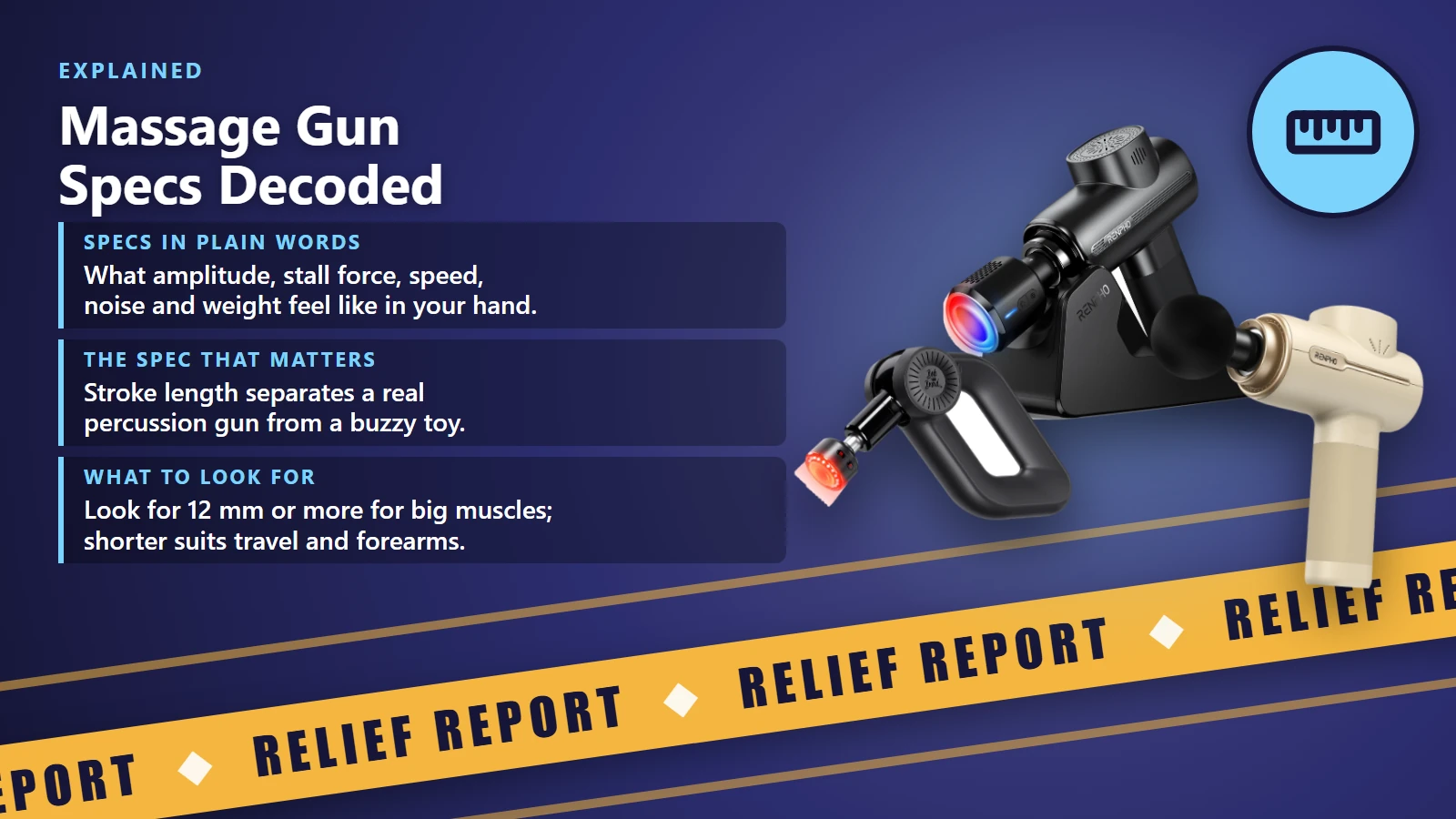
To see why amplitude and stall force (how hard you can press before the head stops moving) matter more than speed settings, read our guide to massage gun specs. The short version: a gun with a short stroke feels gentle on big muscles no matter how many speeds it offers.
Start on level 1 and test any gun on a thigh before you go near a shoulder. Keep it away from the throat, the sides of the neck, bones and recent injuries, and if a charger or handle gets hot, unplug it and stop using it.
Vibrating Rollers
Vibrating rollers sit between manual tools and guns. You still use your body weight, but members say the vibration adds comfort and helps interrupt muscle cramps.
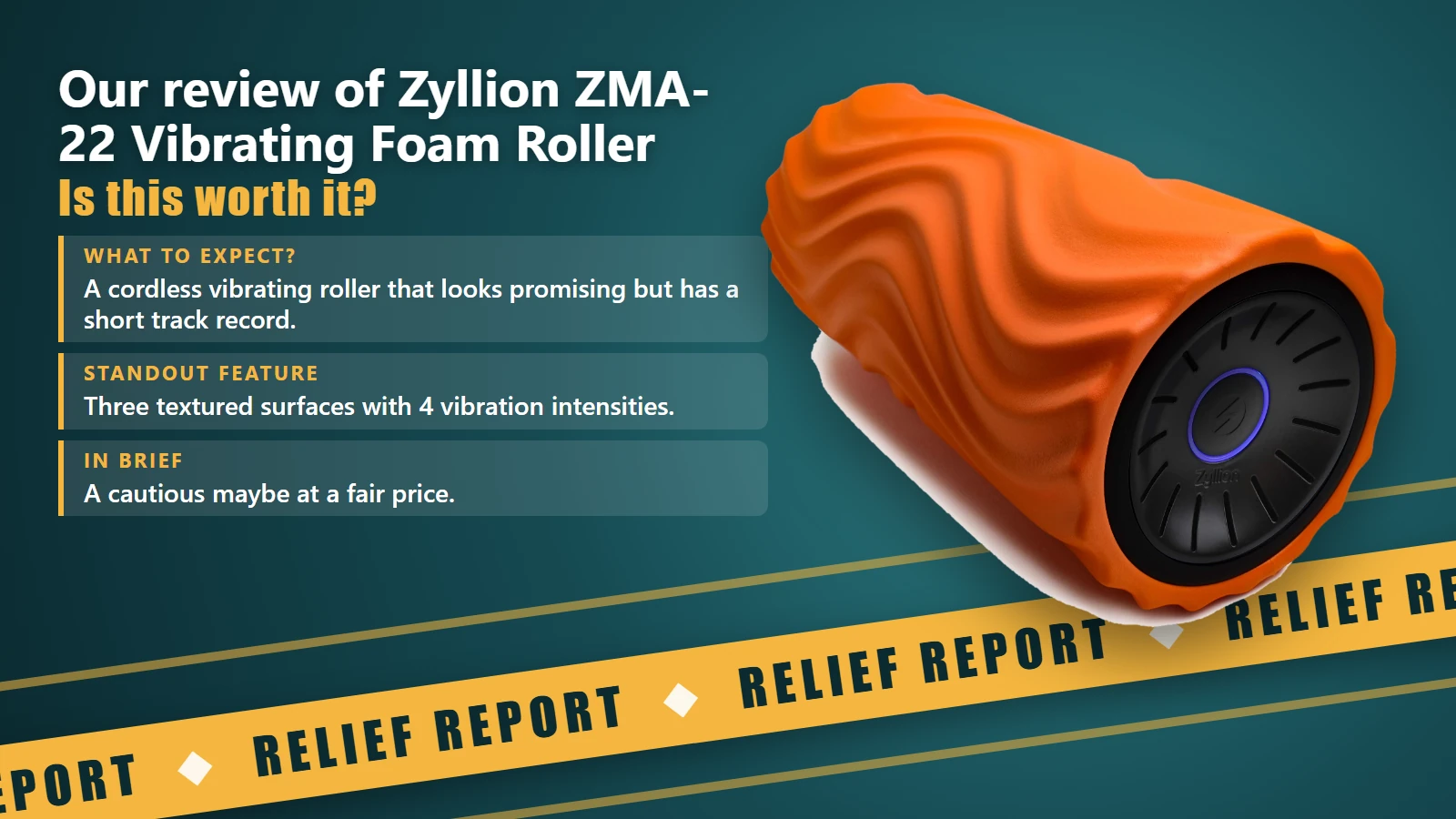
The question is whether the motor is worth the extra cost and the added chance of breakdown. The Zyllion ZMA-22 Vibrating Foam Roller costs $99.95 and offers four speeds shown by a colored light ring.
It has only five-star praise from eight buyers and no critical reviews, which means the evidence is too sparse to call. Nobody has reported noise levels, battery hours or how long it lasts.
The box promises faster recovery than a regular roller, and buyers describe strong vibration and relaxing effects, but in a few lines each. At $99.95, I'd measure it against a $70 knobby Rumble Roller and a $99.00 manual silicone tool, not only against a Theragun.
Buy it if you want a cordless vibrating roller at a fair price, and register the warranty the day it arrives. Skip it if you need heat, a timer or proven durability.
The Zyllion ZMA-30 Peanut Ball costs $59.95 and is a cordless vibrating peanut with four modes. It is a 6 inch silicone shape with two rounded ends and spiral ridges stated at 5 mm.
For desk workers with upper back and neck tension, it earns its price. For anyone who trains hard, it does not.
The elite athlete mentioned earlier also pointed out that a peanut spreads your weight over two contact points, which gives about half the pressure of a single ball. A peanut with a motor is gentler than it looks, because the motor adds comfort more than pressure.
Noise is a real issue on high. One buyer said it shakes the walls at home and sounds like subwoofers in a truck, while another found it very quiet.
Size catches people out too. A small buyer found the 4 inch body wider than a thigh, which made leaning over it for spine work awkward.
Some buyers report it failing around 5 months, but that is unconfirmed, and nobody has reported on it long term. For bedtime cramps, a heavier vibrating peanut stays put better than a cylinder, and members use tools with a 10-minute auto-off so they can fall back asleep.
Which Body Areas Suit Which Tool
The body area matters more than the brand. Here is what members and clients reported for specific spots.
For the upper back, neck and traps, canes and hooks let you press without floor work. The Kineon Relief+ targets these areas with body-weight pressure, but expect a learning curve.
A vibrating peanut ball works against a wall or in bed for lighter tension. A gun reaches the tops of the shoulders and the base of the neck quickly, but four buyers needed a helper for hard-to-reach spots.
For glutes and hips, sustained pressure wins. A foam roller or a lacrosse ball held on a knot does what a gun often cannot, and one of our clients found the Kineon Relief+ more accurate than any ball or roller for glute knots.
The IT band (the thick band running down the outside of the thigh) is a special case, because rolling it directly does not stretch it. Members say the benefit comes from rolling the surrounding hip, glute and quadricep muscles instead.
For calves and shins, the 57-year-old runner in our group said a foam roller beats a gun for deep soreness. A mini gun like the Q2 Mini works for nightly calf work, but one member called that temporary relief, much like calf stretching, so think of it as a comfort habit and not a fix.
If foot pain is part of the picture, check with a doctor before relying on any tool. For forearms, a mini gun shines, and the Q2 Mini at 0.95 lb is light enough to pack for trips.
For quads and hamstrings, a full-size roller or a longer-stroke gun is the better fit. A client with 32-inch quads and a buyer who tried the Q2 Mini on glutes and lower back both said its 7 mm stroke stalled, so bigger muscles call for a bigger tool.
Combining Them
No single tool does everything. Members who own both a gun and a roller use them for different jobs on the same day.
A gun gives fast relief after a run, then a roller handles deep shin and hip work before bed. Each covers a need the other does not.
A practical setup costs about $100 to start: a $12 foam roller and a $20 trigger point cane come to $32. Adding a $69.98 mini gun for travel and forearms brings the set to roughly $102, close to the price of one vibrating roller.
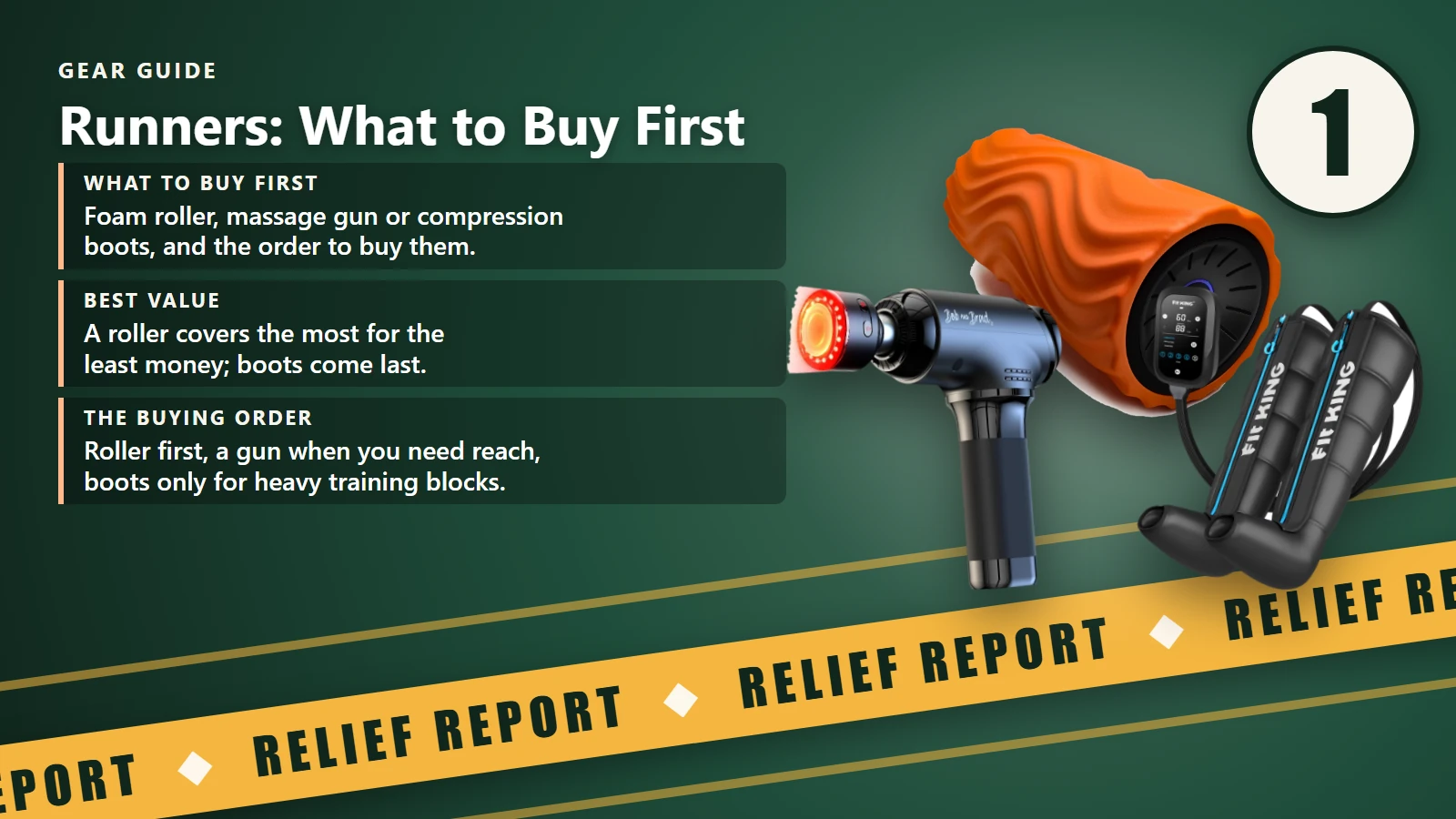
If your budget allows one motorized tool, our guide on what runners should buy first walks through that decision. Members with exercise science backgrounds add an honest caveat: none of these tools replace strength training, sleep and good food for long-term recovery.
They can help sore muscles feel looser and calm the nervous system, but they will not fix structural issues. If you have a condition like arthritis, sciatica or neuropathy, check with a doctor before adding any of these to your routine.
Questions People Ask
Can a foam roller replace a massage gun?
For deep, sustained pressure on knots, often yes. A member of our group found a $12 roller worked out a hamstring knot a gun could not budge, while for speed, reach and convenience a gun still wins. Most people who own both say each has a job the other cannot do.
Are vibrating rollers worth the extra money?
If vibration helps with cramping or makes rolling more comfortable, they can be. The reports on durability and battery life are still thin, so register the warranty. For pure depth, one elite athlete in our group said a plain lacrosse ball beats a $59.95 vibrating peanut.
Which tool is best for reaching your own back?
A gun with a long handle is the best option for solo back work. Four buyers of the Renpho Active needed a helper, and clients picked the X6 Pro for its long handle. Canes and hooks also work for the upper back without floor work.
How long should each session last?
Keep gun sessions to 1 to 2 minutes per muscle and 5 to 10 minutes in total. For manual rollers, hold pressure on a knot for 15 to 25 seconds. More time does not mean more relief, and members say the benefits are temporary and nerve-based, not structural.
The Bottom Line
Start cheap and specific. If your main problem is a stubborn knot in a glute or hip, a $12 foam roller or a lacrosse ball may do more than a $119.99 gun.
If you want fast relief on shoulders and forearms after a workout, a budget gun like the Q2 Mini at $69.98 is worth it, but keep your order number in case the battery fails. If you want vibration to calm cramps or make rolling more comfortable, the Zyllion peanut ball at $59.95 is the cheaper way in.
Reports on both vibrating options are thin, so think of them as cautious bets and register the warranty. The readers who get the most value match the tool to the body area, not the brand to the budget.
A gun for reach, a roller for depth, a vibrating tool for cramps. Spend the least money that solves your specific problem, and put the rest toward a good strength program.