

Key Takeaways
- Nearly everyone we heard from said their legs felt lighter and less sore after a session, and almost nobody said they got faster.
- Members and physical therapists in our group say the boots do not beat good sleep, food and sensible training, and the studies they cite found no clear performance gain over plain rest.
- The people who kept using them did it daily or 4 to 6 times a week, and the people who tried them now and then mostly noticed little.
- At $699.99, one client could not tell what the premium bought at home, which is why we point casual exercisers to a foam roller or a massage gun first.
- Sudden swelling or pain in one calf, a history of blood clots or heart failure all mean a doctor comes before the first session.
A reviewer training for a 10K runs compression boots every night at a light setting of 40 to 50 and says the knee and calf feel much better the next morning. A runner in our Facebook group who paid about $200 for a budget set after double-digit long runs said his soreness dropped a lot.
These are comfort stories, and they are the ones we hear most often. This guide pulls together what our clients, group members and buyer reviewers reported across several compression boot models, so you get an honest read on where the feelings and the research split.
The Honest Short Answer
Compression boots can help tired legs feel lighter and less sore, and that is about the size of it. They squeeze your legs in a pattern that moves from the foot upward, which people describe as a firm hug that leaves the legs refreshed.
What they do not do, based on what members report and the evidence I have seen, is speed up tissue repair or boost your next workout. Several members and physical therapists in our group say the same thing: compression boots do not beat good sleep, hydration and nutrition.
If you train hard several times a week, spend long hours on your feet, or end the day with heavy, swollen legs, the comfort payoff is real. If you exercise now and then and hope for a shortcut, you will likely be disappointed.
What Users Consistently Feel
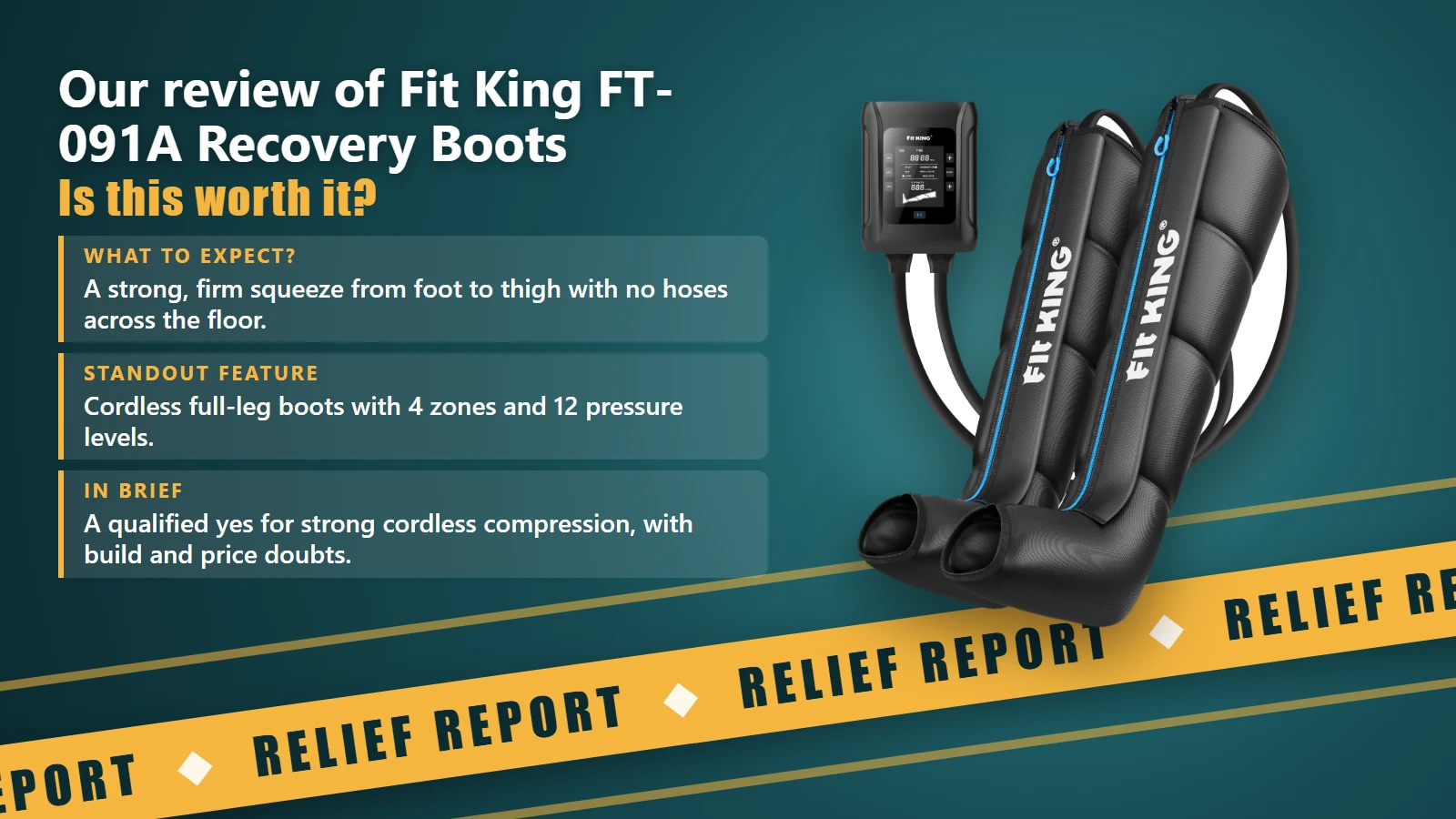
The most common report across every model we reviewed is that legs feel less heavy after a session. A reviewer with sore legs after intense sessions called the Fit King FT-091A Recovery Boots a big step up for recovery, powerful yet comfortable, and liked that they are rechargeable and portable.
People use words like "heaven" and "a very heavy-duty massage" even though the boots only squeeze. One reviewer with 29-inch thighs said the FT-091A feels like heaven once on and eases a chronic pain condition, which I read as a comfort report and not a treatment claim.
The squeeze pattern matters more than raw pressure. Most boots use sequential compression (chambers that fill one after another from the ankle up, so the squeeze travels up the leg), and reviewers agree that this upward squeeze feels good on tired or restless legs.
A client who was 32 weeks pregnant had used a massage gun each night for restless legs and swollen ankles before she switched to the Quinear QN-073A. She ran 40 minutes before bed, mostly on level 2, and the restless legs stopped at night, though her feet still swelled during the day.
Nothing in the listings clears compression in pregnancy, so anyone expecting should ask their doctor first. Her story is a comfort report, not advice.
Members run sessions of 15 to 30 minutes for standard recovery and 45 to 60 minutes after heavy days. Most use them in the evening on the couch, which is itself a benefit, because the boots make you sit still and rest.
A chef who bought the FT-091A said it made the legs feel better than they had in a decade. An ER nurse who runs a budget set on low heat, cycling twice while lying in bed, says the legs do not ache the next morning and the swelling feels much improved.
These are one-person reports and not findings, but the pattern is consistent. People who use the boots regularly say their legs feel better, and the benefit is comfort, not a measured change in recovery time.
What the Research Does and Does Not Show
Members of our Facebook group and the physical therapists who post there point to peer-reviewed research that found no statistically significant performance gain over passive rest or active recovery, such as 10 to 20 minutes of light spinning or walking. We have not read that research ourselves, so this is what our members cite and not our own finding.
Where the user reports and those studies line up is perceived soreness. Members report big drops in DOMS (delayed onset muscle soreness, the stiff, aching feeling a day or two after hard exercise) and an end to the heavy "concrete leg" feeling.
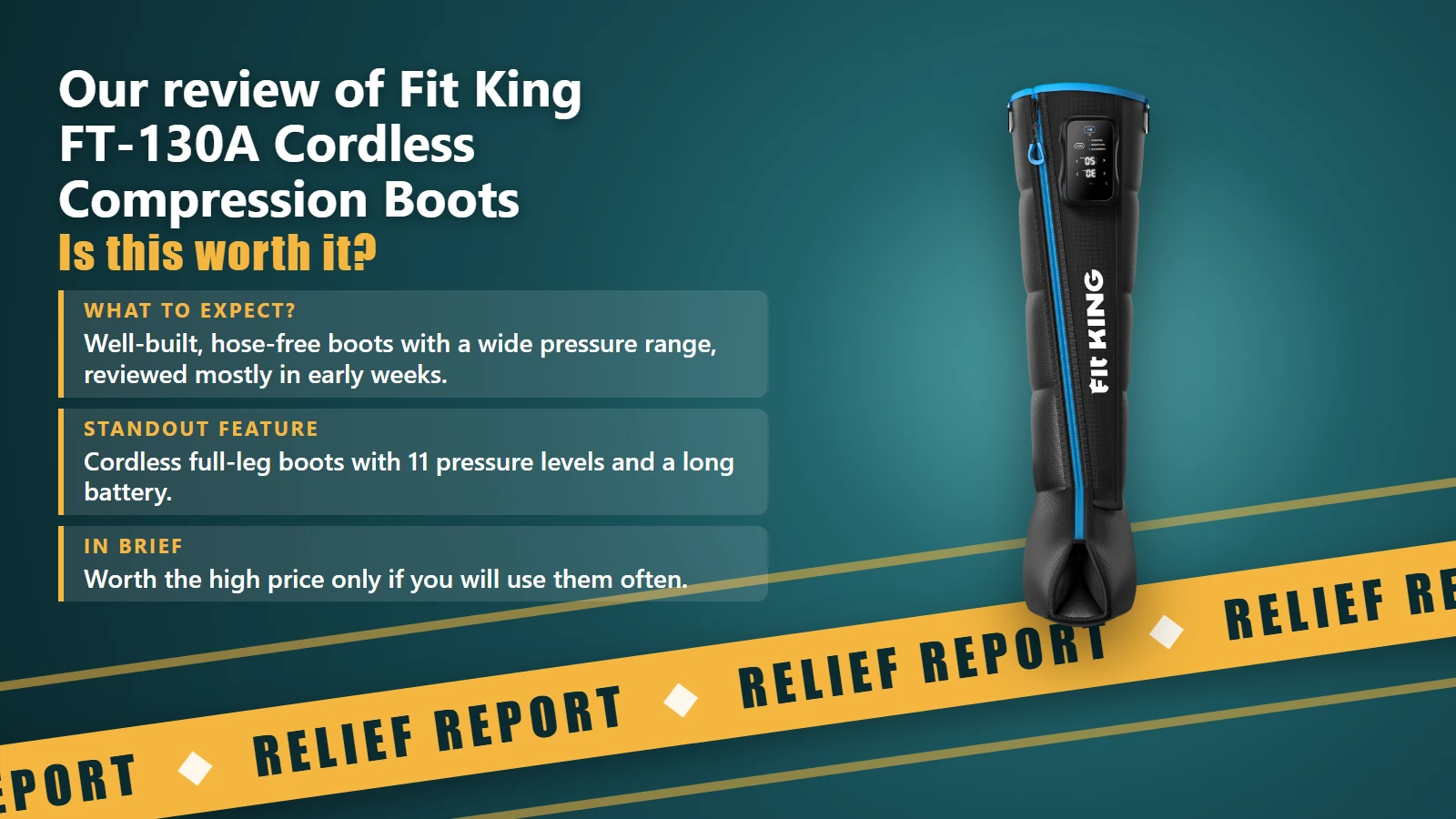
A client who used the Fit King FT-130A for 30 to 35 minutes after workouts said the legs felt a little less tired afterward, yet there was no dramatic change by the next day. The client likened it to drinking a very expensive bottle of wine: it is good, but hard to say why it costs so much.
Several members say the benefit is mostly that legs feel less heavy and that the boots make you sit still. That forced rest may be doing as much good as the compression itself.
The listings on these products also make recovery and drainage claims beyond comfort. I have not verified any of them and will not repeat them as facts, and the group data supports only legs that feel less heavy.
Here is how the feelings stack up against what the evidence supports.
| Claim | What users report | What the evidence says |
|---|---|---|
| Faster muscle recovery | Legs feel less heavy; one client saw no dramatic change next day | Studies members cite show no significant gain over rest |
| Less soreness | Lower perceived soreness; a runner said it dropped a lot | Perceived soreness is where users and studies line up |
| Better next workout | Not reported by our clients | Studies members cite show no performance boost |
| Draining swollen legs | Members report less swelling in ankles and calves | Comfort reports, not treatment; new or one-sided swelling needs a doctor |
| Forced rest | Boots make you sit still for 15 to 30 minutes | The rest may do as much good as the squeeze |
The gap between what people feel and what studies measure is not a contradiction. Feeling less sore is a real benefit even if your muscles are not repairing faster, and for many users that comfort is enough.
Who Gets the Most
High-volume runners, marathoners, ultra runners and cyclists doing back-to-back training blocks get the most out of compression boots. They build up enough fatigue and fluid in the legs that a 20 to 30 minute squeeze makes a noticeable difference the next morning.
A recreational basketball player used the Fit King FT-115A on the calf zones or the full leg after leg day and found it strong, comfortable and surprisingly quiet. People on their feet all day, such as nurses, retail staff and coaches, also report clear benefits, and one client on their feet for long hours found the routine simple: zip up, pick a setting and relax.
People with medical swelling, such as venous insufficiency (veins that struggle to push blood back up from the legs), lipoedema or lymphedema, may find relief, but these are comfort stories and not treatment claims. A reviewer diagnosed with lipoedema 25 years ago, who used to pay for lymphatic drainage sessions, runs the FT-115A most evenings for 60 minutes, alternating two modes, and builds up week by week.
Anyone with a condition like that should work out settings with a clinician first. The FT-115A listing does not say it is FDA-cleared, and I have no evidence that it is.
Who Notices Little
Low-volume or casual exercisers who do not build up much fatigue or fluid notice little to no difference. A gym-goer tried a set at a desk and found setup quick, but after 3 to 4 sessions a week felt no difference in recovery and returned it.
People who want deep kneading or percussion are disappointed by a static air squeeze. Two clients said flat out that compression boots are compression, not a massage, and one reviewer put it as "just pure compression."
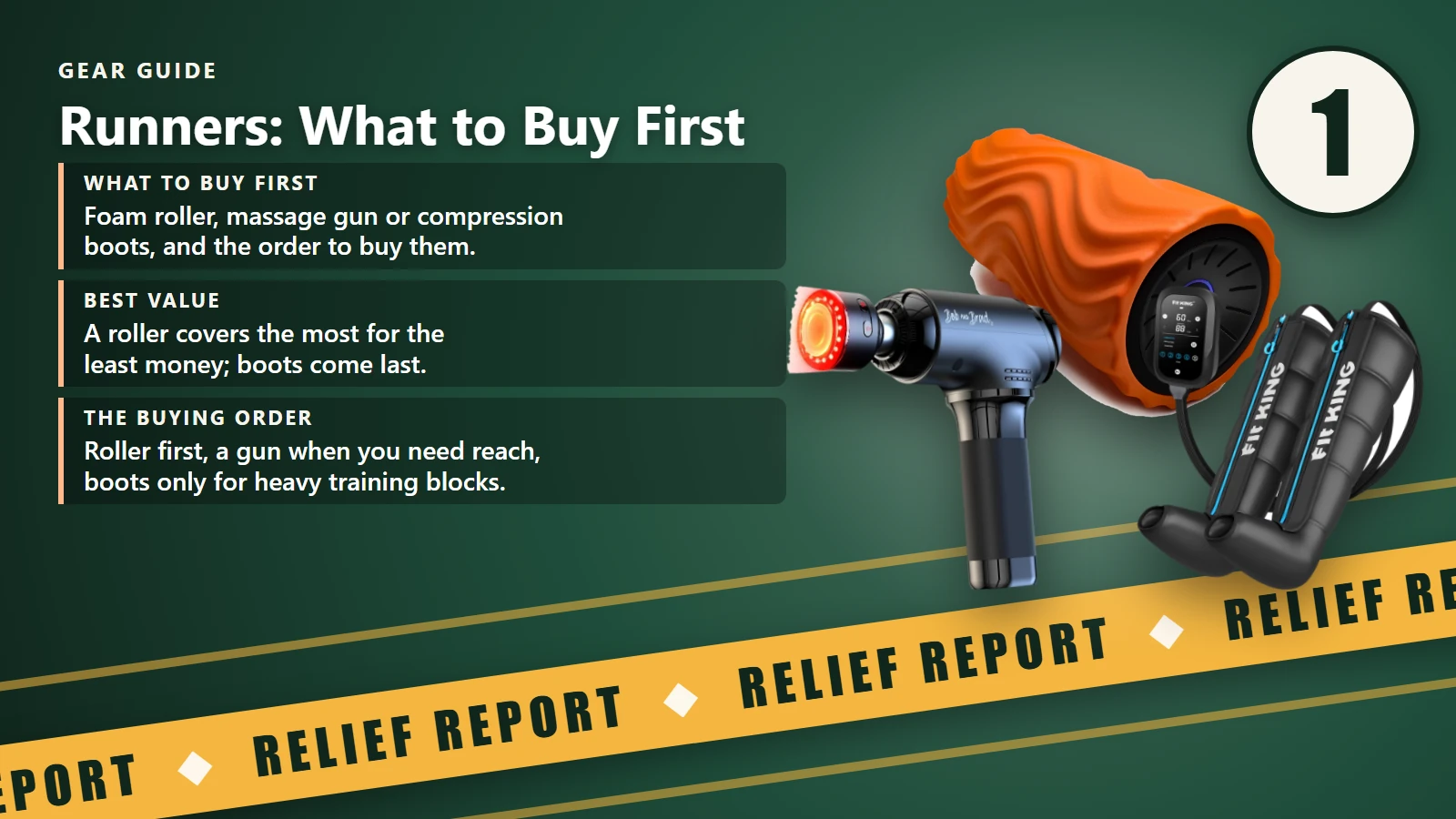
If you are deciding between a massage gun, boots or a foam roller, our guide on the best first recovery tool for runners walks through that choice. The short version: if you can only buy one, a foam roller or massage gun covers more ground for most people.
Price makes this sharper. The FT-130A client above could not tell what $699.99 bought at home, and for someone who does not train hard several times a week, the comfort gain is hard to justify at that cost.
Anyone with severe restless legs who cannot stand the trapped feeling may find symptoms worse, because the boots hold your legs firmly. And athletes hoping to replace sleep, nutrition and load management will not find that here, which members and physical therapists in our group are clear about.
How to Tell if It Is Working for You
Start with a few evenings a week and see how your legs feel the next morning. Members use compression daily or 4 to 6 times a week in hard training blocks and 2 to 3 times a week for upkeep, so you do not need to run them every night to see a benefit.
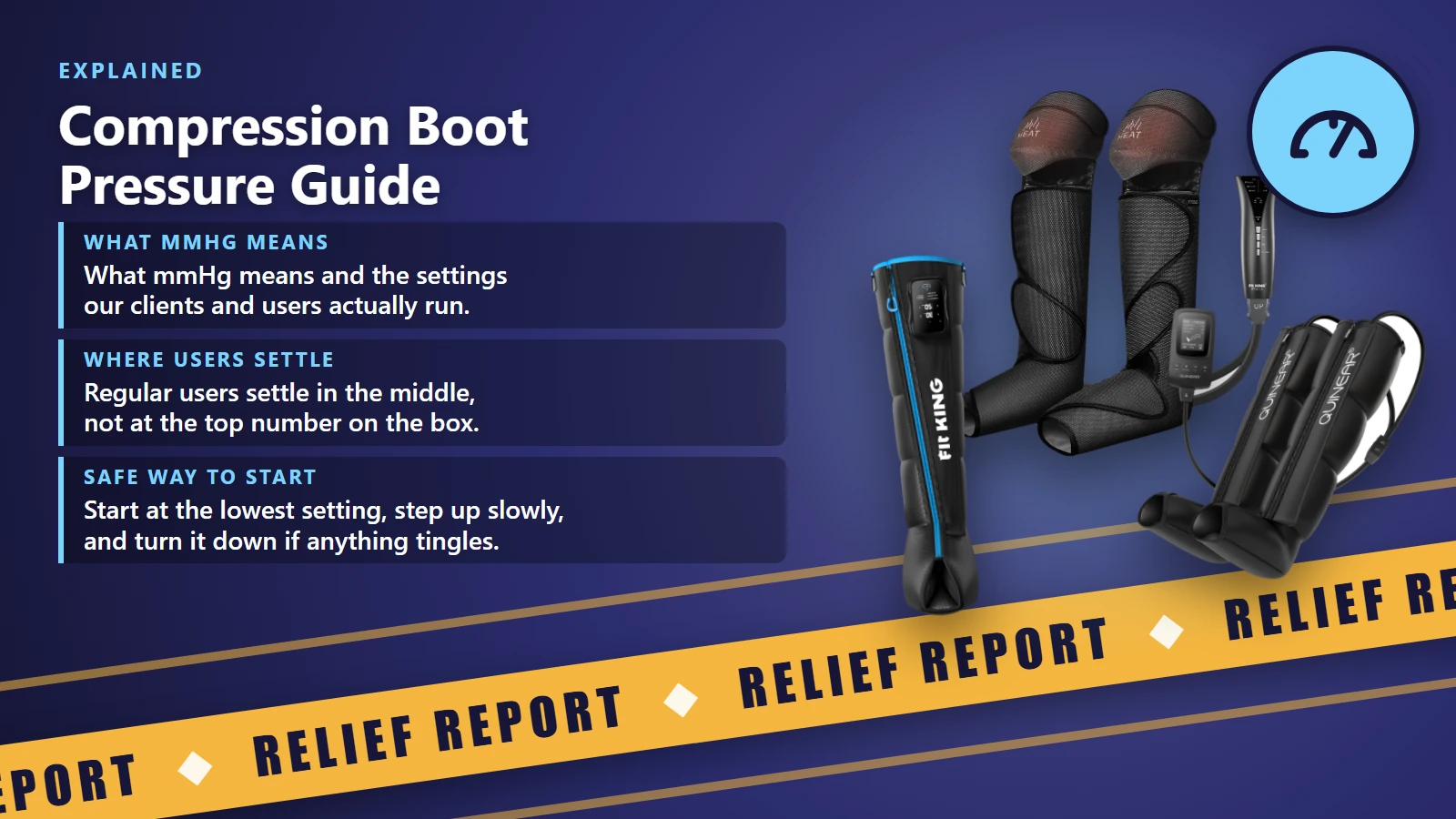
Begin on the lowest setting and move up only if it feels comfortable. Members often settle around 80 to 100 (mmHg, millimeters of mercury, the same pressure unit as a blood pressure cuff) after hard sessions, and wear thin pants to avoid deep skin marks.
Our guide on compression boot pressure settings covers which mmHg level to use in more detail. Settings feel different from leg to leg: the default on some models is 50 mmHg, and 80 already felt a bit strong to one client, so begin low even though the range runs to 150.
A member warned that more pressure is not better, and the happiest clients praised zone control and the screen instead of maxing out the dial. A common letdown is expecting soreness to vanish at once, and a member likened it to foam rolling, where the payoff comes from regular use.
The Quinear Leg Recovery Compression review shows what happens when the lowest setting is already too strong. Two reviewers said even 50 mmHg was too much, and one felt it painfully around the ankles and the top of the foot, so if the lowest setting hurts, that model is not for you.
When to stop and call a doctor
Stop if you feel pain, numbness, tingling that lingers, nausea or dizziness. Sudden swelling or pain in one calf, or shortness of breath, needs urgent medical attention and not another session.
Anyone with a history of blood clots, DVT (a clot deep in a leg vein), peripheral artery disease, heart failure, open wounds, leg infections or recent leg surgery should check with their doctor before using air compression. Unexplained one-sided swelling is a reason to stop and see a professional, not to turn up the pressure.
Questions People Ask
Do compression boots actually speed up muscle recovery?
Not in any way I can promise. A client felt legs a little less tired after 30 to 35 minutes but saw no dramatic change the next day, and members say the boots give you lighter-feeling legs and a reason to sit still, not faster tissue repair.
How long should a session last?
Members run 15 to 30 minutes for standard recovery and 45 to 60 minutes after heavy days, mostly in the evening on the couch. One member stops at around 15 to 20 minutes because longer feels like overkill, so start short and add time only if your legs feel better for it.
Are cordless boots worth the extra money?
For people who train hard several times a week and hate hoses, yes. Our group says corded setups with separate controllers discourage frequent use, and complaints about extension cords across the room show up often, but for casual users the cordless premium is hard to justify.
Can I use compression boots if I have a medical condition?
Only after checking with your doctor, because these are comfort tools and not treatments for circulation problems, swelling or neuropathy. Anyone with blood clots, heart failure, vein problems or unexplained swelling should clear compression with a clinician first.
Bottom Line
If you train hard several times a week, spend long hours on your feet, or deal with heavy legs by evening, compression boots are a comfort tool worth trying. The evidence does not support the performance claims on the box, but the relief people describe is real and consistent across our clients and group members.
If you are unsure, a lower-priced corded set lets you test the habit, but keep the return window in mind. Three of six buyers on one budget model reported hardware failures, and the longest reports on another ran about 9 months before units quit, so lean on the warranty.
If you exercise casually, want hands-on kneading, or are looking for a shortcut around sleep and nutrition, skip them. A foam roller or massage gun covers more ground for less money, and judging the boots by how your legs feel the next morning is the honest measure.