

Key Takeaways
- At $154.99, the useful comparison is a $30 to $60 wired TENS unit: one member tested NeuroMD side by side with a $20 unit and felt the same sensation, while another found it slightly stronger.
- Reviewers rated it anywhere from 1 to 5 stars, and the lowest scores came from a TENS-like feel, pads that quit and charging confusion.
- Roughly 7 of 24 buyers wrote that the pads stop sticking, and a member paid $50 for a replacement 3-pack.
- Start on Mode 1: the brand's own schedule keeps you there for the first 4 to 7 days before Mode 2 takes over.
- It's worth the premium only if you really want a wire-free patch on your back; otherwise a wired unit gives you the same pulses for far less.
- No member has reported on the SM9113 itself, so read the group's praise as being about NeuroMD systems in general.
One reviewer, a recreational weightlifter, strapped this on after heavy squats expecting something special. What they felt was the same basic tingling as a standard TENS unit, and that sets the scene for this NeuroMD SM9113 NMES wireless muscle stimulator review.
Our one client was kinder, and so were several other reviewers who gave it 5 stars. It is a wireless back unit for adults with sore or tight back muscles who like the idea of a patch with no lead wires.
My bottom line: it works for many people, but at $154.99 you are paying for the wireless design, and the pads are the running cost.
NeuroMD SM9113 NMES Wireless Muscle Stimulator Review: What Is in the Box?
| Spec | What it means for you |
|---|---|
| Price | $154.99 (checked Oct 2026), premium for TENS/EMS |
| Type | NMES muscle stimulation, wireless, for the back |
| Design | One butterfly pad with the pod in the middle |
| Modes | 2 preset modes, intensity goes up to 25 per a buyer |
| Session | 25 minutes, started from the LCD remote |
| Power | Rechargeable, about 1 hour to charge, one dual-ended cable |
| Size and weight | 9 x 6 x 1 inches, 13.44 ounces as listed |
| In the box | Pod, pad, remote, cable, storage pouch, user guide |
| FSA or HSA | The listing says it is eligible |
The pod has three touch buttons on its face (minus, power and plus), and the remote does the same job from your hand. Run time per charge isn't stated, so I can't tell you how many sessions a charge gives.
The charging steps are thin too: the guide shows a picture and no time, and one reviewer worked out that the device light turning from orange to blue, with a solid light on the remote, meant it was full.
Two terms matter here: (NMES - electrical pulses strong enough to make the muscle contract, unlike TENS, which works on the pain signal). The listing does not state pulse width, frequency or channels, so the electrical performance can't be checked from the page.
Who Is It For, and Who Should Skip It?
It suits
- Adults with sore lower or upper back muscles who dislike tangled leads
- People on their feet or at a desk all day who want something they can wear around the house
- Travelers, since the pod, pad and pouch pack flat
- Buyers who will follow the guide's schedule and exercises
Skip it if
- You judge value against a $30 TENS unit
- You want to run two areas at once or choose your own pulse settings
- You cannot do the floor exercises in the guide
- You have a pacemaker or any implanted electrical device
What Did One of Our Clients Say About It?
We heard from one client, who rated it 4 stars. The table shows that client, and the other user reviews follow below it.
| Client | Why they bought it | How they used it | What worked |
|---|---|---|---|
| Conrad, who hikes most weekends | Lower back pain relief | Sitting in a chair | Effective, well made, simple |
| Client | What didn't | Their verdict |
|---|---|---|
| Conrad, who hikes most weekends | Center power button turns off when leaning back | 4/5 |
Conrad called it quite effective for pain relief, well made and simple, and would have given 5 stars. The power button sits in the middle of the face, so sitting back in a chair can switch it off.
The pattern in the user reviews is that people who followed the schedule and gave it a few weeks mostly liked it, while the ones who expected more were let down. The pads and the center button are the practical complaints.
Other Observations From User Reviews
- A reviewer, a recreational weightlifter, found the unit worked but nothing set it apart from basic units, and the remote and materials felt basic. They also noted how heavily it is advertised, which raised expectations the device didn't meet (1/5).
- A reviewer with years of constant back pain found the pads came off their backing and stopped sticking around the edges, a replacement did the same, and the return window had closed (3/5).
- Another reviewer, a week in, could feel a difference in the lower back and sciatic area, with pain not gone but much better, advises following the manual closely and plans to buy a second unit (4/5).
- A reviewer who spends most weekends on their feet said the back no longer feels sore, and praised the battery and the remote that adjusts intensity (5/5).
- A reviewer who was skeptical and planned to return it followed the guide, M1 (TENS) for four days, then M2 (NMES), raising the level to the highest comfortable one. They now have days with no need for therapy and call the relief for lumbar spinal stenosis with leg pain phenomenal, which is one person's experience and not a promise; third-party pads that fit for less money worked too (5/5).
- A reviewer set it up, found the guide gave no charging time, and worked out that orange on the device turning blue meant done, rating it 3 stars before using it (3/5).
- Another reviewer, buying for lower back pain, liked the adhesive that sticks and peels off without pulling skin, and uses it 25 minutes a day with the guide's exercises.
- A reviewer said both back pain and sciatica improved, and that it doesn't feel like a magic fix.
- Another reviewer liked the two intensity modes and the 25-minute session, and a further one felt the back was more relaxed and less achy after a session.
- A reviewer who can't yet tell if it's doing anything after only a short time still gave it 5 stars (5/5).
What Do Members of Our Facebook Group Say?
No member has posted about this exact SM9113 yet. These are posts about NeuroMD systems, labeled as brand posts, from members who bought one.
| Member | Device | Experience | Takeaway |
|---|---|---|---|
| A member with sciatica | NeuroMD (brand post) | Owned for 2 years | A few days of use settles flare-ups |
| A member with back pain | NeuroMD (brand post) | Back felt pummeled after each use | Planned to return on day 31 |
| A member who paid $150 | NeuroMD replacement pads | $50 3-pack arrived with melted adhesive | Support refused a replacement, offered 10% off |
| A member using it 5 years | NeuroMD pads | Wipes pads with a wet rag after use | Same pads usable for about 5 years |
| A member comparing devices | NeuroMD vs a $20 TENS unit | Tested side by side | Felt completely identical to them |
| A member with a severe herniated disc | NeuroMD (brand post) | Tried it at nearly 10/10 pain | A slight distraction, not worth the price |
Reviewers and members agree that the results depend on the person, and that pads are the weak point. They differ on pad life: one member says pads last about five years with a wet rag, and the same group has the melted-adhesive story, much like the pads that stopped sticking for one reviewer.
Another member said it felt slightly stronger than a standard TENS machine but gave no long-term relief. A few reported the opposite, with one saying a bulging-disc flare felt less inflamed after two sessions and another symptom-free after three days with gentle stretching, so single reports on both sides.
Do the Brand's Claims Match What People Found?
| What the listing promises | What users actually found |
|---|---|
| NMES and "corrective therapy" | One reviewer and one buyer felt little beyond a $30 TENS unit |
| Reusable gel pads | 7 of 24 buyers said they quit early |
| Wireless, no lead wires | Confirmed; reviewers liked it |
| Charges in about an hour | Fast, but the guide gives no charging time |
| Two modes, 25-minute session | Reviewers who followed it reported good results |
| Simple controls | Easy, but the center button can switch it off |
The biggest gap is the word "corrective." The sensations reviewers described were TENS-like for some of them, and some members said the same, while others felt the NMES contractions did something deeper.
The second gap is the pads. A member paid $50 for a 3-pack that arrived with melted adhesive, and the "about 20 uses per pad" figure is a member's number that I haven't verified.
How Long Does It Last, and What Goes Wrong?
Of the 24 buyer reviews, about 7 say the pads stopped sticking, one in as little as the fifth use. Three say the charge is the problem: one would not charge, one held a charge for a single use, and one says the charge doesn't last long.
- Pads: 7 of 24 buyers plus one other reviewer; the replacement 3-pack costs $50.
- Results: at least 6 buyers saw little or no change after weeks, and two missed the return window.
- Battery: 3 of 24 buyers mention charging problems.
- Center button: our client found it switches off when you lean back.
- Support: 1 buyer called it horrible, and a member reported a refused replacement.
- Guide: one buyer with three knee replacements couldn't do the floor exercises.
- Warranty: not stated.
The return window matters here: two buyers with no relief missed it, one by 3 days, and another reviewer's closed too, so test it early. Members say a few drops of water bring pad stickiness back.
Is It Worth $154.99 Next to Neocarbon and Cheaper Units?
| Product | Price tier | Key difference | What users liked |
|---|---|---|---|
| NeuroMD SM9113 | $154.99, premium | Wireless butterfly pad, remote | No leads, easy to use |
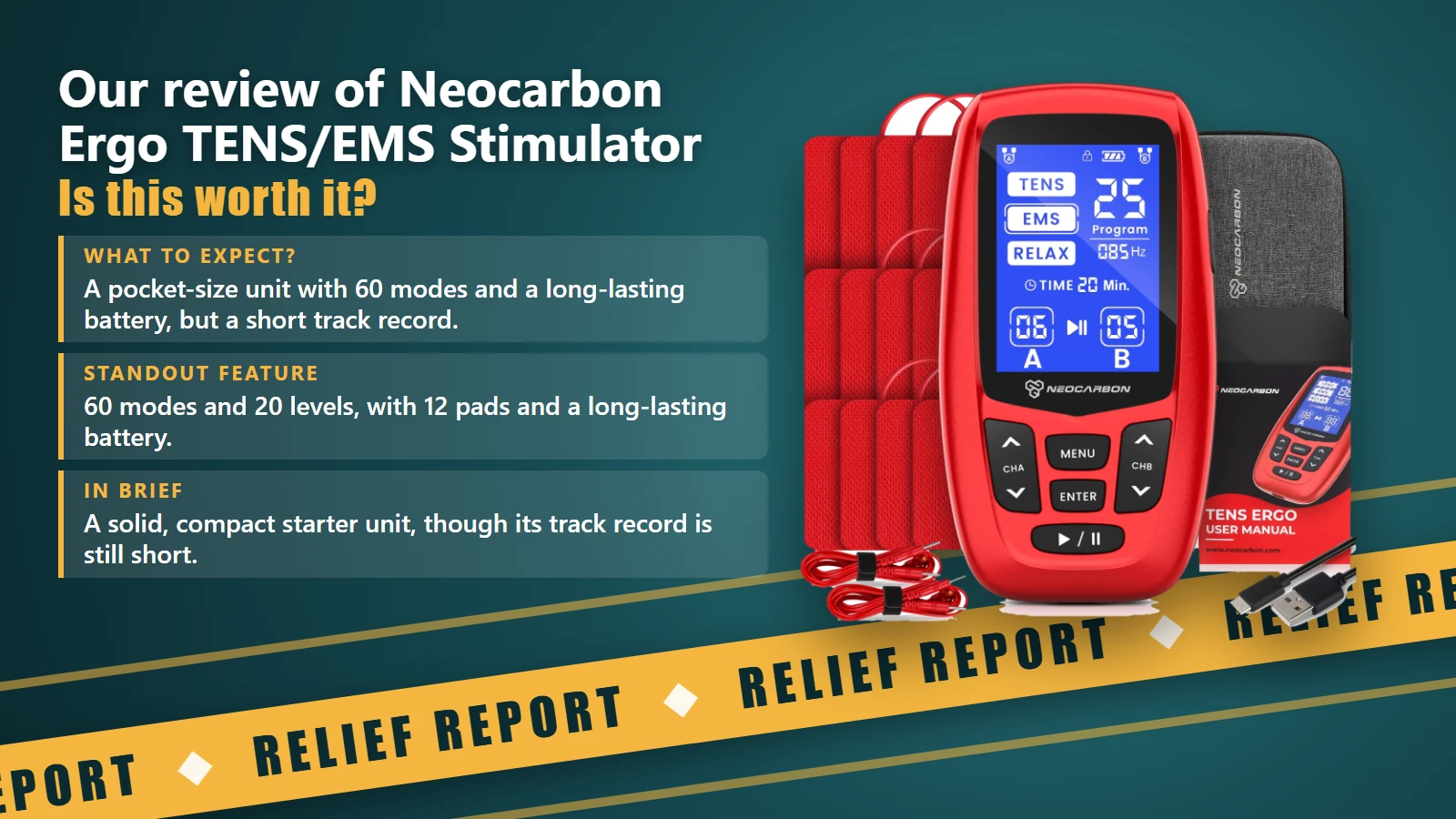
| Neocarbon Ergo | $69.97, mid-range | Wired, 60 modes, 12 pads | Many presets |
| Neocarbon Slim | $59.97, mid-range | Wired, 6 programs, pocket size | Portability |
| Twin Stim 3 | $50, budget | Manual dials, 9V battery | Cheap pads, full control |
| Pure Enrichment Duo | $70, mid-range | AAA batteries | One member: 7 years of use |
| Product | What users disliked | Best for |
|---|---|---|
| NeuroMD SM9113 | Pads and price | Back-only users |
| Neocarbon Ergo | Menu takes learning | Tinkerers |
| Neocarbon Slim | Pads wear out | Travelers |
| Twin Stim 3 | Not reported | Value seekers |
| Pure Enrichment Duo | Not reported | Quad rehab |
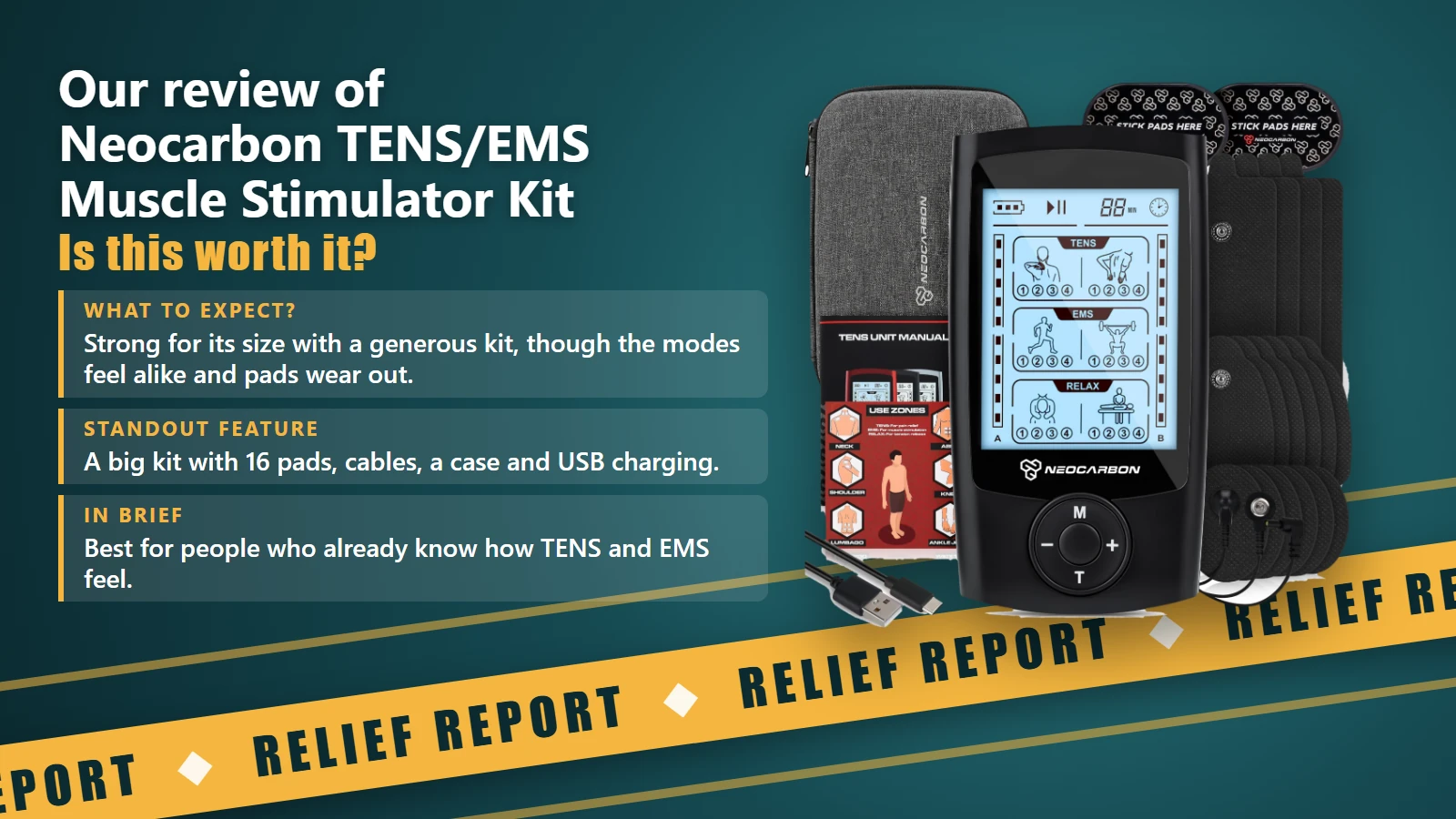
For a cheaper wired alternative, the Neocarbon Ergo TENS EMS costs less than half and has 60 modes, though its menu takes learning. If you want a pocket-sized wired unit, our Neocarbon Slim TENS EMS findings cover what you give up and what you save.
The honest answer on price is that you pay for the wireless patch, the remote and NMES in a single kit. Members say $30 to $60 units deliver the same waveforms.
So $154.99 is worth it only if having no leads is the point for you. Compex doesn't come up beside the SM9113 in our data, so I've left it out.
What Should You Look for in a TENS or EMS Unit?
| Factor | Why it matters | What to look for |
|---|---|---|
| Wired or wireless | Wireless avoids snags; wired spreads pads wider | Wireless for one area, wired for two |
| Pad cost | $50 for 3 versus $5 to $12 for generics | Standard connectors that take cheap pads |
| Channels | Two channels let you set two areas separately | Independent intensity per channel |
| Buttons | A raised center button can switch off when you lean | Side buttons or a remote |
| Battery | 9V or AAA never makes you wait for a charge | USB for convenience, replaceable for flare-ups |
| TENS or NMES | NMES contracts the muscle; TENS dulls pain signals | Know which one you need |
| Return window | Several buyers missed it by days | Test within the first two weeks |
If you are also looking at gear for muscle soreness, my Bob and Brad T2 Ultra Massage Gun review covers a $139.99 percussion option. For something that adds warmth, how the Renpho Mini Thermal Deluxe Massage Gun held up covers a $64.97 gun with a heated head.
How Do You Use It Safely?
The brand's schedule is Mode 1 for the first week (4 to 7 days), Mode 2 for the next weeks, then fewer days for maintenance, each session 25 minutes. Clean the skin first, place the pad, start the session from the remote, and raise the intensity slowly until you feel a firm but comfortable contraction.
NMES can leave a DOMS-like soreness or brief spasms in the first one to two weeks, which is why members say to build up slowly. Stop if you feel sharp stinging or cramping.
Never use it with a pacemaker or any implanted electrical device. Keep pads off the chest and heart, the head and the front of the neck, and off broken skin.
Pregnancy, epilepsy or a heart condition means checking with your doctor first. Don't place the pad over the spine or bone, and don't use it outside the sore area.
NMES and TENS give temporary relief only: they don't repair a disc or a nerve, and they don't replace seeing a clinician if the pain is severe. Pain often returns soon after the unit turns off.
NeuroMD SM9113 NMES Wireless Muscle Stimulator Review: The Verdict
Buy it if you want a wire-free patch for your back and will follow the schedule and exercises. Our client was happy with it, but with no group posts about this exact model and a single client report, I'm confident about the wireless convenience and the pad cost and less sure about long-term results.
Skip it if you judge value against a $30 TENS unit, need two channels or want your own pulse settings. In that case I'd choose a wired unit like the Neocarbon Ergo or the $50 Twin Stim 3.
This NeuroMD SM9113 NMES wireless muscle stimulator review comes down to convenience against price. Check the current price if the wire-free design matters most (if you buy through this link we may earn a small commission, and it doesn't change what our client and buyers reported).