

Key Takeaways
- One member of our Facebook group fainted while standing during a session, so a first session happens sitting or lying down.
- Don't judge a TENS unit by its number of modes; pad contact is what decided whether sessions felt like a smooth buzz or like a zap.
- For sore muscles in an otherwise healthy adult, a basic unit is a fair try; for a pacemaker, a defibrillator or any other implanted device, your doctor comes first.
- Pads stay off the chest, the head, the front and sides of the neck, and broken skin, and a sharp sting, dizziness or cramping means stop.
- Ignore the 60 modes and the 50-hour battery claim on the box, because a gentle buzz on sore spots is all most members were after.
One member of our Facebook group fainted while standing during a session, and another reported painful zaps when a pad peeled partly off. Both stories came back again and again in our group, which is why this page exists.
This is a calm, plain safety guide for TENS (transcutaneous electrical nerve stimulation: sticky pads on your skin send small electrical pulses) and EMS (electrical muscle stimulation: pulses that make a muscle tighten and release) units. It covers who must ask a doctor first, where pads never go, burns, zaps and cramps, and what a safe first session looks like.
Nothing here claims to fix a medical condition. These units are comfort tools, and our reviews are about how people used them.
Who should check with a doctor before using one?
Some people should not use a TENS or EMS unit at all without a doctor's go-ahead. The first group is anyone with a pacemaker (a small implanted device that keeps the heartbeat steady), an ICD (an implanted defibrillator that shocks the heart back into rhythm), or any other implanted electrical device.
Members and heart rhythm specialists (electrophysiologists) in our group caution that a pacemaker can mistake the pulses for the heart's own rhythm and stop pacing. With an ICD, the interference can set off an unwanted, painful shock, so never use a unit near a cardiac device without clearance from your specialist.
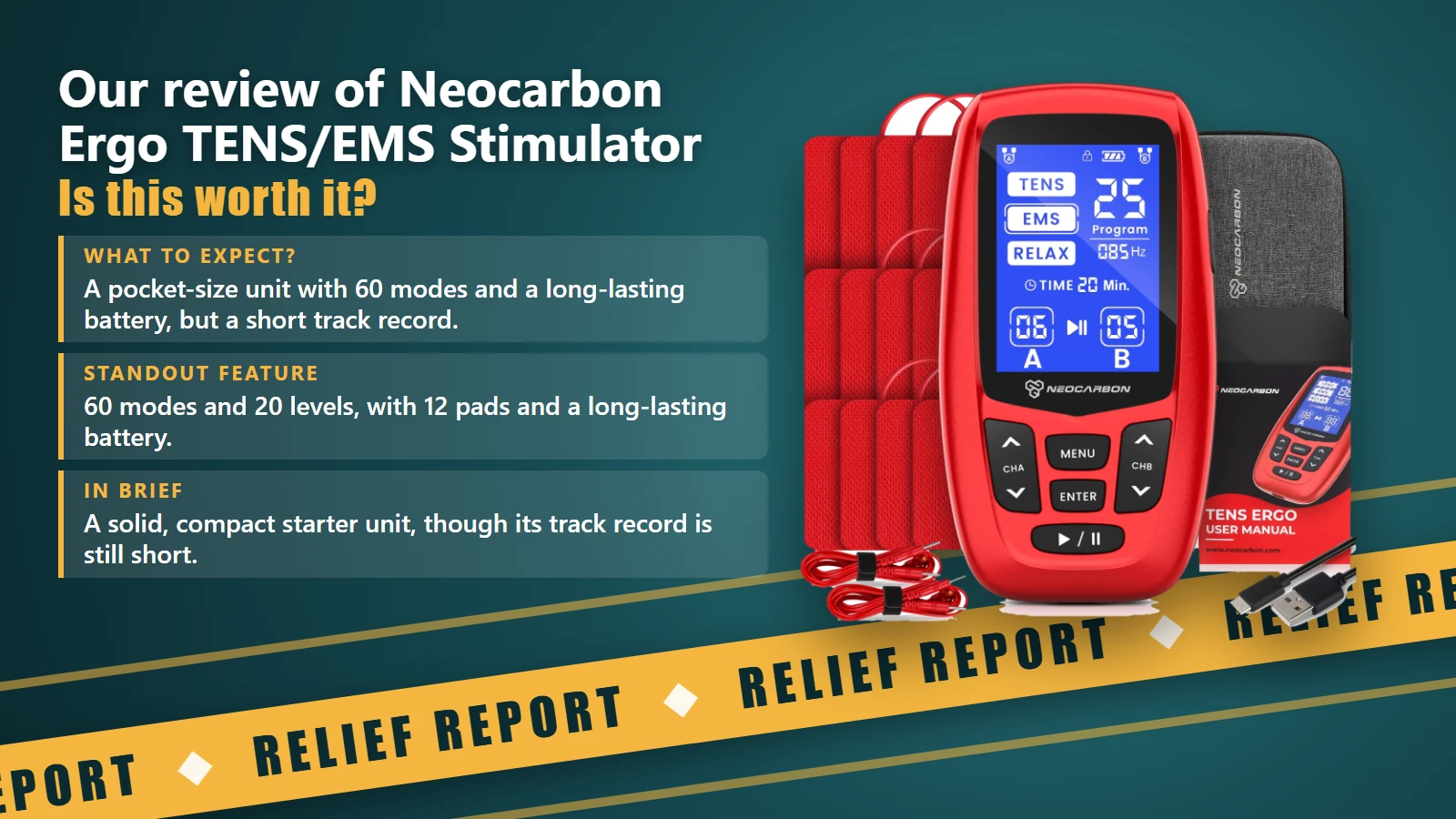
Ask a doctor first if you are pregnant, have epilepsy, or have a heart condition. Our reviews repeat this advice, and the listing for the $69.97 Neocarbon Ergo states no safety precautions at all, so reading the manual matters.
Members add two more groups. People with severe peripheral neuropathy (nerve damage that can cause burning or numbness) or very sensitive nerves reported burning, nerve flare-ups and rebound pain lasting days after stimulation, and anyone with a very low pain tolerance may feel startled, tense or sick from the pulses.
Keep your expectations modest too. A unit only masks pain signals or makes a muscle contract, and pain often returns soon after it powers off.
Who tends to be comfortable using one?
Members describe the happiest users as people with muscle tension in the lower back, neck and shoulder blades, and active runners and lifters who use a unit after a workout or while stretching. They talk about a gentle buzz and sore muscles feeling looser, not a fix for anything.
Members also say these units are a poor match for anyone hoping for a passive shortcut to build muscle, for deep internal problems that an external current cannot reach, and for anyone who finds electrical pulses startling. Don't expect abs from a unit like this: a friend of one client who lifts weights laughed at that idea and uses it after heavy deadlifts for the buzz.
Where must pads never go?
The basic rule is to put pads over soft muscle, in pairs on the same side of the body. This table lists the placement rules that came up in our reviews and from members.
| Area | OK? | Why |
|---|---|---|
| Soft muscle in the sore area | Yes | Pads belong over fleshy muscle tissue |
| Pairs on the same side of the body | Yes | Members advise keeping pairs together |
| Across the chest or chest and upper back | No | Routes current across the heart |
| Front or sides of the neck and throat | No | Risk of carotid spasm or disrupted blood flow |
| Head, temples or eyes | No | Never place pads on the head or temples |
| Broken skin or open wounds | No | Keep pads off broken skin |
| Over the spine or bony areas | No | Pads should sit on soft muscle |
| Near an implanted device | No | Pacemaker and ICD interference |
If you remember one thing from the table, make it soft muscle only, same side of the body. Our reviews of the Neocarbon units and the NeuroMD all repeat these rules.
The neck deserves a second look, because it is where we get asked most. Pads on the front or sides of the neck are a firm no, and the back of the neck is a gray area our data does not cover, so ask your doctor or check the manual before trying it.
What about burns and skin irritation?
Members report that falling asleep with the intensity turned up, or wearing adhesive pads for five or six hours or longer, can cause red circular burns, tape blisters and superficial skin ulcers. So do not wear pads while sleeping, and keep sessions short.
Skin matters too. One buyer said the patches irritate older skin, and members advise cleaning the skin with soap and water or alcohol before the pads go on.
Check the area after each session. If you see red marks that last, take a break and ask a doctor.
Why do some people get zaps, cramps and dizziness?
Most of the scary stories came down to pad contact. Members say that if a pad partly peels off, slips into clothing or loses contact while the unit is running, the whole current routes through a tiny patch of skin, and the result is an intense, painful zap.
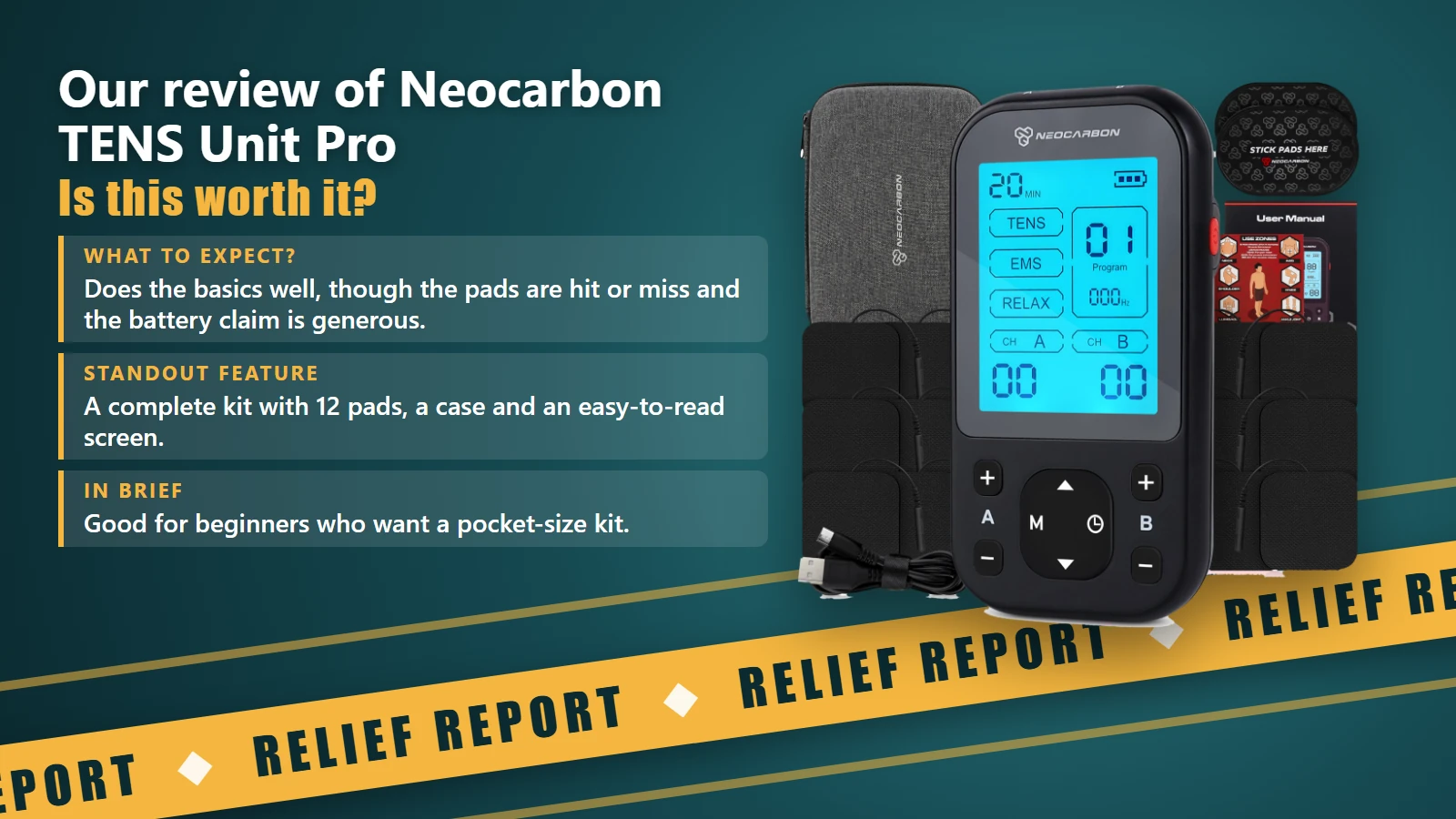
Poor pads are common. One reviewer found the pads on the Neocarbon TENS Unit Pro kept peeling off and wrapped a bandage around them, which is not a fix we would copy, and another reviewer's pads still fell off after cleaning the skin, rarely lasting a full 20-minute session.
Pad care helps. Clean the skin, add a drop of water or gel to dry pads, and store them sealed on their backing, which some members keep in the fridge to stretch a set to 20 or 30 uses.
If your pads are the problem, our guide on why TENS pads stop sticking explains how to make them last longer. On the $154.99 NeuroMD, roughly 7 of 24 buyers wrote that the pads stop sticking, and a member paid $50 for a replacement 3-pack.
The other cause is turning the intensity up too far. Members say it can force muscles into severe cramps or painful spasms, and soreness that lasts several days, especially in pulse or high-modulation modes.
Stinging that feels like a bee sting is a sign to stop and check the pads and settings. Nausea, dizziness and fainting, called vasovagal reactions (a sudden drop in heart rate and blood pressure that can make you faint), have followed spiking the intensity or putting pads on sensitive spots.
Start sitting or lying down. Moving or bending the muscle under an active pad can sharply raise the intensity, so turn it down before you stand up or reach, as members of our group warn.
The muscle-contracting kind of unit can also leave a mild soreness, like the day after a workout, in the first one or two weeks. Build up slowly, and stop if you feel sharp stinging or cramping.
How should your first session go?
Follow these steps, in this order.
- Read the manual first, because the listing may not tell you the precautions.
- Clean the skin, add a drop of conductive gel or water if the pads are dry, and place them on soft muscle in a pair on the same side.
- Sit or lie down, never stand, and keep your phone and anything breakable out of reach.
- Start at a low setting for about 20 minutes, and raise the intensity slowly until you feel a strong but comfortable buzz or a gentle contraction.
- Back off one notch, and stop right away if you feel a sharp sting, cramping or dizziness.
- Do not wear the pads while sleeping, and do not use the unit while driving or using machinery.
The driving rule is common manual advice and did not come up in our reviews, so check your own manual too.
Members run sessions of 15 to 45 minutes, with 20 to 30 as the usual baseline. Members with chronic pain sometimes run back-to-back cycles, but a long session can leave you tingly and sore the next morning, and the Neocarbon TENS Unit Pro caps a run at 60 minutes with no rest periods, so longer sessions mean restarting it by hand.
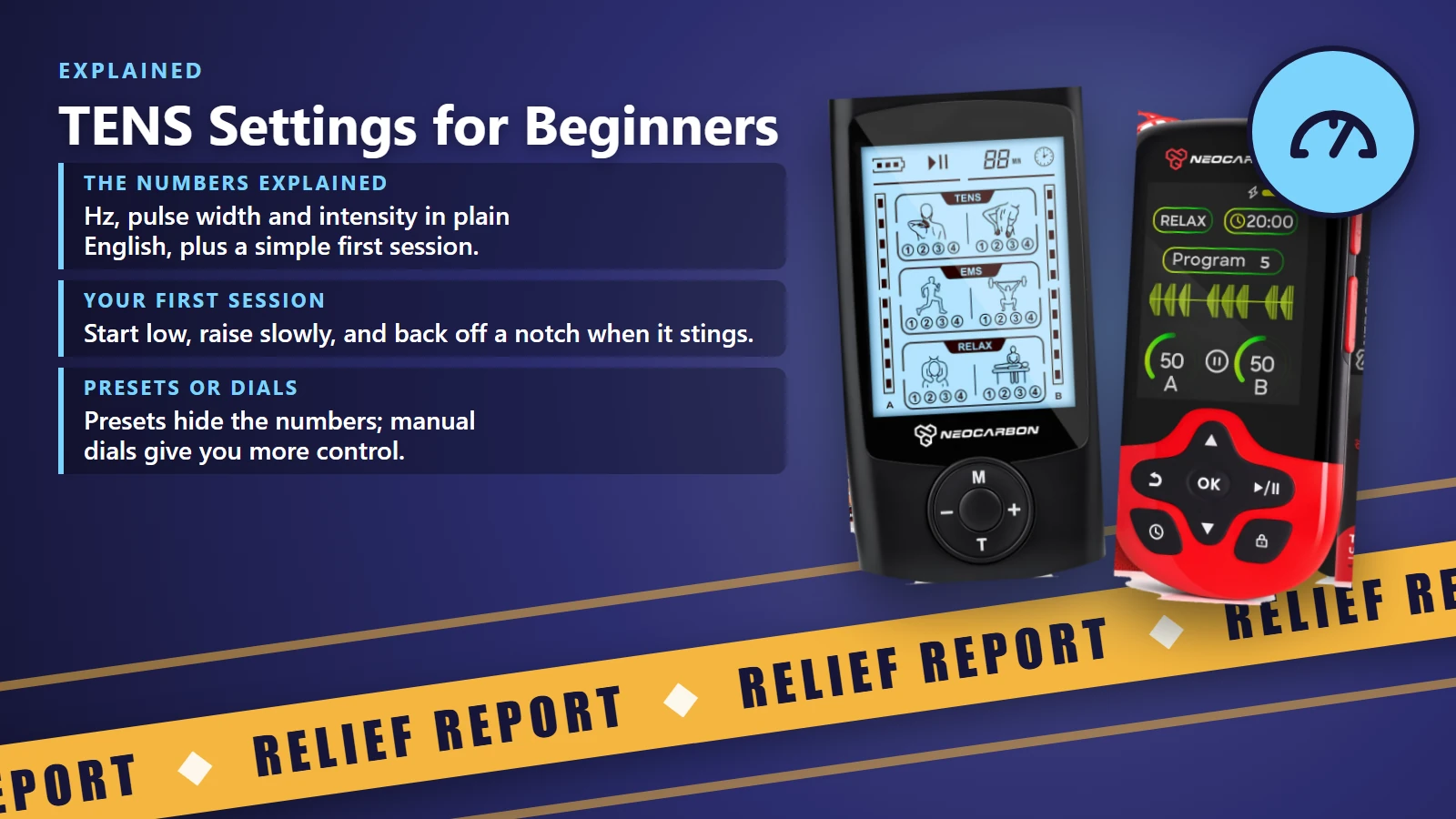
Our guide on TENS settings for beginners explains Hz and pulse width in plain English. The $89.97 Neocarbon Ultra lets you change the intensity per channel but not the pattern.
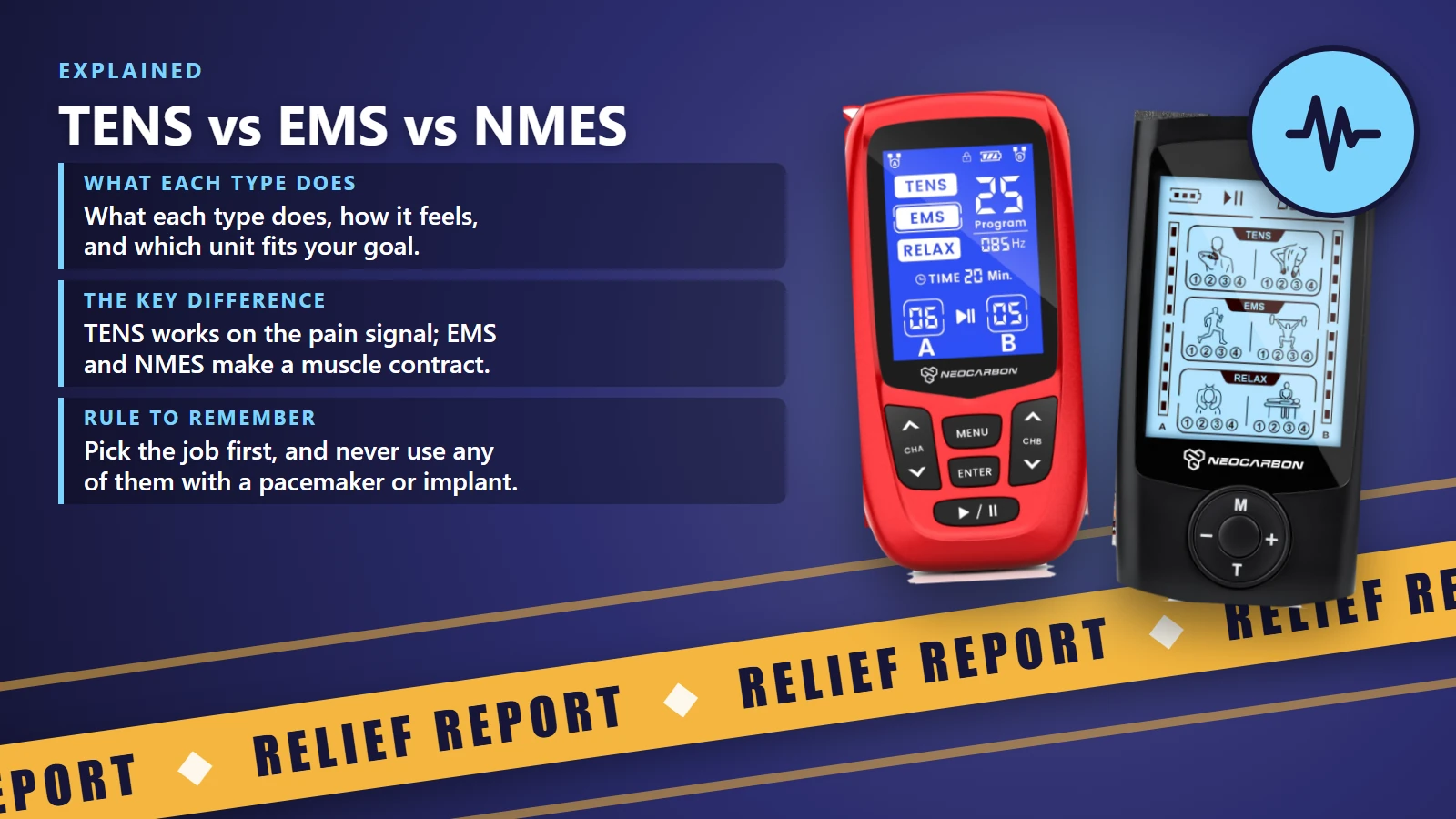
If you are not sure which type you need, our TENS vs EMS vs NMES guide explains the difference (NMES is the stronger, muscle-contracting kind of EMS). The NeuroMD's own schedule keeps you on Mode 1 for the first 4 to 7 days with 25-minute sessions, which is a good slow-start pattern to copy.
Questions People Ask
Can I use a TENS unit with a pacemaker?
No, not without explicit clearance from your heart rhythm specialist. Our reviews all say never to use one with a pacemaker, a defibrillator or any other implanted electrical device, because the pulses can interfere with the device.
Is a TENS unit safe in pregnancy?
Ask your doctor first. Our reviews list pregnancy, along with epilepsy and heart conditions, as a reason to talk to a doctor before any TENS or EMS use, and we have no member data that says it is fine.
Can I put pads on my neck?
Not on the front or sides of the neck, where members say stimulation risks carotid spasm or disrupted blood flow. For the back of the neck our data gives no answer, so ask your doctor or read the manual first.
Why does my TENS unit sting or feel like a shock?
The usual causes are pads that have lost their stickiness or peeled partly off, and an intensity set too high. Pause the unit, clean the skin, press the pads down fully or swap them, and restart low.
Can I sleep with a TENS unit on?
No. Members report burns and blisters from falling asleep with the intensity high, or from wearing pads for five or six hours or longer.
So who should skip it, and who can try it?
Skip it, or ask your doctor first, if you have a pacemaker or other implant, a heart condition, epilepsy, pregnancy or severe neuropathy. If none of those apply, a basic unit is a reasonable way to try a gentle buzz on sore muscles, as long as you start low and watch the pads.
Keep the pads off the chest, head, front of the neck and broken skin, and take a sharp sting as a signal to stop. A unit is a comfort tool, and your doctor is the one to ask about anything more.