

Key Takeaways
- Decide the job first: TENS works on the pain signal, while EMS and NMES make a muscle contract, and most combo units do a bit of both.
- TENS relief is temporary for many people, since members say pain often returns within minutes to half an hour after the unit turns off.
- Members call consumer muscle-building claims marketing hype, so do not buy an EMS unit expecting abs.
- Pads are the running cost: about 7 of 24 buyers of one wireless unit said the pads stop sticking, and a member paid $50 for a replacement 3-pack.
- Skip every TENS and EMS unit if you have a pacemaker or another implanted electrical device, and ask a doctor first about pregnancy, epilepsy or a heart condition.
TENS, EMS and NMES sound like alphabet soup, and the boxes do little to help. Combo units list 60 modes and claims like "clinical-grade", yet rarely say which job they do best.
This guide breaks down what each type does, who it suits, and what our clients and Facebook group members found with the Neocarbon and NeuroMD units we reviewed. You will leave knowing which unit fits sore muscles and which ones to skip.
The short answer
TENS (transcutaneous electrical nerve stimulation: small pulses through the skin) works on the pain signal, giving a buzzing feeling that can dull an ache for a while. EMS (electrical muscle stimulation) and NMES (neuromuscular electrical stimulation, the name used in rehab settings) send stronger pulses that make the muscle contract.
So the first question is whether you want to mask an ache or wake up a quiet muscle. Here is how the types compare.
| Type | What it does | Feels like | Best for |
|---|---|---|---|
| TENS | Works on the pain signal like an electrical distraction | A surface buzz or tingle | Dulling an ache for a while, such as before sleep |
| EMS | Stronger pulses that make the muscle contract | The muscle tightening and releasing | Waking up a quiet muscle, or a post-workout buzz |
| NMES | Pulses strong enough to contract muscle, used in rehab plans | A firm contraction; some feel a TENS-like buzz | Quiet quad or calf muscles after surgery |
| Combo unit | TENS and EMS in one device | Many modes; some feel alike | A first unit when you want both jobs |
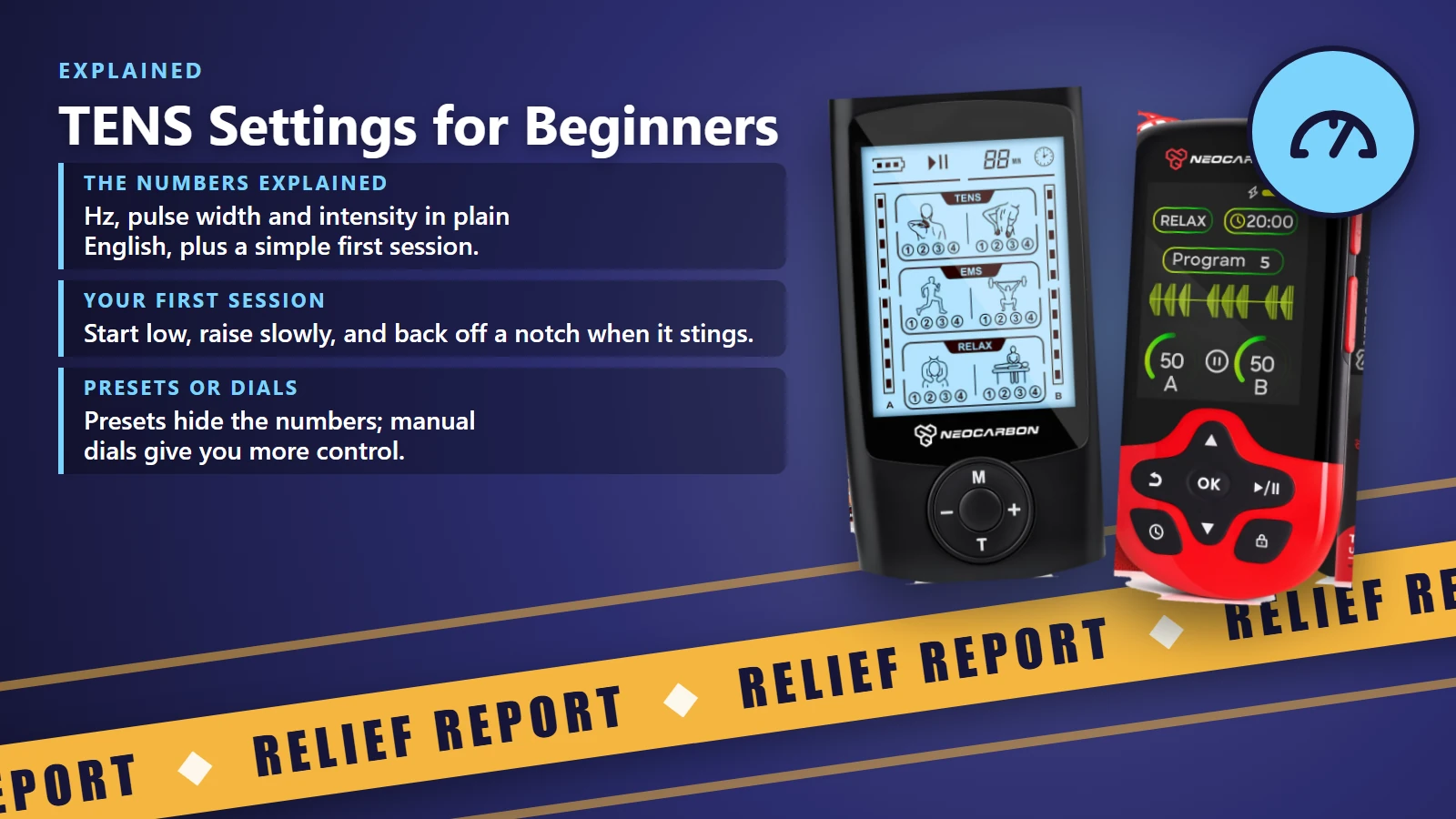
Our guide on TENS settings for beginners explains how to dial in the Hz (frequency, or how many pulses per second), pulse width (how long each pulse lasts, in microseconds) and mA (intensity, or how strong the current is).
Members also look at channels (each channel runs a pair of pads you can set up separately). A 2-channel unit works well for one area like a knee or wrist, while a 4-channel unit can cover several zones at once, such as the lower back, glute, hamstring and outer calf.
Control style matters as much as channel count. Members often advise manual dials over complicated touchscreen menus, because cheaper digital units tend to hide exact settings, and a flap over the dials stops accidental bumps that spike the intensity.
TENS in plain words
TENS sends small pulses that act like an electrical distraction, overriding pain signals on their way to the brain. Members call this the gate control idea (a busy buzzing signal crowds out the pain signal).
The relief is strictly temporary for many users, and pain often returns soon after the unit powers off. Even so, members say a 30 to 60 minute window of numbing can help you fall asleep, finish physical therapy exercises or wait for oral medication to kick in.
A member of our Facebook group with cervical dystonia uses a Neocarbon TENS stimulator on their shoulders or arm. They turn it down if moving raises the intensity, and they call it one of the few things that works for them, which is one member's comfort story and nothing more.
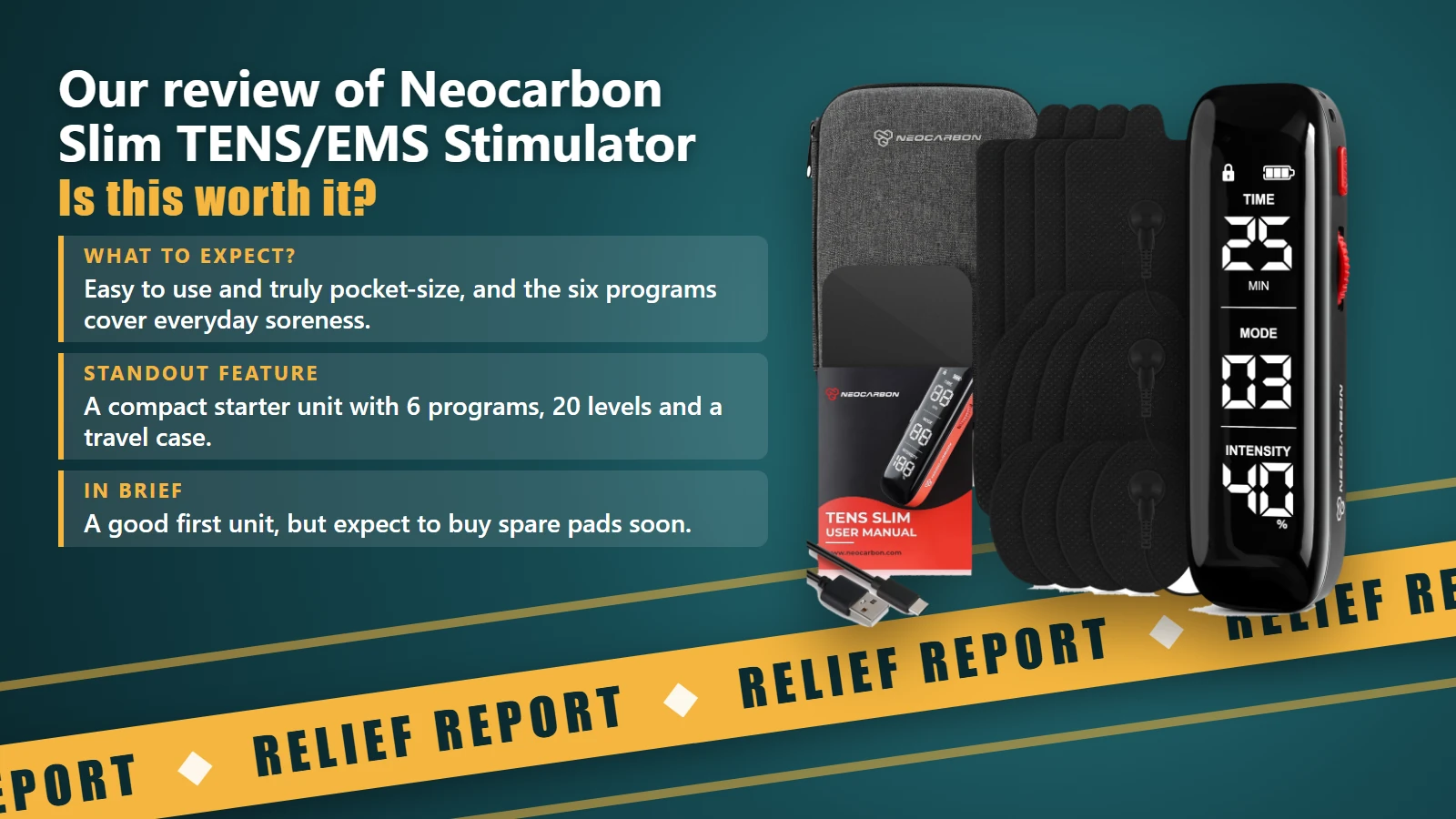
Pads are the main running cost. A client's pads on the Neocarbon Slim TENS EMS stopped being sticky after about 5 uses, and no gel came in the box.
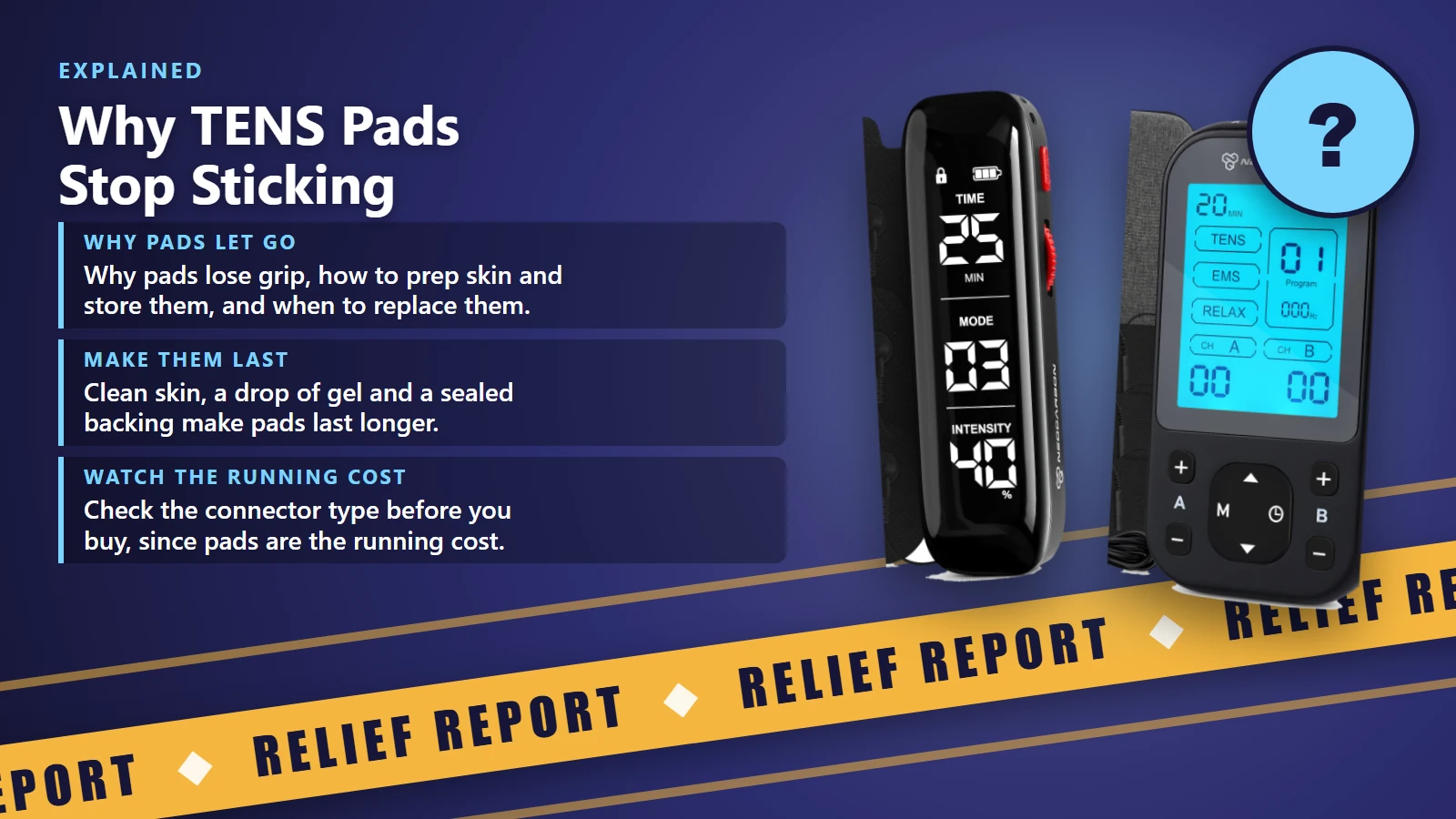
Our guide on why TENS pads stop sticking has fixes, and one is a small dab of conductive gel or a drop of water when pads lose their grip. Members also say to check the connector style: universal 2mm pigtail pins (standard lead wires) let you buy cheap generic pads in bulk, while proprietary connectors lock you into pricey replacements.
Some members want built-in heat, mainly for pelvic cramps or tight lower backs. The Neocarbon Ergo has none, so you would need a separate heat pack.
EMS and NMES in plain words
EMS and NMES send stronger pulses that make the muscle contract. Members rehabbing after surgery say a standard TENS only creates surface buzzing, and it is the dedicated EMS or NMES settings that wake up a quiet, shrunken muscle.
A member rehabbing after knee surgery uses EMS mode on the quad muscles with a different brand's unit, and has done so for about seven years. Members widely dismiss claims that a consumer unit can replace resistance training as marketing hype.
EMS can wake up a muscle after surgery, but members say it lacks the load needed to build real size in a healthy, trained person. A friend who lifts weights laughed at the abs idea and uses a unit after heavy deadlifts for the buzz.
Wireless patch-style units cut the cables and hide under clothing. The premium example is the NeuroMD SM9113 NMES at $154.99, and members note wired units allow wider pad separation and avoid rigid pods that can press into the back.
One member tested NeuroMD side by side with a $20 unit and felt the same sensation, while another found it slightly stronger. The brand's schedule keeps you on Mode 1 for the first 4 to 7 days before Mode 2 takes over, with each session 25 minutes.
A skeptical reviewer followed that plan and called the relief for lumbar spinal stenosis with leg pain phenomenal, which is one person's experience and not a promise. Third-party pads that fit for less money worked for that reviewer too.
The biggest gap is the word "corrective" on the box. Reviewers described TENS-like sensations, and NMES and TENS give temporary relief only, since they do not repair a disc or a nerve.
Combo units: what you get
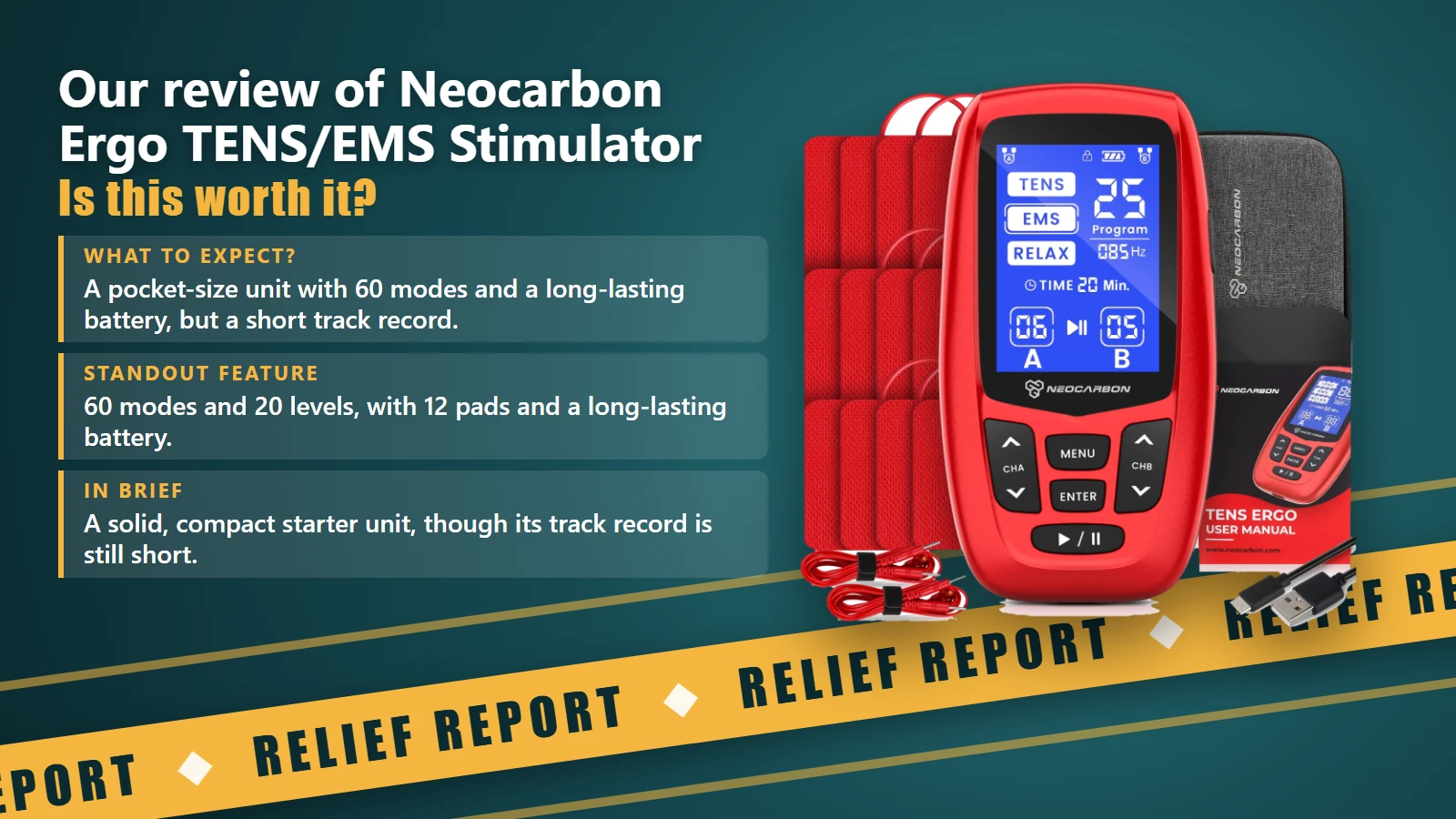
Combo units put TENS and EMS in one device. The Neocarbon Ergo TENS EMS costs $69.97 and gives you 60 modes and 20 intensity levels.
Our client settled on two pads instead of all four after some trial and error. Menu complaints were rare, though a buyer wanted it to remember the last setting.
Expect days between charges, since one reviewer still had a nearly full battery after hours of use. Nobody has timed the brand's 70-hour claim.
The Slim costs $59.97 and has 6 programs. A reviewer who has used a few TENS units over the years said it holds its own, with pads that stick well and a battery that stayed solid, which makes the pad story mixed.
The Neocarbon Ultra TENS EMS costs $89.97 and has 60 programs. It has plenty of power, but only the intensity is independent on each channel, so both run the same pattern.
Battery reports split users. One reviewer uses it 3 to 5 times a day on one charge, while our client's charge does not last long, and of 14 buyer reviews, two 2-star ones are about the battery and a dead contact.
The Neocarbon TENS EMS Pulse Massager costs $59.97 and has 24 modes. A client counted them down to 6 modes with 4 sub-modes each, and said the modes and levels all feel about the same.
The power surprised some people, and one client who had owned a much larger unit said there is no comparison in power. The hardware is good, and the manual and mode design are not.
The Neocarbon TENS Unit Pro costs $69.97 and has three named modes. It does the basics well, but the pads are hit or miss, and a reviewer who wears it 4 hours a day at setting 10 needed a recharge by day three, so the 50-hour battery claim only holds at very low settings.
Against $300 to $700 app-driven units, one member's view is that electricity is electricity. The real differences are the app, the subscription and the price.
Who should pick which
Members with muscle tension in the lower back, neck and shoulder blades get the most from these units. Members with sciatica or a disc problem say the buzzing helps them sit upright or fall asleep, and those with menstrual cramps place pads over the lower back or lower abdomen to muffle the stabbing feeling.
The Ultra even has a steady mode the brand describes as for menstrual cramp comfort. That is a comfort story, not a treatment.
After surgery, members use NMES programs to activate quiet quad and calf muscles. Runners and lifters use a unit after a workout to ease sore muscles.
Some members with ADHD or restless legs find the rhythmic tingling a calming physical sensation that helps focus during computer work or eases bedtime restlessness. Members advise against buying a unit expecting dramatic endorphin rushes, since they say it does not compare to pharmaceutical pain relief.
Battery type is a real choice. Replaceable 9V or AAA batteries suit members who do not want to wait 20 to 60 minutes for a recharge during a spasm flare-up, while USB-C models cut battery buying and can run for weeks between charges.
Who should not use either
Anyone with a pacemaker or other implanted electrical device should skip these units. A pacemaker can mistake the pulses for the heart's own rhythm, and with a defibrillator (ICD) the interference can trigger painful, inappropriate shocks.
Never place pads across the chest and upper back at the same time, on the front or sides of the neck, or over open wounds, the spine or bony spots. Pads belong on fleshy muscle, and pregnancy, epilepsy or a heart condition mean a doctor should weigh in first.
Our guide on who should not use a TENS unit covers pacemakers, pregnancy and pad placement in more detail. Members with severe peripheral neuropathy (nerve damage that causes numbness or burning, often in the feet and hands) should skip these units, because some had burning or rebound pain lasting days.
People with a very low pain tolerance can feel startled or nauseated by the pulses. Falling asleep with the intensity turned up can cause red circular skin burns.
If a pad partly peels off while the unit runs, all the current passes through a tiny patch of skin and zaps. Turn the unit down or off before you press it back on.
Cranking the intensity too high can force a muscle into painful, locked-up cramping, and lingering soreness can last days. Pads on sensitive areas or a sudden jump in intensity can also trigger nausea or fainting, and members report falls that caused injuries, so sit or lie down.
Questions People Ask
Does a TENS unit fix the cause of the pain?
No, it only masks the signal temporarily. TENS acts like an electrical distraction that overrides pain signals on their way to the brain, and members say pain often returns within minutes to half an hour after the unit powers off, so see a clinician if the pain is severe.
Can EMS build big muscles?
No. It can wake up a quiet muscle after surgery, but members say it lacks the load needed to build real size in a healthy, trained person. Claims that a consumer unit can replace conventional resistance training are widely dismissed as marketing hype.
How long should a session last?
Sessions in our group run 15 to 45 minutes, with 20 to 30 as the usual baseline. Start at the lowest intensity and work up slowly until you feel a strong buzz or a mild muscle contraction, then back off a notch.
Why do my pads stop sticking?
Pads wear out after a few uses and need gel or replacements. About 7 of 24 buyers of one wireless unit wrote that pads stop sticking, a client's pads on a pocket-size unit lost their grip after about 5 uses, and one member paid $50 for a replacement 3-pack.
Bottom Line: What to Do Next
Buy a TENS unit for dulling an ache and an EMS unit for making a muscle contract, and a combo unit if you want both jobs in one pocket-sized kit. Pick the job first and the brand second.
Skip the premium wireless units if you judge value against a $30 TENS unit. A wired unit like the Neocarbon Ergo costs less than half the NeuroMD and has 60 modes.
Whatever you choose, start on the lowest intensity, keep early sessions to around half an hour, and keep pads off the chest and the front or sides of the neck. If you have a pacemaker, are pregnant, or have a heart condition or epilepsy, talk to your doctor before you press start.